
Related Posts



Podcasts




There’s a hard truth most marketers don’t mention often enough.
Your industry makes as much of a difference in your campaign as your ad strategy itself… and no amount of “clever targeting” will save you if you’re on the wrong platform.
This is the one thing we’ve seen many businesses fail to realise until they’ve poured thousands, if not tens of thousands of dollars into their paid media campaigns.
Most of this pain comes down to one simple mistake: your industry and your buyer behaviour don’t match the platforms you’re using.
And yet, most businesses still treat platform selection like a buffet. They grab a bit of Google, sprinkle in some Meta, and dabble in LinkedIn, hoping something sticks.
After running paid media campaigns across APAC for just about every industry imaginable, the pattern is definitely clear.
Some industries crush it on Google but tank on Meta. Some thrive on LinkedIn and fall flat everywhere else.
And some shouldn’t be on certain ad platforms at all… no matter how many “gurus” swear otherwise.
In this article, you’ll get a full breakdown of which platforms actually work for which industries and why. You’ll also get a simple way to figure it out if your industry isn’t on the list, so you’re not gambling your budget on guesswork.
4 Paid Media Platforms for 4 Different Buyer Behaviours
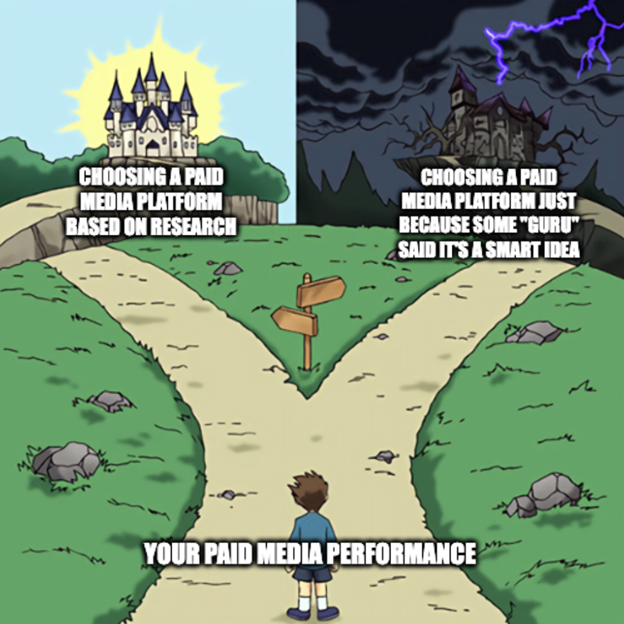
Choosing the right ad platform isn’t about what’s trendy or what your competitors claim works. It comes down to something far more predictable:
Every ad platform is built around how people behave on it, and every industry has its own buying behaviour.
When those two things match, ads work. But when they don’t, you waste money.
Here’s an overview of five paid media platforms and the five common buying behaviours they line up with:
1. Google Ads: Intent
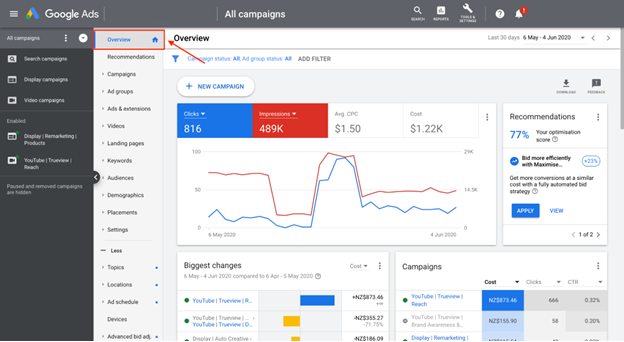
Google is often seen as the “solve my problem now” platform because people generally don’t browse Google for entertainment. Instead, they go there with a job to be done with queries like:
- “Fix my hot water system”.
- “Best payroll software”.
- “Cosmetic dentist Sydney”.
- Or, “warehouse racking supplier”.
This is why Google is deadly effective when your industry has measurable search volume and people are problem-aware.
Whenever you try to reach a high-intent audience with Google Ads, you’re more likely to get better outcomes because:
- Your ads show at the crucial moment when someone is actively looking for what you sell.
- Search queries reveal urgency that you can develop a strategy around, which helps take the guesswork out of the process.
- For many service-based industries, demand already exists; Google just captures it.
But, Google Ads isn’t a universal platform for all buying behaviours because it usually struggles:
- When the industry is too niche (e.g., complex B2B tech with almost no search volume).
- When buyers don’t know that they should already be searching.
- When your product needs education before someone recognises the problem.
If people Google what you sell, Google Ads is usually your highest-converting channel.


Types of Google Ads in 2025: An Ultimate Guide to Ads Campaigns
2. Meta Ads (Facebook & Instagram): Emotion
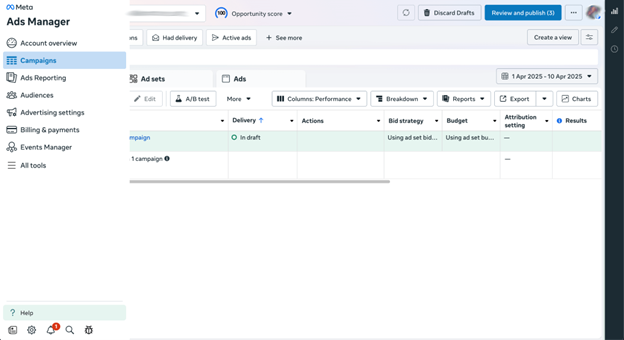
Unlike Google Ads, Meta isn’t an intent platform because people on Instagram and Facebook are scrolling, relaxing, killing time… which means your ad’s probably going to be an interruption.
That sounds negative, but having ads that function as an interruption typically has a massive advantage for industries where:
- Buyers don’t know they have a problem.
- Purchases are emotional or visual.
- Or, you need to spark interest instead of capturing it
Facebook and Instagram Ads can be especially effective if you want to disrupt your target market’s feed because:
- You can reach huge audiences for low CPMs.
- Visual storytelling works exceptionally well for industries that rely on visuals to market offerings, such as lifestyle, health, home improvement, education, and retail.
- You’re catching people before they start comparing options.
But, it’s important to know that Meta Ads might struggle to deliver results for situations, products, or services like:
- High-ticket B2B offers where trust is built slowly.
- Technical or complex offers that require explaining.
- Or, industries where people rely heavily on search or referrals.
Meta Ads are a strong option when you need reach, attention, and emotional buy-in… but not when your offer requires detailed evaluation.

The Ultimate Facebook & Instagram Meta Ads Strategy in 2025
3. LinkedIn Ads: Job-Based Relevance
The platform allows you to choose precisely who sees your ad based on:
- Job title.
- Seniority.
- Industry.
- Company size.
- Skills.
- Groups.
- And, job function.
That level of precision makes LinkedIn Ads an especially effective option if your industry is one where:
- Your ideal buyer is a specific type of professional.
- The buying process is considered.
- Or, you’re selling something tied to a job responsibility or role.
LinkedIn Ads can help you make the most out of the conditions above because the platform is built to help you:
- Get your message in front of decision-makers.
- Skip gatekeepers who might not have the power to purchase your product or service, and might prevent you from reaching those who can.
- Set up targeting for long sales cycles where awareness and credibility matter.
And while LinkedIn’s ad platform can be especially valuable if you’re looking for more precise targeting, it might not perform well for:
- Anything price-sensitive (e.g. smartphones, clothing, airline tickets, groceries).
- Anything B2C.
- Offers that need a broad audience or emotional triggers.
If your ideal buyer lives in a specific job title or vertical, LinkedIn can give you a degree of unmatched precision that other platforms can’t.
We’ve personally been using LinkedIn Ads as a retargeting method for our advertising strategy. We have other channels generating traffic to our website, like Google Ads and Meta, so LinkedIn becomes a great tool to retarget those website visitors with highly credible content from our CEO and other team members. Our campaigns don’t track conversions, and CPMs can be high, but we’ve seen conversions increase across the board with this awareness based retargeting strategy.
Luca Troise, Head of Growth @RedPandas
How to Generate Business or a Job on LinkedIn
4. YouTube Ads: Trust
Unlike the organic content native to the platform, it’s important to remember that YouTube Ads are not long-form videos. Based on the current set-up, these ads can either be:
- Skippable in-stream ads (five to 30 seconds).
- Non-skippable short ads (six to 15 seconds).
- Bumper ads (six seconds).
- Or, discovery ads (like sponsored search results)
Generally, YouTube Ads work for certain strategies and industries because:
- People are already in a “lean-in” mode when they come across an ad, which means they’re watching content intentionally.
- You can target based on what they watch, what they search for, and what they’re interested in.
- You can combine visuals, audio, and repetition; a mix that’s extremely powerful for memory.
YouTube Ads work in certain industries that thrive on the following:
- Considered purchases where education helps.
- Demonstrating quality or showing expertise.
- And, storytelling opportunities (“how it works”, “before/after”, “results”).
On the other hand, YouTube Ads might not be a good fit for your business or industry if:
- Your offer needs immediate conversion, and buyers aren’t ready.
- When creative is weak, because low-quality videos perform terribly.
- Or, your industry’s market doesn’t rely on research or trust-building.
YouTube Ads shine when your industry benefits from showing, not telling; and, most importantly, when brand recall drives purchase decisions.

How to Combine Search, Display, and YouTube Ads for a Full-Funnel Campaign
Your industry’s natural buying behaviour should determine your ad platform… not preference, habit, or what worked for someone else.
Once you understand this, picking the right platform stops being a gamble and starts becoming a strategy.

Can You Scale Paid Media With a Limited Budget?
The Best Paid Media Platforms for 6 Industries
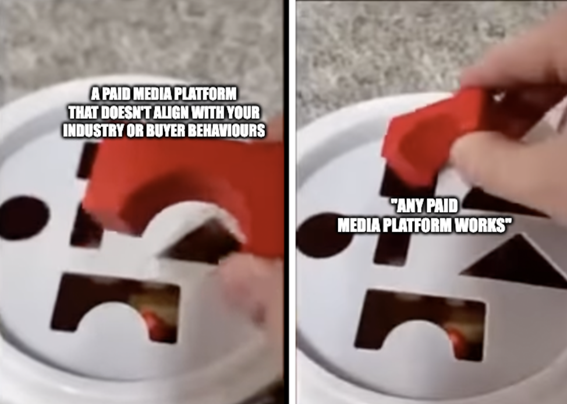
Choosing the right ad platform for your business to thrive on and scale with boils down to pattern recognition. Across industries, buyers behave in predictable ways.
When a platform aligns with those behaviours, ads scale.
But when it doesn’t, you burn money.
Here’s an overview of the best paid media platform options for nine industries:
Industry #1: B2B Services
The best platforms for the B2B services industry might be LinkedIn Ads and Google Ads.
B2B service decisions are tied to job roles, pain points, and budget owners. LinkedIn lets you target exactly that: CFOs, COOs, HR Directors, IT Managers, etc.
Most other platforms treat everyone the same; LinkedIn doesn’t.
On the other hand, Google ads work for B2B services because buyers often search with specific intent through terms like:
- “IT support provider Sydney”
- “fractional CMO cost”
- “outsourced HR services”
When someone types a problem into Google, they’re already mid-journey.
If you’re looking to run a full ad stack for your B2B service business, here’s a sample three-part approach:
- Use LinkedIn Ads for top-of-funnel (guides, calculators, webinars).
- Use Google Ads for bottom-of-funnel (service pages, comparison pages).
- Use HubSpot to connect both so sales gets qualified, warmed leads.
By leveraging the strengths of LinkedIn Ads and Google Ads, you can have a more potent ad framework that gets your campaigns to buyers who are a best-fit for your offers.
Case study: LW Reid
Industry #2: SaaS (B2B)
The best platforms for SaaS businesses could be:
- Google Search.
- LinkedIn.
- And, YouTube.
This mix of platforms generally works because SaaS buyers research deeply. They look for demos, comparisons, and case studies, and they often need approval from multiple decision-makers.
LinkedIn Ads, in this situation, can be used to get in touch with SaaS buyers while targeting their C-suites (if any), while Google Ads can meet them halfway while doing their research.
But, adding YouTube Ads into the mix can help you maximise your campaign’s returns better because SaaS products usually need explanation. They could let you show the product in context and answer questions like:
- “What does it do?”
- “How does it work?”
- And, “Why is it better than the alternatives?”
Here’s what using these three paid media platforms together can look like:
- Google catches in-market buyers
- LinkedIn targets decision-makers
- YouTube builds belief through demos or feature breakdowns
Combine all three, and you can expect your SaaS pipeline quality to increase over time with proper planning and paid media management.
Industry #3: Trades and Local Services
The best paid media platforms for trades and local services could be Google Ads and Meta Ads.
Google Ads tend to be a strong option for tradies and local service providers because they have offerings for either urgent problems or planned maintenance. This is because people with these kinds of concerns end up searching on Google with terms like:
- “Plumber near me”.
- “Emergency electrician”.
- And, “Pest control Sydney”.
And then, Meta Ads can help as a secondary platform for any trade or local service paid media strategy because it usually works well for:
- Advertising seasonal promos.
- Establishing a presence in new service areas.
- Building brand reputation through repetition, exposure, and feed disruption.
- And, posting job openings for apprentices or technicians.
A strategy with Google Ads as a primary platform and Meta Ads as a secondary platform can help you position your trade or local service business top of mind for your market and build familiarity.
Industry #4: Healthcare and Allied Health
The best paid media platforms for healthcare and allied health are Google Ads and Meta Ads.
Google Ads comes as a top option for healthcare and allied health businesses because health is problem-driven. And this usually shows in the form of queries like:
- “Back pain physio”.
- “Dentist for kids”.
- And, “psychologist for anxiety”.
People end up searching for all of this online because they want someone local, reputable, and available. It just so happens that the best way to do this is by searching on Google and going through the results (or seeing Google Ads from reputable service providers).
To complement the wide-ranging capture Google Ads has for healthcare and allied health businesses, Meta Ads can boost your paid media campaign’s impact. It usually does this by leveraging the fact that many health decisions are also emotional or community-influenced.
With the help of Meta Ads, you can build trust with a well-structured campaign long before someone searches for your business.
Google Ads and Meta Ads can help you get more returns out of your paid media strategy by allowing you to passively generate appointments while building relationships and credibility.
Industry #5: Education and Training
The best paid media platforms for education and training businesses, in our experience, are:
- Meta Ads.
- Google Ads.
These types of businesses usually perform well on Meta Ads because education and training-based decisions often start with emotional developments like:
- Career changes.
- A fear of missing out.
- Parent concerns.
- Or, self-improvement.
With Meta Ads, you can have a platform that’s more suited to generating engagement and potential conversions through emotional storytelling. And with the platform’s new emphasis on having high-performing and relevant creatives, you can expect to see returns from your assets.
While your Meta Ads help build market presence and capitalise on your potential customers’ sentiments, you can also use Google Ads to support your strategy. This platform can help you create momentum for your business through highly specific searches like:
- “Project management course Sydney”.
- “Year 7 tutoring”.
- And, “MBA online Australia”
Together, these two platforms can help you grow your education and training business because these industries work best with journeys, not single-click conversions.
This means that you’ll need to use your paid media strategy to build sequences instead of one-off ads.
Case Study: Kids Club Early Learning Centres
Industry #6: Home Building, Manufacturing, and Industrial
The best paid media platforms for home building, manufacturing, and industrial businesses are LinkedIn Ads and Google Ads.
LinkedIn is usually a strong choice for these industries because they tend to rely on these kinds of professionals to get leads and secure deals:
- Procurement managers.
- Engineers.
- Operations heads.
- And, technical buyers.
These professionals usually spend most of their time on LinkedIn looking for companies and options to support their long buying processes. So, you probably won’t find these people on TikTok clicking “Buy Now” when looking for your company.
With LinkedIn Ads, you can easily target decision-makers and turn them into potential clients. And you can do this through campaigns that educate and create awareness around your offerings.
Google Ads can also serve as a strong support for your initial LinkedIn Ads set-up. This generally works well, especially if you have a B2C arm to your business with a target audience that isn’t on LinkedIn.
With the help of Google Ads, you can get more mileage for your paid media strategy by tapping into search terms like:
- “Industrial pump supplier”.
- “Home builder Sydney”.
- “Steel fabrication NSW”.
- “Commercial property builder Sydney”.
- And, “Modular homes supplier near me”.
So, if you want to pull leads from high-intent searches and reach key people who can back a decision to invest in what you’re offering, then a strategy with LinkedIn Ads and Google Ads is a good step forward.

Are Paid Ads Worth It When Marketing for Construction Companies?
What Should You Do If Your Industry Isn’t Mentioned?
If your industry isn’t mentioned in the list above, here’s a core framework to help you find out which platform works best for you:
The “3-Behaviour Framework”
Every industry’s buyer journey usually leans on one (or all) of these three behaviours:
- Intent: “I know what I want.”
Buyers who actively search for solutions. Google dominates here. - Discovery: “I wasn’t looking, but this caught my eye.”
Buyers respond to visuals, stories, lifestyle, and emotion. Meta Ads excel here. - Professional Context: “This matters to my role/company.”
Generally, LinkedIn owns this space/behavioural response.
If your industry leans heavily towards one of these behaviours, it becomes easier to choose an ad platform. This way, you’re not relying on conflicting inputs online to make a decision.
What is the difference between paid, owned and earned media?
So, What’s Next?
The ad platform you choose can either accelerate your growth or quietly drain your budget.
If you’ve ever stared at campaign reports wondering why results feel inconsistent, remember that it’s not because ads are unpredictable.
It’s because most businesses haven’t matched their industry to the platform that naturally supports how their buyers behave.
Once you fix that, everything else gets easier: better leads, shorter sales cycles, happier teams, and far less money wasted on channels that were never right for you in the first place.
If you’re ready to take the guesswork out of your paid media, start with one simple step: audit your current platforms against your industry.
If the platform you’re on doesn’t match your ideal buyer, then it’s probably time to shift.
But, if you’re not sure where your industry sits or need help from a paid media management expert, feel free to schedule a free consultation call with us.

What is a Paid Media Retainer & What Does It Include?