









Here’s How Marketing for Construction Companies Is Different From Other Industries

Last updated: 18 November 2026.
Key Takeaways
- Marketing for construction companies has to work across long sales cycles, tenders and several decision-makers
- LinkedIn’s B2B Institute estimates 95 per cent of B2B buyers aren’t ready to buy today, so a quote button alone misses most of your market
- Real project proof (budgets, timelines, named clients) builds more trust for marketing for construction companies than polished branding
- Search ads catch ready-to-hire buyers; content, case studies and retargeting warm up the rest
- A CRM that tracks every enquiry to a signed contract shows which construction marketing actually works
Quick Answer
Marketing for construction companies is different because sales cycles run for months, several people approve every project, and trust beats clever branding. What works: search ads for ready-to-hire buyers, real project case studies, plain technical language, and a CRM that follows up every enquiry and tracks which marketing wins contracts.
Is your marketing is busy, but your pipeline still has nothing to show for it?
Book a free 30-minute HubSpot consultation for builders. RedPandas’ experts will look at how enquiries reach you, where they stall between site visit and quote, and what your CRM should be doing while your team is on site:


Free HubSpot Consultation for ANZ Builders
Stop me if you’ve heard this one before: You built a new website, ran some ads, posted on LinkedIn, maybe hired an agency. Six months later, the enquiries are still coming from the same three referral partners.
The tactics weren’t wrong. They were built for another industry.
Here’s what most agencies don’t mention: marketing for construction companies isn’t the same as marketing for tech, retail, or professional services.
Marketing for construction companies has to work across long sales cycles, tender panels and buyers who’ve been burnt by a builder before. A playbook written for retail or SaaS ignores all three.
At RedPandas we set up the marketing and CRM behind Australian builders, from display-home groups to commercial contractors. Below are the 3 things that make construction different, the channels that actually win projects, and the steps you can take this week.
3 Ways Marketing for Construction Companies Is Different
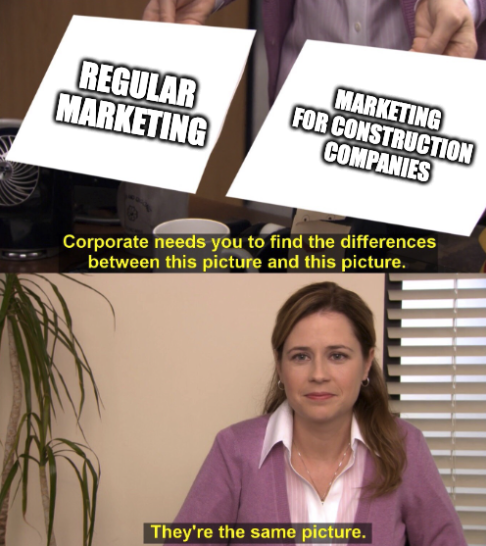
If your marketing strategy feels off, it’s probably because you’re using a playbook that wasn’t built for construction in the first place.
The tactics might be solid, but they’re not tailored to work in the industry… and that’s where everything falls apart.
The bottom line is marketing for construction companies is different, and here’s why:
1. The Sales Cycle Is Longer (and Much More Complex)
In eCommerce, a well-placed ad can drive a purchase in minutes. In SaaS, a demo request might come in after a couple of blog posts.
But when it comes to marketing for construction companies, The decision timeline can stretch for months (sometimes, even years).
Here’s what that actually looks like:
- A developer is planning a project 12 months out and researching potential contractors right now.
- A commercial client is gathering quotes while the design phase is still being finalised.
- A government contract is in early tender stages, and the buyer’s shortlisting based on reputation and digital presence.
For you, this opens up an opportunity to build sustained awareness and trust over time.
LinkedIn’s B2B Institute estimates that 95 per cent of potential B2B buyers aren’t ready to buy today. A ‘Get a Quote’ button only talks to the other five per cent.
2. Reputation Is Everything
In most industries, you can get away with aggressive growth tactics (think: fearmongering or high-scarcity advertising, heavy discounting).
With marketing for construction companies, however, that kind of pushy marketing raises eyebrows.
Your buyers aren’t buying a simple off-the-shelf product… they’re trusting you with a project that might be worth millions.
Word-of-mouth still dominates marketing for construction companies, which means that a single bad experience spreads quickly.
On the other hand, a solid reputation can carry your business through years of growth. Your marketing needs to reflect that, which means it also has to be credible.
To effectively show your credibility through your marketing, you could:
- Show real project outcomes, not just pretty pictures: Include details like timeline, budget, challenges, and client feedback. A before-and-after photo carousel paired with a short write-up beats a polished, vague portfolio any day.
- Let your clients do the talking: Ask for testimonials right after project handover when results are fresh and satisfaction is high. Even a two-line quote can make a big difference when placed next to relevant work.
- Use proof points across your site: Mention safety accreditations, team qualifications, repeat business stats, or contract win rates. These are the credibility cues buyers look for, especially in B2B and tender-heavy spaces.
3. Your Audience Speaks a Different Language
Let’s be honest: most “industry content” written by generalist marketers sounds like it’s been prompted and proofread by someone who’s never worn steel caps. If your content talks about “maximising engagement touchpoints,” you’ve already lost them.
Construction buyers are practical, technical, and limited on time. They want straight answers to real problems like:
- What do you build?
- What kinds of jobs have you done?
- Can you work to spec and hit the deadline?
- Do you know how to manage site safety and subcontractors?
The key is creating content that answers those questions simply and thoroughly… And that answers one of the biggest needs that marketing for construction companies aims to solve.
Here’s a guide on how you can use AI to align your marketing strategy with your audience for better results.
What Actually Works in Construction Industry Marketing
Marketing for construction companies isn’t about being the loudest company in the industry (in fact, it’s quite far from it).
Instead, it’s about being the most relevant and trustworthy option at the exact moment someone’s looking for a solution.
And that means using strategies built specifically for how your buyers think, research, and make decisions.
Here are four tactics that are a better fit when it comes to marketing for construction companies:
1. Content That’s Targeted, Practical, and Industry-Specific
Let’s be blunt: many content agencies treat construction like any other industry, and it shows.
And while the fundamentals work across every industry, it’s important to pivot in some areas to match the industry. The same is true for marketing for construction companies.
Here’s how to create content that delivers value and is much more likely to work in this industry:
- Start with the site plan: What are your audience’s biggest questions at each stage of their decision-making process? Are they early in research, weighing up contractors, or ready to invite tenders?
- Use technical detail to show credibility: If you’ve got decades of experience with fit-outs, don’t hide it behind vague headlines like “Why Choose Us”. Instead, write content like “How to Plan a 4-Week Medical Clinic Fit-Out Without Losing Operational Days.” Specificity builds trust.
- Ditch the “top 5 tips” format: That style might work for lifestyle brands, but it feels lightweight in construction. Instead, focus on walkthroughs, “what to expect” guides, and detailed project breakdowns that mirror real industry conversations.
- Make it modular: Great content becomes even more valuable when it feeds into your sales process. Turn blogs into checklists, checklists into lead magnets, and combine them with follow-up emails.
With the approaches above, you can spend less time wondering what works and focus more on delivering actual value that your potential clients always look for.
Construction buyers don’t want to just read: they want to understand enough to make a sound decision.
Clear, specific, industry-literate content helps them make informed decisions, reduces friction in the sales process, and positions your business as the one that “gets it”.
To make your next content brainstorming session easier, use this recap table as a reference:
| What to Include | Why It Works For Marketing For Construction Comapnies | Example |
| Content that answers specific questions your clients are actively searching for | Builds trust by showing you’re helpful and knowledgeable at the research stage | Blog: “How Much Does a Commercial Fit-Out Cost in Sydney (2027 Guide)” |
| Content focused on pre-tender or project planning concerns | Attracts early-stage decision-makers and positions your business as a valuable partner | Article: “What to Include in a Construction Tender Response (For Contractors)” |
| Explainers about your process, compliance, and capabilities | Reduces perceived risk by showing you’re thorough and experienced | Page: “Our Process: From Site Assessment to Handover” |
| Downloadable checklists and planning tools | Adds practical value and gives your sales team content they can use in follow-ups | Lead magnet: “Commercial Fit-Out Planning Checklist for Project Managers” |
| Use of plain language with industry nuance | Ensures content is accessible, relevant, and sounds like it came from someone who understands the space | Tip: Avoid marketing jargon like “synergy” or “scalable solutions” |


The Best 5 Topics to Drive Traffic Leads & Sales
2. Case Studies That Speak to the Right Audience
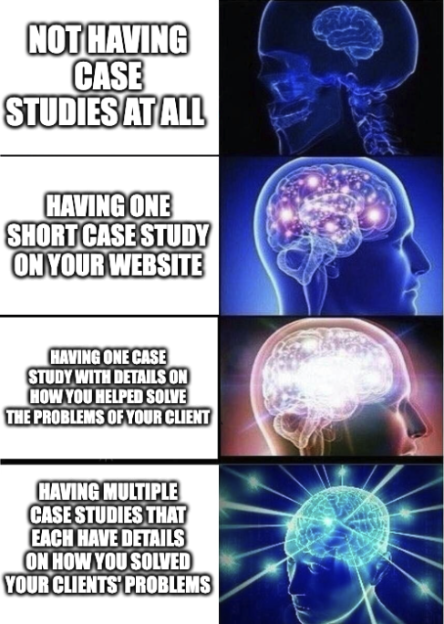
Your future clients want to see who you’ve worked with, what problems you solved, and what results you delivered… but in a format that matches how they think.
What works:
- Short, punchy project recaps (with real photos; stock photos aren’t recommended)
- Clear outcomes: budget met, deadlines hit, problems solved
- Industry-aligned: show commercial projects to win more commercial work
(Bonus points if your client gives a testimonial on camera.)
Why it works:
Case studies reduce perceived risk. They prove you’ve done this before and you can do it again, which is often the final nudge a hesitant buyer needs.
With case studies that can help potential clients see your capabilities, you can equip yourself with one of the highest-converting tools for marketing for construction companies.
3. Search That Captures Ready-to-Hire Enquiries
When someone searches “civil contractors Brisbane” or “shopfitting company near me”, they aren’t browsing. They have a project and they’re building a shortlist. If you don’t show up, you’re not on it.
What works:
- Google Search ads on project and location terms, so you appear this week rather than in 12 months
- A service page for each project type and region your ads can send people to (“Concrete Slabs for Industrial Builds”, “Medical Fit-Outs in Western Sydney”)
- Real project photos, a capability statement and a short enquiry form on every one of those pages
- Fast, mobile-friendly pages. Many first searches happen on site, on a phone
Why it works: search catches the 5 per cent of buyers who are ready now, while your content and case studies warm up the rest.
4. A CRM That Backs Up Your Sales Team
Marketing for construction companies is won on relationships, often over a year or more. Your strategy has to remember every conversation as well as your best estimator does.
What works:
- Every enquiry tracked back to the channel, campaign and page it came from
- Pipeline stages that match how you actually win work: enquiry, site visit, quote or tender, negotiation, contract
- Automatic follow-up within minutes of an enquiry, then a short sequence that keeps you front of mind while the client gets other quotes
- Project sheets and case studies your sales team can send from the CRM in one click
Why it works: you stop guessing which marketing brings in signed contracts, and jobs close faster.
After RedPandas restructured roof inspection provider RIAX’s HubSpot (separate new-business and upsell pipelines, triage forms and 39 automated workflows), their average time to closed-won improved 3.6x.
Home builder Campbell Property Group (Domaine Homes and Clarendon Homes) now has 100 per cent lead attribution across Meta, Google, REA, TikTok, Bing, Spotify, AdRoll and organic.
Read the RIAX case study and the CPG case study.
Related: What the first 15 minutes after a home builder enquiry should look like and a 5-touch follow-up sequence for construction sales.
Construction Marketing Channels Compared
No single channel wins marketing for construction companies on its own. Here’s where each one fits:
| Channel | Best for | Buyer stage | Time to first enquiry |
|---|---|---|---|
| Google Search ads | Residential and trade businesses, local commercial work | Ready to hire | Days to weeks |
| Facebook and Instagram ads | Residential builders showing finished projects | Early inspiration, retargeting | Weeks |
| LinkedIn ads and content | Commercial builders reaching developers, PMs and procurement | Research and shortlisting | Months |
| Service and location pages | Everyone; where your ads and referrals land | Comparing options | Ongoing |
| Case studies and project sheets | Tender responses and evaluators | Shortlisting, approval | Ongoing |
| CRM email follow-up | Long quotes and tender cycles | After first enquiry | Immediate |
| Referrals and trade events | Repeat clients and partners | Every stage | Varies |
Most builders get the fastest results by pairing one paid channel with a CRM that follows up every enquiry, then adding content and case studies over time. A well-rounded approach with multiple channels can significantly improve your success when marketing for construction companies.
What Should a Construction Company Spend on Marketing?
When it comes to marketing for construction companies, there’s no percentage that fits every builder. Work back from the projects you need:
- Count the jobs: How many extra signed projects do you need from marketing this year?
- Work out your win rate: If you win 1 in 5 quotes and need 10 extra jobs, you need about 50 quality enquiries.
- Price the enquiries: US benchmarks put the median cost of a home improvement lead from Google Ads at around AUD $135, and industrial and commercial leads at around AUD $127.
In that example, 50 enquiries at AUD $135 is roughly AUD $6,750 in ad spend for the year. Check your own numbers: Australian costs vary by trade and suburb.
Then budget for the system around the ads, or the enquiries leak:
- Service and location pages for the ads to land on
- A CRM that tracks and follows up every enquiry
- Case studies and project sheets your sales team can send
Benchmarks: US medians, April 2024 to March 2025 (WordStream), converted at 1 USD = 1.482 AUD in November 2026.
For setup and click costs, see Are Google Ads Worth It When Marketing for Construction Companies?
3 Actionable Construction Marketing Steps You Can Take Today
Let’s be clear: effective construction marketing doesn’t start with a 50-page strategy document or a complete rebrand.
Results start with small, intentional shifts that align your messaging, targeting, and proof with how your buyers make decisions.
Here are three specific, practical steps you can start today:
1. Audit Your Marketing Through a Construction Lens
Most construction businesses think they’ve got the basics covered: a website, a few social posts, maybe a brochure or capability statement. But when you audit those assets with a construction buyer in mind, the cracks start to show.
Here’s what to look for when marketing for construction companies:
- Clarity: Is it immediately obvious what you do, where you operate, and what types of projects you specialise in?
- Credibility: Are you using real project photos and named clients, or relying on stock images and generic testimonials?
- Relevance: Is your language tailored to construction professionals? Or does it sound like it was lifted from a SaaS blog?
If your digital presence feels generic, vague, or outdated, you’re giving buyers a reason to move on. Especially in construction, where trust and professionalism matter as much as price.
What to do now:
- Print your homepage and service pages. Give them to someone outside your business. Ask them to explain, in 10 seconds, what you do and who it’s for.
If they can’t? Rewrite it.
- Replace all stock images with real project photos. If you don’t have any, book one site shoot this month.
- Add a simple banner to your homepage: “Trusted by [X], [Y], and [Z] across [location] for over 10 years.” Instant trust signal.
2. Map the Real Buyer Journey (And Who’s Involved)
Most construction projects don’t have a single decision-maker. If your marketing for construction companies only speaks to one role, you’re leaving the rest of the people who can vouch for your business uninformed or unconvinced.
Start by mapping these 3 core roles:
- The Researcher: Usually a junior team member (project coordinator, EA, office manager). They Google, shortlist, and do the legwork.
- The Evaluator: Often a senior PM, estimator, or procurement lead. They want to see capability, past performance, and risk factors.
- The Approver: The business owner, director, or client-side PM. They care about big-picture outcomes: cost, time, and trust.
If your website only speaks to one of these people, you’ll stall the buying process. You need messaging that covers technical detail, commercial outcomes, and big-picture credibility.

Comprehensive Guide: Creating a Customer Journey Map for Sales Enablement
What to do now:
- On your homepage, add a “Why Choose Us” section. Break it into three columns: Proven Delivery, Detailed Site Management, and Budget & Time Confidence. Each column speaks to a different stakeholder.
- Create a capabilities page that highlights past projects by sector (e.g. retail, medical, education). That way, evaluators can find what’s relevant to them fast.
- Add PDF project summaries that your sales team can send directly to procurement teams.
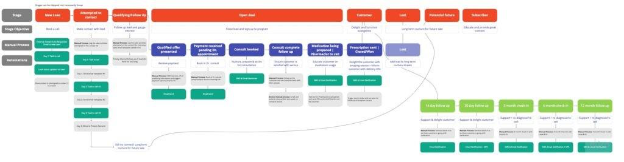
Example customer journey map: who’s involved at each stage and what they need to see.
This can be very overwhelming to look at for the first time; but don’t worry, we feel you. We’re going to break this down step by step later on. But first, let’s talk about how a Customer Journey Map can help you.
To view the image above in full size, see here.
3. Start Publishing Authority Content
Decision-making involves research, and you can help your potential customers find the best route for their project by answering their questions.
This is where content (like blog articles) comes in handy when you’re marketing for construction companies.
We recommend writing three blog articles per week if you’re serious about making a dent in your space.
When you’re brainstorming for content that converts, think about the questions customers will be asking or concerns they might have. For example, they might ask (or be concerned about):
- Delays in commercial fit outs
- What compliance risks do I need to be worried about?
In response to those, you could write articles like:
- “What delays a commercial fit-out (and how to avoid it)”
- “The compliance risks that delay school construction projects (and how to plan around them)”
Authority content, when done right, builds your company’s visibility on search engines like Google while proving that you’ve done the work before. This is a key detail to invest time and resources into when marketing for construction companies.
It shows you understand the problems buyers are trying to avoid. And it positions you as the smarter, safer choice… long before you’ve even spoken to them.
What to do now:
- Choose one common question your sales team hears before a project starts and write a blog post answering it.
- Take one recent project and write a case study on it. What was the challenge, what did you do, and what was the outcome? Add one quote from the client.
- Add a “Knowledge Hub” or “Insights” tab to your website, even if it only has two posts to start. This way, you’re signalling authority that makes passive returns and generates leads for your business.
The Anatomy of a Learning Centre that Generates Revenue on Your Website
Should You Hire a Construction Marketing Agency?
A general agency can run your ads. A construction-literate one knows why a tender takes nine months and why a “Get a Quote” button won’t win a commercial fit-out.
Before you sign with someone who can help improve your marketing for construction companies, ask any agency:
- Which construction or trade clients have you worked with, and can we speak to one?
- How will you track enquiries through to signed contracts, not just leads?
- Who writes our copy, and have they ever read a scope of works?
- What do you need from our estimators and site team, and how often?
- What happens to our ad accounts, CRM and data if we leave?
If an agency can’t answer question 2, you’ll be judging them on clicks and leads instead of projects.
Frequently Asked Questions: Marketing For Construction Companies
How is marketing for construction companies different from other industries?
Construction sales cycles run for months or years, several people sign off on every project, and reputation outweighs clever branding. Marketing for construction companies has to build trust over that whole cycle with real project proof, plain technical language and consistent follow-up, rather than chasing quick conversions the way retail or eCommerce marketing does.
How do construction marketing agencies differ from general marketing agencies?
A construction-literate agency understands tenders, long buying cycles and the different people who evaluate and approve a project. It writes in your buyers’ language, tracks enquiries through to signed contracts, and builds campaigns around project types and regions. A general agency often applies a retail or SaaS playbook that measures clicks instead of projects.
What are the most effective marketing strategies for construction companies in Australia?
Pair Google Search ads for ready-to-hire searches with service pages for each project type and region. Add case studies with real budgets and timelines, use LinkedIn for commercial buyers or Meta for residential, and run every enquiry through a CRM that follows up within minutes and tracks which channels produce signed contracts.
How do premium builders attract higher-quality clients?
Show the work, not the slogan. Premium buyers want detailed project case studies, named clients, clear process pages and pricing signals. Target specific project searches rather than broad terms, ask qualifying questions in enquiry forms, and respond fast. That combination filters out tyre-kickers and builds trust with clients planning larger builds.
How can digital marketing help construction companies grow their sales pipeline?
Digital marketing keeps you visible during long decision cycles. Search ads capture people ready to hire, content and retargeting stay in front of the 95 per cent who aren’t ready yet, and a CRM tracks every enquiry from first click to signed contract so your team knows who to follow up and when.
How do I choose the right marketing agency for my construction business?
Ask which construction clients they’ve worked with and speak to one. Ask how they’ll track enquiries through to signed contracts, who writes your copy, what they need from your team, and what happens to your ad accounts and data if you leave. Vague answers on tracking are the biggest red flag.
Marketing For Construction Companies: What’s Next?
You’ve made it this far because something about your marketing isn’t working (or not working well enough).
You now know that it’s not because you’re bad at what you do. It’s because you’ve been using the wrong strategy for your industry. And that disconnect is costing you; not just in budget, but in lost tenders, missed opportunities, and wasted time chasing leads that go nowhere.
And here’s the real urgency to put everything you’ve just read into practice:
Every month you wait is another month where your competitors (the ones who are investing in tailored marketing) show up first, build trust faster, and win jobs you should’ve been shortlisted for.
The longer you delay, the harder it gets to catch up…
So, don’t leave this as another “something we’ll look into later.”
Still thinking if it’s the right time to invest in your marketing for construction companies or not? Here’s a guide on investing in marketing when times are good vs. bad help you make your next move.
About the Author




Get the best content marketing insights right in your inbox!
Subscribe to our Newsletter and get marketing insights delivered to your inbox every week.