









Here’s How Marketing for Construction Companies Is Different From Other Industries

You tried the standard marketing playbook. Built a website, ran some ads, posted content… Maybe you even brought in an agency to take the pressure off.
Still, nothing’s clicking.
Here’s what most agencies don’t mention: marketing for construction isn’t the same as marketing for tech, retail, or professional services.
The sales cycles are longer, decisions involve more people, and trust outweighs clever branding. And if you’re not adjusting to all of these things, you could be wasting time and money.
In this article, you’ll learn what makes marketing for construction companies so different, where most strategies fall short, and what to do instead based on what we’ve seen works for our clients in the industry.
By the end, you’ll have a clear, actionable direction to help your business get in front of the right people (and stay there).
3 Ways Marketing for Construction Is Different Than Traditional Marketing
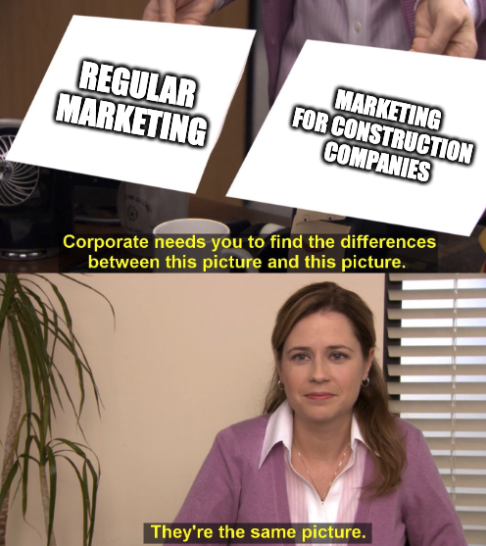
If your marketing strategy feels like it’s missing the mark, it’s probably because you’re applying a playbook that wasn’t built for construction in the first place.
The tactics might be solid, but they’re not tailored to work in the industry… and that’s where everything falls apart.
The bottom line is marketing for construction is different, and here’s why:
1. The Sales Cycle Is Longer (and Much More Complex)
In eCommerce, a well-placed ad can drive a purchase in minutes. In SaaS, a demo request might come in after a couple of blog posts.
But in construction? The decision timeline can stretch for months (sometimes, even years).
Here’s what that actually looks like:
- A developer is planning a project 12 months out and researching potential contractors right now.
- A commercial client is gathering quotes while the design phase is still being finalised.
- A government contract is in early tender stages, and the buyer’s shortlisting based on reputation and digital presence.
For you, this opens up an opportunity to build sustained awareness and trust over time.
If your marketing only focuses on capturing short-term demand (like pushing for a “Get a Quote” CTA on the homepage), you’re likely ignoring 90 per cent of your actual sales funnel.
2. Reputation Is Everything
In most industries, you can get away with aggressive growth tactics (think: fearmongering or high-scarcity advertising, heavy discounting).
With construction, however, that kind of pushy marketing raises eyebrows.
Your buyers aren’t buying a simple off-the-shelf product… they’re trusting you with a project that might be worth millions.
Word-of-mouth still dominates this industry, which means that a single bad experience spreads quickly.
On the other hand, a solid reputation can carry your business through years of growth. Your marketing needs to reflect that, which means it also has to be credible.
To effectively show your credibility through your marketing, you could:
- Show real project outcomes, not just pretty pictures: Include details like timeline, budget, challenges, and client feedback. A before-and-after photo carousel paired with a short write-up beats a polished, vague portfolio any day.
- Let your clients do the talking: Ask for testimonials right after project handover when results are fresh and satisfaction is high. Even a two-line quote can make a big difference when placed next to relevant work.
- Use proof points across your site: Mention safety accreditations, team qualifications, repeat business stats, or contract win rates. These are the credibility cues buyers look for, especially in B2B and tender-heavy spaces.
3. Your Audience Speaks a Different Language
Let’s be honest: most “industry content” written by generalist marketers sounds like it’s been prompted and proofread by someone who’s never worn steel caps. If your content talks about “maximising engagement touchpoints,” you’ve already lost them.
Construction buyers are practical, technical, and limited on time. They want straight answers to real problems like:
- What do you build?
- What kinds of jobs have you done?
- Can you work to spec and hit the deadline?
- Do you know how to manage site safety and subcontractors?
The key is creating content that answers those questions simply and thoroughly.

Here’s a guide on how you can use AI to align your marketing strategy with your audience for better results.
What Actually Works In Marketing for Construction
Construction marketing isn’t about being the loudest company in the industry (in fact, it’s quite far from it). Instead, it’s about being the most relevant and trustworthy option at the exact moment someone’s looking for a solution…
And that means using strategies built specifically for how your buyers think, research, and make decisions.
Here are four tactics that are a better fit when it comes to marketing for construction companies:
1. Content That’s Targeted, Practical, and Industry-Specific
Let’s be blunt: many content agencies treat construction like any other industry, and it shows.
And while the fundamentals work across every industry, it’s important to pivot in some areas to match the industry. The same is the case when it comes to construction.
Here’s how to create content that delivers value and is much more likely to work in this industry:
- Start with the site plan: What are your audience’s biggest questions at each stage of their decision-making process? Are they early in research, weighing up contractors, or ready to invite tenders?
- Use technical detail to show credibility: If you’ve got decades of experience with fit-outs, don’t hide it behind vague headlines like “Why Choose Us”. Instead, write content like “How to Plan a 4-Week Medical Clinic Fit-Out Without Losing Operational Days.” Specificity builds trust.
- Ditch the “top 5 tips” format: That style might work for lifestyle brands, but it feels lightweight in construction. Instead, focus on walkthroughs, “what to expect” guides, and detailed project breakdowns that mirror real industry conversations.
- Make it modular: Great content becomes even more valuable when it feeds into your sales process. Turn blogs into checklists, checklists into lead magnets, and combine them with follow-up emails.
With the approaches above, you can spend less time wondering what works and focus more on delivering actual value that your potential clients always look for.
Construction buyers don’t want to just read: they want to understand enough to make a sound decision.
Clear, specific, industry-literate content helps them make informed decisions, reduces friction in the sales process, and positions your business as the one that “gets it”.
To make your next content brainstorming session easier, use this recap table as a reference:
| What to Include | Why It Works | Example |
| Content that answers specific questions your clients are actively searching for | Builds trust by showing you’re helpful and knowledgeable at the research stage | Blog: “How Much Does a Commercial Fit-Out Cost in Sydney (2025 Guide)” |
| Content focused on pre-tender or project planning concerns | Attracts early-stage decision-makers and positions your business as a valuable partner | Article: “What to Include in a Construction Tender Response (For Contractors)” |
| Explainers about your process, compliance, and capabilities | Reduces perceived risk by showing you’re thorough and experienced | Page: “Our Process: From Site Assessment to Handover” |
| Downloadable checklists and planning tools | Adds practical value and gives your sales team content they can use in follow-ups | Lead magnet: “Commercial Fit-Out Planning Checklist for Project Managers” |
| Use of plain language with industry nuance | Ensures content is accessible, relevant, and sounds like it came from someone who understands the space | Tip: Avoid marketing jargon like “synergy” or “scalable solutions” |


The Best 5 Topics to Drive Traffic Leads & Sales
2. Case Studies That Speak to the Right Audience
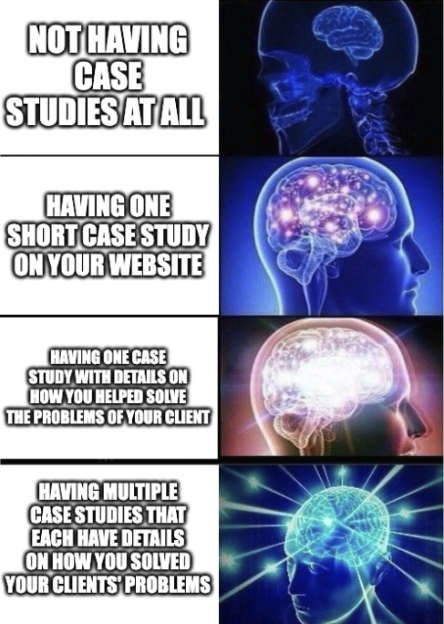
Your future clients want to see who you’ve worked with, what problems you solved, and what results you delivered… but in a format that matches how they think.
What works:
- Short, punchy project recaps (with real photos; stock photos aren’t recommended)
- Clear outcomes: budget met, deadlines hit, problems solved
- Industry-aligned: show commercial projects to win more commercial work
(Bonus points if your client gives a testimonial on camera.)
Why it works:
Case studies reduce perceived risk. They prove you’ve done this before and you can do it again, which is often the final nudge a hesitant buyer needs.
With case studies that can help potential clients see your capabilities, you can equip yourself with one of the highest-converting tools for marketing construction companies.
3. SEO That Captures High-Intent Traffic
When someone searches “civil contractors in Brisbane” or “shopfitting company near me,” they’re not just shopping around: they’re looking with intent. If you’re not ranking for those kinds of bottom-of-funnel searches, you’re missing warm leads.
What works:
- Service area pages optimised for your locations
- Clear service breakdowns (e.g. “Concrete Slabs for Industrial Builds”)
- FAQ sections targeting common objections
- Schema markup, fast loading, and mobile-friendly design
Why it works:
Organic visibility gets you in front of people who are actively looking for what you offer. And unlike paid ads, the effect compounds over time.
4. Digital That Supports (Not Replaces) Offline Sales
Construction is, for the most part, a relationship-driven industry. Your digital presence needs to reinforce the trust you build in real life, not feel disconnected from it.
What works:
- A website that mirrors how you actually speak in tenders or meetings
- Project sheets your sales teams can send in follow-ups
- CRM integration to track where leads come from and when to follow up
- Email sequences that support your team’s pipeline without spamming leads
Why it works:
It creates consistency across your touchpoints. Whether someone finds you online, hears about you from a mate, or meets you at a trade show, your brand message, tone, and credibility all align.
3 Actionable Construction Marketing Steps You Can Take Today
Let’s be clear: effective construction marketing doesn’t start with a 50-page strategy document or a complete rebrand.
Results start with small, intentional shifts that align your messaging, targeting, and proof with how your buyers make decisions.
Here are three specific, practical steps you can start today:
1. Audit Your Marketing Through a Construction Lens
Most construction businesses think they’ve got the basics covered: a website, a few social posts, maybe a brochure or capability statement. But when you audit those assets with a construction buyer in mind, the cracks start to show.
Here’s what to look for:
- Clarity: Is it immediately obvious what you do, where you operate, and what types of projects you specialise in?
- Credibility: Are you using real project photos and named clients, or relying on stock images and generic testimonials?
- Relevance: Is your language tailored to construction professionals? Or does it sound like it was lifted from a SaaS blog?
Now, if your digital presence feels generic, vague or outdated, you’re giving buyers a reason to move on. Especially in construction, where trust and professionalism matter as much as price.
What to do now:
- Print your homepage and service pages. Give them to someone outside your business. Ask them to explain, in 10 seconds, what you do and who it’s for.
If they can’t? Rewrite it.
- Replace all stock images with real project photos. If you don’t have any, book one site shoot this month.
- Add a simple banner to your homepage: “Trusted by [X], [Y], and [Z] across [location] for over 10 years.” Instant trust signal.
2. Map the Real Buyer Journey (And Who’s Involved)
Most construction projects don’t have a single decision-maker. If your marketing only speaks to one role, you’re leaving the rest of the people who can vouch for your business uninformed or unconvinced.
Start by mapping these 3 core roles:
- The Researcher: Usually a junior team member (project coordinator, EA, office manager). They Google, shortlist, and do the legwork.
- The Evaluator: Often a senior PM, estimator, or procurement lead. They want to see capability, past performance, and risk factors.
- The Approver: This is the business owner, director, or client-side PM. They care about big-picture outcomes: cost, time, and trust.
If your website only speaks to one of these people, you’ll stall the buying process. You need messaging that covers technical detail, commercial outcomes, and big-picture credibility.

Comprehensive Guide: Creating a Customer Journey Map for Sales Enablement
What to do now:
- On your homepage, add a “Why Choose Us” section. Break it into three columns: Proven Delivery, Detailed Site Management, and Budget & Time Confidence. Each column speaks to a different stakeholder.
- Create a capabilities page that highlights past projects by sector (e.g. retail, medical, education). That way, evaluators can find what’s relevant to them fast.
- Add PDF project summaries that your sales team can send directly to procurement teams.
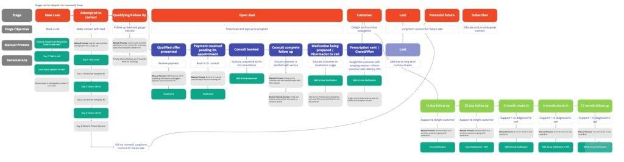
This can be very overwhelming to look at for the first time; but don’t worry, we feel you. We’re going to break this down step by step later on. But first, let’s talk about how a Customer Journey Map can help you. To view this image in full size see here.
3. Start Publishing Authority Content
Decision making involves research, and you can help your potential customers find the best route for their project by answering their questions.
This is where content (like blog articles) comes in.
We recommend writing three blog articles per week if you’re serious about making a dent in your space.
When you’re brainstorming for content that converts, think about the questions customers will be asking or concerns they might have. For example, they might ask (or be concerned about):
- Delays in commercial fit outs
- What compliance risks do I need to be worried about?
In response to those, you could write articles like:
- “What delays a commercial fit-out (and how to avoid it)”
- “Top 5 compliance risks in school construction projects”
Authority content, when done right, builds your company’s visibility on search engines like Google while proving that you’ve done the work before.
It shows you understand the problems buyers are trying to avoid. And it positions you as the smarter, safer choice… long before you’ve even spoken to them.
What to do now:
- Choose one common question your sales team hears before a project starts and write a blog post answering it.
- Take one recent project and write a case study on it. What was the challenge, what did you do, and what was the outcome? Add one quote from the client.
- Add a “Knowledge Hub” or “Insights” tab to your website, even if it only has two posts to start. This way, you’re signalling authority that makes passive returns and generates leads for your business.
The Anatomy of a Learning Centre that Generates Revenue on Your Website
So, What’s Next?
You’ve made it this far because something about your marketing isn’t working (or not working well enough).
You now know that it’s not because you’re bad at what you do. It’s because you’ve been using the wrong strategy for your industry. And that disconnect is costing you; not just in budget, but in lost tenders, missed opportunities, and wasted time chasing leads that go nowhere.
And here’s the real urgency to put everything you’ve just read into practice:
Every month you wait is another month where your competitors (the ones who are investing in tailored marketing) show up first, build trust faster, and win jobs you should’ve been shortlisted for.
The longer you delay, the harder it gets to catch up…
So, don’t leave this as another “something we’ll look into later.”
Still thinking if it’s the right time to invest in your marketing or not? Here’s a guide on investing in marketing when times are good vs. bad help you make your next move.
About the Author





Get the best content marketing insights right in your inbox!
Subscribe to our Newsletter and get marketing insights delivered to your inbox every week.