








How to Run Facebook Ads That Actually Convert: A Meta Advertising Agency’s Guide for Australian Businesses

Key Takeaways
Facebook ads and Meta ads are the same thing, run through Meta Ads Manager: a properly built campaign outperforms a boosted post every time.
- Facebook ads work for B2B businesses, but expect a lower CTR (~0.78%) and a higher cost per lead ($60–$70+) than consumer benchmarks.
- Realistic 2026 Australian costs: $0.70–$1.70 CPC, $9–$20 CPM, and $22–$38 cost per lead for general campaigns.
- Budget $20–$50 a day minimum for a real test. Meta’s official $1–$5/day minimum keeps a campaign live but won’t generate enough data to optimise.
- GST depends on your ABN. Add it to Ads Manager, or Meta adds 10% GST to every invoice by default.
- Detailed targeting is now a suggestion, not a hard filter. Broad, Advantage+ targeting is the default in 2026: feed it strong signals and let it work.
- Judge campaigns on leads and pipeline, not clicks. Watch frequency (2.5–3.0+ signals fatigue) before performance actually drops, and scale budget in ~20% steps every 2–3 days rather than swapping creative first.
- DIY suits modest budgets and simple offers. A Meta advertising agency typically costs 10–20% of ad spend or a flat $800–$3,000+/month.
So, you want to know how to make Facebook ads work instead of outsourcing the job to a Meta advertising agency and crossing your fingers.
But there’s a more honest question first: does Facebook advertising even work for a business like yours?
Maybe you’ve already clicked “Boost Post” on your page.
You picked up a few likes, a comment or two… then waited for the phone to ring. It didn’t.
Well, here’s the thing: boosting a post and running a proper Meta ad campaign are built for different jobs.
One spreads a post further. The other is engineered to turn strangers into leads.
It’s a pattern that shows up on ad accounts across Australia, again and again. At RedPandas, we see it constantly on accounts inherited from other providers. Money spent, engagement won, and the sales pipeline is exactly where it started.
By the end of this guide, you’ll know how to make Facebook ads that generate leads, not just likes.
You’ll understand what a campaign really costs in Australia, and how to set one up step by step. You’ll also see how Meta’s 2026 AI-driven tools change that process.
And you’ll know exactly when it’s worth calling in a Meta advertising agency instead of doing it yourself.
Quick Answer
Facebook and Instagram ads work for Australian businesses, including B2B and considered-purchase companies, when built as proper campaigns rather than boosted posts.
Budget AUD $20 to AUD $50 a day for a lead generation campaign to give Meta’s algorithm enough data to optimise properly. Setup takes under two hours: create a Meta Business Suite account, install the Meta Pixel and Conversions API, then launch a conversion-focused campaign through Meta’s Advantage+ automation.
A Meta advertising agency can typically have all of this live and tracking correctly within a week if you’d rather skip the learning curve.


How to Give RedPandas Access to Your Google Ads and Meta Ads Accounts for a Complimentary Paid Ads Audit
What Are Facebook & Meta Ads?
Facebook ads and Meta ads mean the same thing: Meta is Facebook’s parent company, and every ad you run sits inside one platform: Meta Ads Manager.
That’s why a Meta advertising agency and a Facebook advertising agency describe identical work.
Both build, launch, and manage campaigns across Meta’s full network, not just Facebook itself.
Facebook alone reaches 3.07 billion monthly active users worldwide. Across Meta’s whole family of apps, that figure climbs past 3.5 billion daily active people, including Instagram, Messenger, and WhatsApp.
Where Your Ads Actually Appear
When you make Facebook ads through Ads Manager, Meta can show them across:
- Facebook Feed and Marketplace: the widest reach, especially for older and regional Australian audiences
- Instagram Feed, Stories, and Reels: stronger for visual products and younger professional audiences
- Messenger: inbox-based ads and click-to-message campaigns
- Audience Network: third-party apps and websites showing Meta ads
- Threads: Meta’s newest placement, with advertising expanding through 2026 as the platform’s daily mobile audience overtook X’s
You don’t need to pick placements manually in most cases. Meta’s Advantage+ system automatically tests your ad across these placements and shifts budget toward whichever performs best.
The 6 Ad Formats You Can Use
Every Meta Ads campaign is built from one or more of these formats:
| Ad Format | What Is It? |
| Image ads (now includes multi image ad) | A single photo, the simplest format to produce |
| Video ads (now inludes multi video ads) | Includes short-form vertical video, now the dominant format on Meta |
| Carousel ads | Multiple images or videos that a user or viewer can swipe through |
| Collection ads | A catalogue-style format suited to multiple products or services |
| Lead ads | A native form that captures enquiries without leaving Facebook or Instagram |
| Advantage+ Sales campaigns | Meta’s AI-led format that automates targeting, budget, and creative testing together |
For most B2B and service businesses, lead ads and video ads do the heavy lifting. They’re built for enquiries, not just browsing.
Making Facebook ads, in practice, means choosing a format and objective inside Ads Manager and letting Meta’s AI handle most of the delivery decisions.
A Meta advertising agency typically manages the whole stack of creative, setup, tracking, and reporting on a client’s behalf.
Do Facebook Ads Actually Work for B2B Businesses?
Yes, but the numbers look different from what a consumer brand sees. Setting the wrong expectations is why so many B2B businesses give up early.
B2B click-through rates average around 0.78 per cent on Meta, well below the 2.19 per cent platform-wide average. That’s expected for a business audience on a platform built mostly for consumer scrolling.
Business buyers scroll past ads the same way anyone else does. Fewer stop, but the ones who do tend to be genuinely interested.
Some 2026 benchmarks put the average B2B cost per lead at AUD $60 to AUD $150, compared to roughly AUD $22 to AUD $28 across all industries. Professional services and considered-purchase offers sit at the higher end of that range.
That gap reflects a smaller, more valuable audience and a longer decision-making process. Budget for it accordingly rather than judging performance in the first fortnight.

Paid Media Benchmarks: Where Do You Stand Against Your Competitors?
How to Make Facebook Ads: A Meta Advertising Agency’s Step-by-Step Setup
Every Meta ad campaign is built from three layers:
- Campaign: This sets your objective
- Ad set: This controls your audience and budget
- Ad: This holds your creative
Understanding this hierarchy makes everything below easier to follow.
Here’s how to make Facebook ads, from a blank account to your first campaign live:
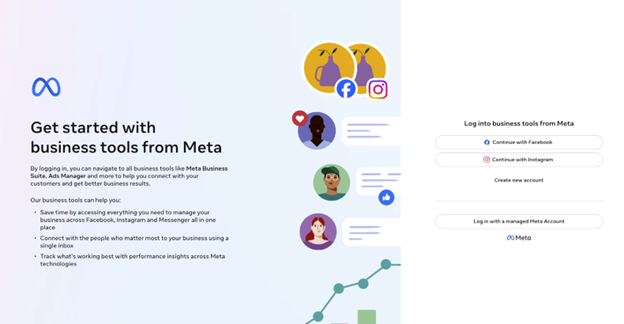
1. Create a Meta Business Portfolio: Go to business.facebook.com and set up your business account. You’ll need a verified email and an existing Facebook Page.
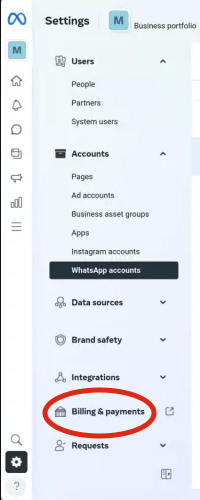
2. Add your ad account and payment method under the “Billing and Payments” tab: This sits inside your Business Portfolio and controls billing for every campaign you run.
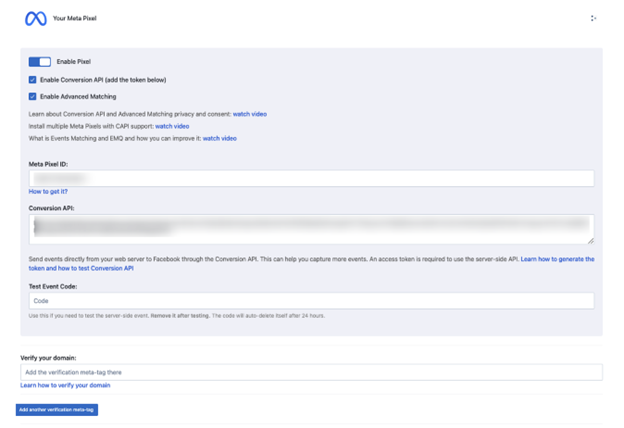
3. Install the Meta Pixel and Conversions API: Add both to your website so Meta can track what happens after the click: enquiries, leads, and purchases.
4. Choose your objective: For most lead generation goals, select Leads or Sales as your objective. Match the conversion event to what you actually want: a form fill, a call, or a purchase.

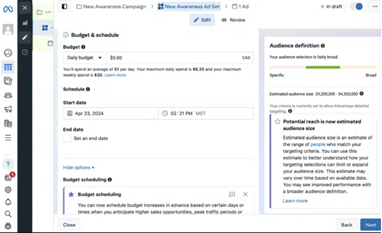
5. Build your ad set: Set your audience, budget, and schedule. Most 2026 accounts perform best with a broad Advantage+ audience rather than narrow manual targeting.
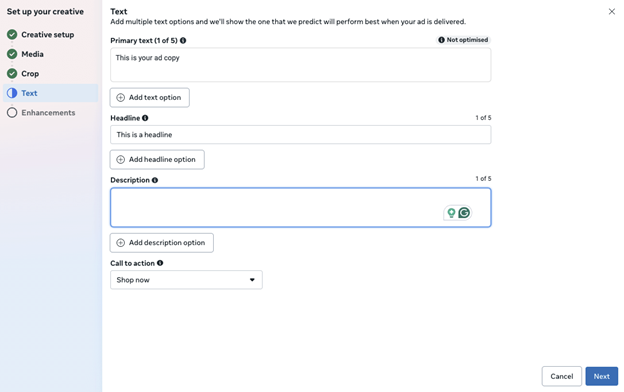
6. Build your ad: Upload your creative, write your copy, and choose a call-to-action button that matches your objective.
7. Publish, then leave it alone: Meta needs about a week and roughly 50 conversions per ad set to exit the learning phase. Resist the urge to edit daily.
Before any campaign goes live, run through this checklist:
- The Pixel fires correctly on your confirmation or thank-you page both server side and website side
- Your Facebook Page and ad account are properly connected
- Your destination URL or lead form actually works on mobile
- You’re running at least two or three ad variations, not just one
A Meta advertising agency will typically run this exact checklist on every account before spending a dollar of client budget.
Skipping it is the single most common reason a first campaign underperforms.
Choosing the Right Meta Ads Objective, Audience & Budget
Getting the objective right matters more than any targeting decision that follows.
Meta optimises delivery around whatever event you tell it to chase, so a mismatched objective wastes budget from day one.
For most ANZ B2B and considered-purchase businesses, that means choosing Leads or Sales. So, you’ll need to set the conversion event to an actual enquiry or booking, rather than a page view or click.
Why a Meta Advertising Agency Treats Interest Targeting as a Suggestion
Meta removed a large number of detailed interest categories from Ads Manager on 15 January 2026. Anything you select now, such as age, gender, interests, or behaviours, works as a starting signal that Meta’s algorithm can build from and expand beyond.
Location, language, and minimum age still hold as fixed limits. Everything else guides the algorithm rather than restricting it.
For most businesses, the practical approach in 2026 looks like this:
- Feed Meta your best signals: Upload your customer list and connect the Conversions API so the algorithm learns from real conversions
- Favour broad audiences over narrow ones: Stacking several interests to get specific usually shrinks the pool and slows delivery down
- Keep custom audiences for retargeting: Website visitors, email lists, and past enquirers remain some of the highest-value audiences you can build
- Reserve manual targeting for compliance: Housing, employment, credit, and social or political ads still require manual “Original Audiences” targeting, since Advantage+ isn’t available for these categories
A Meta advertising agency will typically test broad Advantage+ targeting against a manual, interest-seeded audience early on. Performance data then decides which one earns the larger share of the budget.
Budget Allocation: How Much Goes Where
A common, well-tested split among experienced Meta advertisers in 2026 looks like this:
| Budget Share | Where It Goes |
| 70 to 80% | Broad, Advantage+ targeted campaigns |
| 20 to 30% | Retargeting (website visitors, engagers, customer lists) |
Many ad sets on a small budget is a common mistake because it doesn’t give Meta’s Andromeda engine enough data to work with.
Two or three well-funded ad sets are more likely to outperform six thin ones, since each one reaches Meta’s roughly 50-conversions-a-week threshold faster.
How Much Do Facebook Ads Cost in Australia? A Meta Advertising Agency’s Real Numbers
Search this question and you’ll find wildly different answers. Depending on which report you read, Australian CPM ranges anywhere from $9 to $24.
That inconsistency is normal because different trackers pull from different account sizes, industries, and time periods.
Here’s an approximate range, based on cross-checking multiple 2026 benchmarks:
| Metric | Typical Range (in AUD) | What Drives It |
| CPC (cost per click) | $0.70 to $1.70 | Objective, industry, placement mix |
| CPM (cost per 1,000 impressions) | $9 to $20 | Competition, seasonality, audience size |
| Cost per lead (general) | $22 to $38 | Offer strength, landing page quality |
| Cost per lead (B2B) | $60 to $70+ | Smaller audience, longer sales cycle |
These ranges shift with the calendar. Costs typically climb 15 to 40 per cent through November and December as more advertisers compete for the same Christmas and Boxing Day audiences.
What a Meta Advertising Agency Recommends as a Starting Budget
Meta’s technical minimum is just AUD $1 to AUD $5 a day. That keeps a campaign live, but it won’t generate enough data for the algorithm to optimise properly.
For a real lead generation test, budget a minimum of AUD $100 a day. Meta’s system needs roughly 50 conversions a week per ad set before it exits the “learning phase” and delivery stabilises.
A Meta advertising agency will usually recommend concentrating that budget into one or two ad sets. Spreading it thinly across five or six ad sets slows the algorithm down instead.
Don’t Forget GST on Your Ad Spend
If your business is GST-registered and you’ve added your ABN to Ads Manager, Meta typically won’t charge GST on your invoices. A reverse charge may apply instead, which usually nets out to zero once you report it correctly on your BAS.
But if you haven’t added an ABN, Meta generally treats your account as a consumer purchase and adds ten per cent GST to every invoice. Add it early to avoid overpaying and reconciling months of invoices later.

What Your CFO Wants to See Before Approving a Paid Media Advertising Agency
DIY vs. Hiring a Meta Advertising Agency: Which Is Right for You?
Running your first campaign yourself is a genuinely good way to learn the platform. On the other hand, handing it to a Meta advertising agency is a genuinely good way to save time and avoid expensive mistakes.
Both are valid, depending on your situation.
What a Meta Advertising Agency Actually Costs in Australia
Fees generally fall into one of two structures:
| Fee model | Typical range | Best suited to |
| Percentage of ad spend | 10 to 20% | Growing budgets, scaling accounts |
| Flat monthly retainer | – Small-Medium Business: AUD $6000/month (+ AUD $6,000 onboarding fee) – Medium-Large Businesses: AUD $8,500/month (+ AUD $7,500 onboarding fee) – Large-Enterprise Businesses: AUD $10,000/month (+ AUD $8,500 onboarding fee) | Predictable, steady ad spend |
Check out our paid media management pricing page for a clearer idea of what a flat monthly retainer includes.
Your ad spend is billed separately and directly to Meta. The agency fee sits on top of that, covering strategy, creative, testing, and reporting.
When DIY Makes Sense, and When to Hand It Over
DIY makes the most sense when your budget is modest and your offer is straightforward. It also helps if someone on your team has a few hours a week to learn Ads Manager properly.
Handing campaigns to a Meta advertising agency makes more sense once any of these apply:
- Your marketing lead is already stretched across five other channels
- Your sales cycle is long enough that leads need nurturing through a CRM, not just counting in Ads Manager
- Previous in-house attempts produced likes and clicks, but no real pipeline
- You’re managing more than one or two campaigns at a time
An agency earns its fee by turning campaign management into someone’s actual job. That’s different from treating it as a Friday-afternoon task squeezed between everything else.
For B2B businesses specifically, the case strengthens further: longer sales cycles and smaller, harder-to-reach audiences reward focused, full-time attention, connected properly to your CRM data.
Contemplating whether you should get an in-house specialist or hire an agency? This guide on the advantages of getting a media buyer for your business might help.
Frequently Asked Questions: A Meta Advertising Agency’s Quick-Answer Guide
How do you make Facebook ads?
Making Facebook ads means creating a Meta Business Portfolio, installing the Meta Pixel and Conversions API, then building a campaign in Ads Manager with a clear objective like Leads or Sales. Choose your audience, set a daily budget of at least AUD $20 to AUD $50, upload creative, and publish. Most campaigns need a week to exit Meta’s learning phase.
How much do Facebook ads cost in Australia?
Facebook and Instagram ads in Australia typically cost AUD $0.70 to AUD $1.70 per click and AUD $9 to AUD $20 per 1,000 impressions. CPL usually falls between AUD $22 and AUD $38 for general campaigns, rising to AUD $60 to AUD $70 or more for B2B and professional services with longer sales cycles.
Do Facebook ads work for B2B businesses?
Yes, though B2B campaigns look different from consumer ones. Click-through rates average around 0.78%, well below the platform average, and cost per lead runs higher due to smaller, more valuable audiences. Meta works best for B2B when it builds awareness and retargets website visitors, feeding warmer leads into email or sales conversations rather than closing deals outright.
What’s the difference between boosting a post and running Facebook ads?
Boosting a post is a simplified promotion tool with basic audience options. Running ads through Meta Ads Manager gives you full control over objectives, audiences, and placements. Boosting suits quick visibility; Ads Manager suits campaigns built to generate leads or sales.
Do I need a Meta advertising agency to run Facebook ads?
No, but it depends on your time and budget. DIY works well for modest budgets and simple offers, provided someone can learn Ads Manager properly. A Meta advertising agency makes more sense once campaigns need CRM integration, ongoing creative testing, or management across multiple channels, typically for a flat fee or 10 to 20% of ad spend.
What’s the minimum budget for Facebook ads in Australia?
Meta’s technical minimum is AUD $1 to AUD $5 a day, but that’s too low to generate meaningful data. For a real lead generation test, budget AUD $20 to AUD $50 a day, concentrated into one or two ad sets. Meta’s algorithm needs roughly 50 conversions per ad set each week to exit the learning phase and stabilise delivery.
Is GST charged on Facebook ads in Australia?
It depends on your account setup. If you’re GST-registered and have added your ABN to Ads Manager, Meta typically won’t charge GST directly, though a reverse charge may apply on your BAS. Without an ABN, Meta generally treats the account as a consumer purchase and adds 10% GST to every invoice.
What is Advantage+ and do I need to use it?
Advantage+ is Meta’s AI-driven automation suite that handles targeting, placements, budget, and creative testing. It’s enabled by default for most new campaigns in 2026. You don’t strictly need it, but most accounts perform better by feeding Advantage+ strong signals, like a customer list and Conversions API data, than by fighting it with fully manual targeting.
How do you measure if Facebook ads are working?
Judge campaigns on leads and pipeline, not clicks or impressions. Track cost per lead alongside how many of those leads become genuine sales conversations in your CRM. Watch frequency as an early warning sign of creative fatigue, and treat rising CPM as a signal worth reviewing alongside conversion rate.
Make Facebook Ads Work For Your Business
Making Facebook ads work comes down to a few fundamentals:
- Run a real campaign instead of a boosted post
- Send people to a landing page or lead form built for the offer
- Give Meta enough budget to actually learn
Get those right, and numbers like cost per lead, frequency, and CPM become useful signals instead of confusing noise.
Whether you build that first campaign yourself or hand it to a Meta advertising agency, the goal stays the same: leads that turn into real sales conversations, tracked all the way through your CRM.
Ready to see what proper Meta ads management could do for your pipeline? Book a free consultation call with our paid media experts through the link below.

Get a Free Meta Ads Consultation With RedPandas’ Experts
About the Author
RedPandas Digital is a HubSpot Diamond Solutions Partner and Meta advertising agency based in Sydney, Australia. The team runs Meta and Facebook ad campaigns for ANZ mid-market businesses across HubSpot, B2B SaaS, education, and professional services.
Every campaign connects back to a real CRM pipeline, rather than platform-reported clicks.
RedPandas’ team has rebuilt Meta ad accounts for clients including Peak Education and continues HubSpot and paid media work across ANZ.
About the Author




Get the best content marketing insights right in your inbox!
Subscribe to our Newsletter and get marketing insights delivered to your inbox every week.