

Related Posts



Podcasts




Setting a digital marketing budget sounds simple until you actually have to defend it.
One department wants to double ad spend. Another argues organic growth is “free.” Finance just wants predictable returns.
And somehow, you’re meant to turn all that noise into a number that drives results and satisfies everyone.
Well, here’s something to consider: most budgets don’t fail because the math’s wrong.
They fail because the process starts in the wrong place, which is with a target number instead of a clear purpose.
A sound budget isn’t about how much you can spend; it’s about knowing what your spend is designed to achieve and how to prove it’s working.
Marketers like yourself are almost always under pressure to deliver short-term wins while still building long-term brand strength when numbers are up for discussion.
And while it’s true that the best budgets manage both, there’s one thing that many miss out on: it has to be rooted in business goals, not guesswork.
In this article, you’ll learn how to set a digital marketing budget that’s realistic, measurable, and defensible. You’ll see what factors might justify an increase, and how to explain those decisions in a way that builds confidence rather than friction.
What a Strong Digital Marketing Budget Could Look Like

A good digital marketing budget, contrary to what most might expect, isn’t about cutting costs or chasing trends.
In reality, it’s about achieving two things at the very core of all the numbers on the sheet: balance and intention. And every line should have a reason for existing once you’re done putting it all together and weighing alternatives.
The goal is to spend where it creates measurable impact and trim where it doesn’t.
Start with Revenue Alignment, Not Guesswork
Many teams begin budgeting by picking an arbitrary percentage of revenue (often five to 10 per cent).
It’s a fine starting point, but too often it’s where the thinking stops. That’s like deciding to fill your car with “about half a tank” without checking how far you need to go.
Instead, begin with what you need to achieve and work backwards. For example, if your revenue target is AU$10 million and you know your average deal value and conversion rate, you can calculate how many leads you need and what it costs to get them. That’s your anchor.
As an example, here’s how a mid-sized B2B company might structure an AU$700,000 digital marketing budget:
| Category | Per cent of Budget | Purpose / Logic | Example Activities |
| Paid Search & Social | 35 per cent (AU$245,000) | Drive immediate, measurable leads. Fast results but higher cost per lead. | Google Ads, LinkedIn campaigns, paid webinars. |
| SEO & Content Marketing | 25 per cent (AU$175,000) | Build long-term visibility and lower cost per lead over time. | Blog strategy, video production, case studies, SEO optimisation. |
| CRM & Marketing Automation | 15 per cent (AU$105,000) | Improve lead quality and conversion efficiency. | HubSpot integration, lead scoring, automated email sequences. |
| Creative & Brand Development | 10 per cent (AU$70,000) | Strengthen recognition and differentiation in crowded markets. | Rebrand rollout, design assets, campaign visuals. |
| Data, Analytics & Tools | 10 per cent (AU$70,000) | Prove ROI and inform optimisation decisions. | Attribution tracking, dashboarding, analytics software. |
| Training & Experimentation | 5 per cent (AU$35,000) | Keep the team ahead of trends and test emerging channels. | New ad formats, pilot projects, upskilling courses. |
This example balances short-term gain (paid media) with long-term sustainability (content and automation). Data and tools serve as the feedback loop by telling you what’s working, so future budgets can evolve intelligently.
The key is to choose a budget by working backwards. Focus on your purpose first and then map out what needs to be true to achieve that purpose. That’s how you find your budget.
Budgeting by the Customer Journey
An alternative framework is to allocate spend around the stages of your customer journey rather than by channel. This keeps the focus on buyer intent instead of departmental priorities.
| Journey Stage | Goal | Example Tactics | Suggested Allocation |
| Awareness | Reach new audiences and build trust. | Video ads, thought leadership, sponsored content. | 40 per cent |
| Consideration | Educate and nurture leads. | Case studies, webinars, remarketing, gated content. | 30 per cent |
| Conversion | Turn engaged prospects into customers. | PPC landing pages, CRM workflows, email sequences. | 30 per cent |
This model ensures your spend moves people smoothly from “never heard of you” to “ready to buy.” It’s particularly useful when multiple teams (such marketing, sales, or success) share pipeline responsibility.
The Real Marker of a Strong Budget
A strong marketing budget doesn’t just fund activities: it explains them. Each dollar has a purpose, a measurable outcome, and a clear owner.
When you can show that alignment to leadership, you can shift the conversation from “what does marketing cost?” to “what return are we generating on investment?”
How to Set Your Digital Marketing Budget in 2026, Step by Step
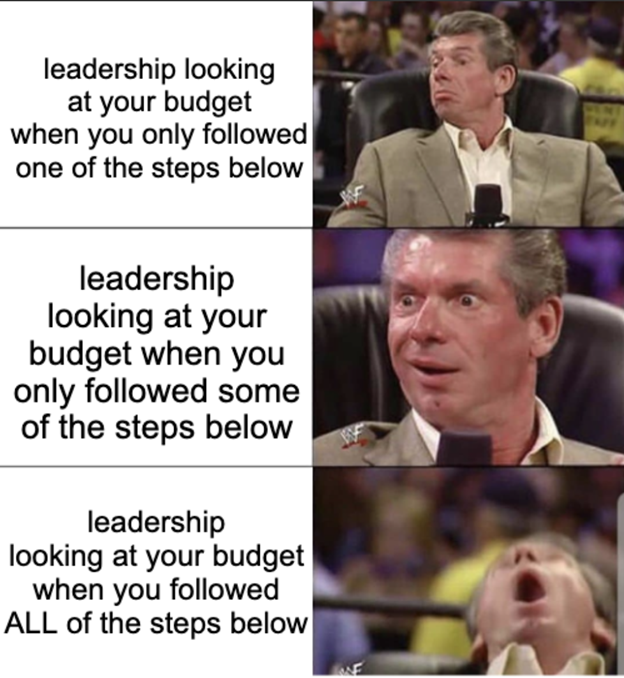
Here’s a five-step process that ties strategy to spend, with enough detail you can use to defend every dollar you allocate:
Step #1: Start With Revenue And Growth Goals
Too many teams pick a number (e.g. “let’s spend eight per cent of revenue”) without asking what that spend is meant to achieve. You can start smarter by linking your budget to your commercial targets.
Generally, it’s recommended to begin with your revenue goal, then eventually translate it into pipeline requirements. This makes it easier to not only calculate a well-rounded allocation but also strengthen the logic behind every figure and the corresponding decision behind it.
Let’s hammer this point home with an example.
If your business aims to generate AU$2 million in new revenue this year, and your average deal value is AU$50,000, you’ll need 40 deals. If your sales team converts one in five qualified leads, that means marketing needs to deliver 200 high-quality leads.
Now, estimate your cost per qualified lead.
If it’s around AU$400, you’re looking at roughly AU$80,000 to hit the target. That number becomes your baseline; not a random “industry average,” but a figure grounded in business maths.
This approach reframes budgeting as reverse engineering growth, instead of funding marketing activity for its own sake.
Another way you can look at it (which is what we also do internally) is to generate 2-4x of your sales target in the pipeline every month.
For example, if your sales target is $200k in new revenue every month, then you’d need to generate $400-800k in the pipeline every month to achieve that sales target.
Pro Tip: Reverse-engineer your marketing budget from the top down. Start with business revenue targets, not arbitrary percentages.
Step #2: Analyse Past Performance And Efficiency
When it comes to allocating your budget, it helps to look backward before you move forward.
Where did you get the most impact for the least spend last year?
Which channels produced leads that actually closed, not just filled the CRM?
Think of it like pruning a tree: you trim the branches that aren’t bearing fruit so the healthy ones get more sunlight.
Let’s say you spend AU$30,000 on paid search and generated AU$150,000 in pipeline, but your social campaigns cost AU$20,000 and generated AU$25,000. Given the numbers, you’ll have a clearer idea of where you could shift the weight of your budget in the future.
But don’t just look at immediate ROI. Some channels (like content or SEO) take longer to bear fruit. The question isn’t only “what made us money last quarter,” but “what’s building predictable growth over time.”
Pro Tip: Grade each marketing channel using a traffic-light system to have better visibility on what’s generating returns and what possibly needs to be scrapped to save cost.
- Green Light – Strong ROI: Scale or maintain.
- Yellow Light – Moderate ROI: Optimise and test.
- Red Light – Weak ROI: Pause or re-evaluate.
Step #3: Balance Short-Term And Long-Term Investments
Budgets go off track when everything is either urgent or vague. The healthiest ones mix both.
- Short-term: Paid media, promotions, and lead-gen campaigns that drive immediate traffic and conversions.
- Long-term: SEO, email nurturing, content creation, and brand building; slower to pay off but far more cost-efficient over time.
If you spend your entire budget on quick wins, you’ll constantly chase results. But if you go too heavy on long-term bets, you might not have enough activity to hit targets this quarter.
That being said, it helps to balance both.
Treat your short and long-term strategies like fitness. Paid campaigns are your cardio: fast burn, quick impact. Content and SEO are strength training: steadier results, but their impact can scale well in the long run.
You need both to stay in shape.
For most companies, a 60/40 or 70/30 split (short-term to long-term) might work at first. But you could shift toward more long-term investment as your brand matures.
Pro Tip: Avoid treating long-term marketing like a luxury. It’s your insurance against rising ad costs and market shifts.


How to Align Your B2B Content Marketing Strategy with Your Sales Goals
Step #4: Account For Tools, Data, And People
Many budgets focus entirely on ad spend and forget the infrastructure that makes marketing work.
Instead of making the same mistake, you can put a more thorough budget together by thinking about:
- CRM and automation tools (ex., adopting HubSpot to replace spreadsheets and manual tracking in 2026).
- Analytics and reporting software.
- Creative production (designers, writers, video).
- People, whether they’re in your internal teams or in the form of agencies.
Without these, the best strategy still fails. An AU$50,000 ad budget run without tracking or optimisation is like driving a race car blindfolded.
Your tools and people aren’t overhead; they’re multipliers. They make every channel work harder.
Pro Tip: If possible, try to allocate a portion of your total budget to enablement (the tech and talent that make execution possible).
Step #5: Build Flexibility In From The Start
No budget makes it through its first contact with reality unscathed.
Platforms update algorithms, competitors shift strategy, and costs fluctuate. So build a 10 to 15 per cent contingency for testing, new opportunities, or market shocks.
Here’s an example that puts this tip into perspective: A sudden spike in cost-per-click might force you to pause one channel and move spend to another. Or maybe a new platform (like Threads or TikTok B2B ads) emerges as a viable option mid-year.
If every dollar is pre-allocated, you’ll miss the moment.
Maintaining a sense of flexibility before you start spending your budget is what can separate strategic marketers from reactive ones. This way, you’re not rewriting your plan every month; instead, you’re giving yourself controlled agility.
Pro Tip: Treat flexibility like a line item, not an afterthought. Label it “innovation reserve”: it signals strategic intent, not uncertainty.
READ: How Can You Justify Your Marketing Spend to Leadership?

How Can You Justify Your Marketing Spend to Leadership?
When you finish this process, you can point to every line in your budget and explain what outcome it’s meant to drive and why it deserves the spend it has.
That clarity turns your budget from a defensive document into a leadership tool.
5 Common Digital Marketing Budgeting Mistakes to Avoid
Just like anything else with your marketing strategy, planning your digital marketing is a process with a lot of room for error. It just so happens that the mistakes you can make while crunching numbers could snowball into more problems, like missed leads and competitive disadvantage.
Don’t worry, though: knowing what to watch out for is usually more than half the battle already.
Now, remember: even solid marketers can fall into the same traps new ones find themselves in if they’re unaware of what problems to avoid.
And most of these mistakes come from trying to look efficient instead of being strategic.
Here’s what each one looks like in practice, why it happens, and how to fix it:
Mistake #1: Copying Last Year’s Numbers
Many budgets start with “What did we spend last year?” followed by “Add five per cent for inflation.”
Now, you might think that doing something like this feels safe (or predictable, even), but it’s probably in your best interest not to rely on older figures from even older strategies.
The thing is that markets move faster, algorithms change, and best practices in digital marketing shift every year. This means that not everything that you put your marketing budget into last year will need an allocation for 2026 (or even work, rather).
And the argument for not copy-pasting last year’s marketing budget into your 2026 proposal makes more sense when you consider that:
- Your audiences may end up shifting platforms entirely in the coming months.
- Search volumes for terms you were targeting in 2025 may change drastically in 2026
- Your own funnel could look completely different depending on what works best with your strategy next year (and what new updates might come out).
To avoid this mistake, you can start drafting your digital marketing budget each year from zero and eventually map it to your current and future goals. Ask: “If we had no historic data, how would we invest to hit our objectives today?”
Now that’s a mindset that forces clarity and relevance, which can be great for future-proofing your budget.
Mistake #2: Chasing “Average” Benchmarks
It’s tempting to anchor to what others spend on their marketing budgets based on what you heard from a guy who knows a guy, who knows a guy.
Five per cent of revenue, 10 per cent, 12 per cent. This all might seem like a good basis for your strategy, but it’s probably a lot further from the truth when you consider that no two budgets, ideally, should be alike.
Benchmarks feel objective, but they ignore your growth stage, deal size, and sales cycle.
Two companies with the same revenue can need wildly different budgets depending on how they generate demand.
Considering all of the factors, it’s more ideal to use benchmarks as a reference, not a rule. Start with your revenue target, work backward through conversion rates and cost per lead, then see how that maps against your industry range.
Mistake #3: Over-Funding Vanity Metrics
Clicks, likes, followers: they look good on reports and slide decks, but they don’t always move the needle.
The danger to your ability to see a strong ROI from your 2026 digital marketing budget here is letting “busy” numbers disguise a lack of progress.
To avoid over-funding vanity metrics, it’s ideal to define what success actually means before setting a budget. For awareness, track brand recall or website traffic growth. For lead generation, on the other hand, track cost per lead and conversion rate.
Your budget should follow the metrics that affect revenue, not applause.
Mistake #4: Forgetting Hidden Costs
Budgets often focus on media spend: the visible number. But success depends on everything around it: agency retainers, creative production, software licences, and even the hours your team spends reporting.
Ignore those and you’ll either overshoot or underdeliver.
To have a more accurate forecast of what you might spend in 2026, start by listing every cost involved in executing campaigns. Separate “working spend” (money going directly to ads or assets) from “non-working spend” (tools, people, management).
Present both transparently, and you’ll be a lot more likely to get support from leadership by being more detailed with your costing.
Mistake #5: No Contingency For Change
Treating your budget as immovable locks you into yesterday’s plan. Algorithms shift, competitors pivot, and new channels appear mid-year. Without room to move, you’ll either miss opportunities or scramble for emergency funds.
One way to equip your digital marketing budget for contingencies is to build in a “flex fund”, one around 5 to 10 per cent of your total available spend for testing, reacting, or scaling winners.
Think of it as the marketing version of R&D. If unused, it rolls into the next quarter. That small cushion keeps you proactive instead of reactive.
READ: How to Implement Design Thinking in Your Marketing Strategy: A Step-by-Step Guide

How to Implement Design Thinking in Your Marketing Strategy: A Step-by-Step Guide
A well-run budget is alive. It evolves as data comes in and goals shift.
Sticking rigidly to static numbers might look disciplined on paper, but in practice, adaptability is what separates growth from stagnation.
Budget With Intent Instead of Instinct
If there’s one truth about digital marketing budgets, it’s this: hesitation costs more than action.
The market won’t wait for you to figure it out… and your competitors might not, either.
Budgets set on instinct or comfort keep businesses still. But, budgets built with intent move them forward because they reflect decisions made with data, confidence, and alignment.
That’s the difference between “spending money” and “investing in growth.”
If you’re unsure where your marketing spend is working hardest (or whether your current budget fits the growth you’re chasing), now is the time to find out.
The smartest leaders review, recalibrate, and refine before the next financial year starts, not after.