









Is Answer Engine Optimisation (AEO) and AI Search Overview Replacing SEO?

You spent years mastering SEO. Keyword mapping, content pillars, backlink strategies, you’ve ticked all the boxes. But now, your traffic’s plateauing. Or worse, slipping.
You Google your best-performing keywords and instead of your article, you see an AI-generated summary stealing the spotlight. No clicks. No visibility. Just your content, repackaged by an algorithm, without attribution.
Search isn’t dead, but it has changed. It’s not just about search engines anymore. It’s about answer engines.
Tools like ChatGPT, Google’s AI Overviews, and Perplexity aren’t pointing people to your website, they’re giving them the answers you wrote, with no promise of a click.
This shift demands a new approach: Answer Engine Optimisation (AEO).
It’s the key to getting seen in a world where fewer people are clicking, and more are skimming summaries.
In this article, you’ll learn what AEO actually means, how it differs from SEO, and most importantly, how to make your content discoverable, usable, and citable by the AI models shaping the future of search.
What Is AEO and Why It Matters in 2025
Answer Engine Optimisation (AEO) is exactly what it sounds like: optimising your content so that AI-powered tools can find it, understand it, and use it to answer questions.
Think of it as SEO’s next evolution. Traditional SEO was all about ranking in Google’s top results.
AEO is about being the source behind the answers shown in:
- Google AI Overviews
- ChatGPT (via web search or plugins)
- Perplexity, You.com, and other conversational search tools
- Voice assistants like Alexa and Siri
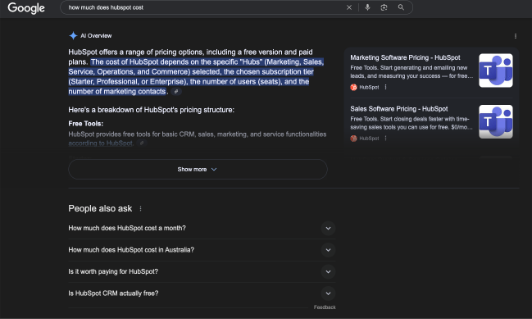
These tools don’t show ten blue links. They summarise, cite, or paraphrase—often pulling answers from structured, well-formatted content. If you’re not optimised for that, your visibility dies quietly in the background.
Here’s an example of what that looks like:
Why This Matters Now
- AI Overviews are already live: Google rolled out AI-generated answers across millions of searches. In some tests, they appear in over 15% of queries, pushing organic links further down or off the page entirely.
- Zero-click searches are the norm: More than half of search queries now end without a click. The answer appears right there, no need to visit a site.
- Conversational AI is becoming the new search interface: People are asking ChatGPT “What’s the best time to send an email campaign?” instead of googling it. That traffic used to go to blogs. Now, it goes to bots.
The New Goal: Be the Source, Not the Result
In an AEO world, the win isn’t just ranking #1, it’s being the answer. If Google’s AI, or Perplexity, or ChatGPT pulls your phrasing into a response, you become the brand that educates, builds trust, and earns authority—even if the user never clicks.

When that user does want to engage in a service/product, who do you think they’re going to go to?
SEO vs AEO: What’s Changing (and What Isn’t)
You don’t need to throw out your SEO playbook. But you do need to update it. AEO isn’t a replacement for SEO, t’s an evolution. To adapt, you need to understand what still works, what needs adjusting, and what no longer matters as much.
What’s Still Relevant from SEO
- Technical SEO: Site speed, mobile responsiveness, and clean code still matter. Google’s crawlers don’t stop being picky just because there’s AI involved.
- Intent-driven content: Content that solves a real problem still wins, especially when the question is clearly defined and answered directly.
- Internal linking & content structure: Clear navigation helps AI understand topic relationships, which can boost your chances of being cited.
What AEO Demands That SEO Didn’t
- Direct answers, not essays: AI looks for clearly structured answers to questions. That means short, punchy explanations, bulleted lists, and FAQ-style formats.
- Schema markup is critical: Structured data helps AI models understand your content. FAQ schema, How-To schema, and Article schema improve your chances of being featured.
- Optimise for questions, not just keywords: AI tools don’t search for “email best practices”, they’re parsing “What’s the best time to send a marketing email?” That shift changes how you frame your headlines, intros, and H2s.
What Matters Less in AEO
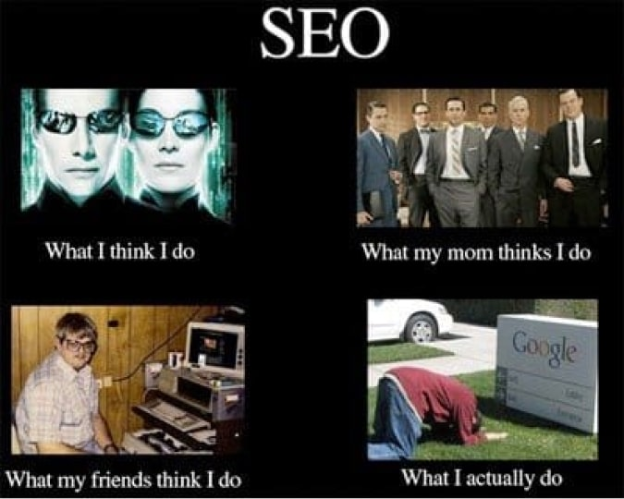
- Keyword stuffing: AI doesn’t reward repetition, it penalises it. Language models prefer clarity over density.
- Link-chasing: Backlinks still matter for authority, but they’re less important if your goal is to be cited in an AI overview or summary.
- Traditional CTR tactics: AI models aren’t drawn to clever hooks or clickbait, they’re reading your content as-is, for accuracy and structure.
Bottom line: AEO builds on your existing SEO foundation, but shifts the goalposts. You’re not just trying to rank—you’re trying to be quoted. That means answering questions clearly, structuring content for AI, and embracing schema to make your intent obvious.
How to Optimise for AEO & AI Search Overview
If you want your content to be picked up by AI models and answer engines, it has to do two things really well: be easily understood and be directly useful.
That means shifting how you write and structure your content… not completely, but intentionally.
Here’s how to do that:
1. Start with Real Questions
Think like your audience. Don’t just target “email marketing best practices”, target the actual questions people ask:
- “When is the best time to send an email campaign?”
- “How often should I email my subscribers?”
- “What’s a good email open rate in 2025?”
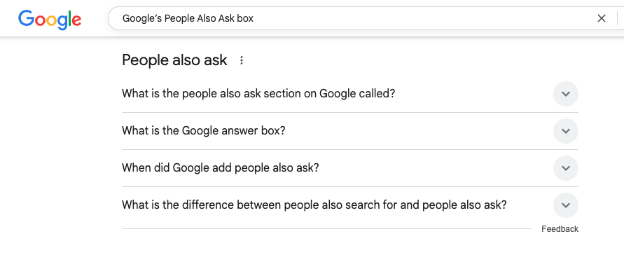
Tools like AnswerThePublic, and Google’s People Also Ask box can surface these quickly.
2. Use Q&A Formatting
AEO thrives on clarity. Use headers that ask questions (like an FAQ), and follow up with concise, well-structured answers.
For example:
“What’s a good email open rate in 2025?
Email open rates vary by industry, but 25–30% is considered strong. Anything below 15% may indicate issues with your subject line or list quality.”
This is exactly the kind of snippet AI looks for.
3. Structure Your Content for Scannability
AI models (and humans) struggle with walls of text. Use:
- Short paragraphs (2–4 lines max)
- Bulleted or numbered lists
- Clear subheadings every 200–300 words
- Highlighted definitions or bolded answers when possible
This helps AI pull precise answers and improves readability at the same time.
4. Add Schema Markup
Implement structured data like:
- FAQ schema
- How To schema
- Article schema
These are signals that tell Google and other engines, “This part is the answer.”
5. Optimise for Featured Snippets and Zero-Click
Think of AEO as an extension of featured snippet optimisation:
- Place key definitions or answers in the first 1–2 paragraphs
- Include concise summaries under H2s
- Use strong introductory lines for every section
These formats are not just useful for Google, they’re exactly what AI tools like ChatGPT and Perplexity parse and cite.
6. Write for Language Models, Not Just Algorithms
AI models don’t care about cleverness; they care about clarity. Avoid vague metaphors, excessive jargon, or meandering intros. Write the way you’d explain something to a smart person in a hurry.
With these strategies, your content won’t just show up, it’ll stand out as the go-to source for AI summaries and direct answers.


20 Tips on How to Improve SEO, Even if Nothing Else is Working
What AEO Means for Your SEO Team
AEO isn’t just a tweak—it’s a shift in mindset. If your team is still focused solely on rankings and backlinks, they’re missing what matters most in 2025: visibility in an AI-first world.
Here’s how this shift affects your team and how to adapt without starting from scratch.
Content Writers: Write for Questions, Not Just Keywords
Writers should start framing content around user intent in its most natural form: a question. Each article, guide, or landing page should clearly answer one or more core questions—ideally within the first 100 words.
Action:
- Encourage writers to begin sections with “What is…” or “How do I…” style subheadings.
- Train them to write with clarity over flair—AI doesn’t reward cleverness, it rewards precision.
SEO Specialists: Prioritise Structure and Schema
SEOs need to go beyond rankings and start thinking about extractability—how well an AI can pull an answer from your content.
Action:
- Add schema implementation to your monthly audit.
- Measure content not just by ranking, but by snippet performance and AI citations (manual tracking in Perplexity or AI models).
Content Strategists: Build AEO into the Briefing Process
If your briefs still only focus on volume and difficulty scores, they’re outdated. Every brief should now include:
- Core questions the content must answer
- Suggested schema markup
- Clear guidance on format (e.g., use of bullets, short paragraphs, etc.)
Action:
- Add question-based sections to your briefs.
- Define KPIs like featured snippet wins or zero-click visibility alongside traffic.
Leadership: Realign Performance Metrics
You can’t optimise for AI outcomes if you’re still measuring success purely by page views. The metrics must evolve:
- Snippet presence
- AI citation frequency
- Brand mentions in conversational queries
Action:
- Expand your KPIs to reflect new visibility goals.
- Educate stakeholders that being seen is now just as important as being clicked.
AEO isn’t about replacing your team’s skill set, it’s about refining it. The fundamentals still matter. But in 2025, the teams that adapt to how people consume answers will be the ones that stay visible.
Checklist: Your First AEO-Ready Content Plan
If you’re just starting to incorporate Answer Engine Optimisation, don’t overcomplicate it. This checklist will help you make your existing content AEO-ready, without a full overhaul.
Step 1: Identify the Questions You Want to Own
- Use tools like AnswerThePublic, or Google’s “People Also Ask” section
- Choose 1–3 questions per piece of content that are tightly aligned to what your audience is actually searching for
Step 2: Rewrite Your Content to Directly Answer Those Questions
- Place the answer immediately below the question
- Keep answers clear, direct, and under 75 words when possible
- Use bullet points and numbered lists to structure information
Step 3: Add Schema Markup
- Use FAQ schema for multi-question pages
- Add Article schema or How-To schema where relevant
- Use a plugin (like Yoast) or Google’s markup helper to simplify the process
Step 4: Optimise for Featured Snippets
- Restate your main question in an H2 or H3
- Add the answer directly below it in plain language
- Use clear formatting and avoid filler text
Step 5: Test Your Content’s Extractability
- Ask AI tools (ChatGPT, Perplexity) your target questions
- See if they pull your content or cite your brand
- Make adjustments if your content is ignored or paraphrased poorly
Step 6: Monitor and Adjust
- Use Google Search Console to track question-based search queries
- Check for impressions in snippet sections and “People Also Ask” boxes
- Note any AI visibility trends and adapt future content accordingly
You don’t need to rebuild your entire content strategy for AEO. You just need to prioritise clarity, structure, and intentionality. With these small but powerful changes, your content will be positioned to not just rank, but to answer.
SEO isn’t dead. But it’s changed. And so, we all need to change how we approach the game.
Want a full SEO guide? Check out our complete SEO Guide below.

The Ultimate SEO Strategy (Updated 2025)
About the Author





Get the best content marketing insights right in your inbox!
Subscribe to our Newsletter and get marketing insights delivered to your inbox every week.