

Related Posts



Podcasts




You’ve done everything right… or so you thought.
The ad copy passed internal checks, the landing page loaded fast, and targeting looked spot on. Yet, once again, your campaign’s been slapped with a bright red “Disapproved”.
If you lead marketing, this moment lands like a punch to the gut. It’s not just about an ad being blocked. It’s another delay. Another budget cycle derailed. Another “update” you owe leadership.
There’s a specific set of reasons your Meta ads aren’t passing approval, and in this article, you’ll get a summarised explanation of the policies you need to keep your eyes on.
Why Paid Campaigns Get Disapproved
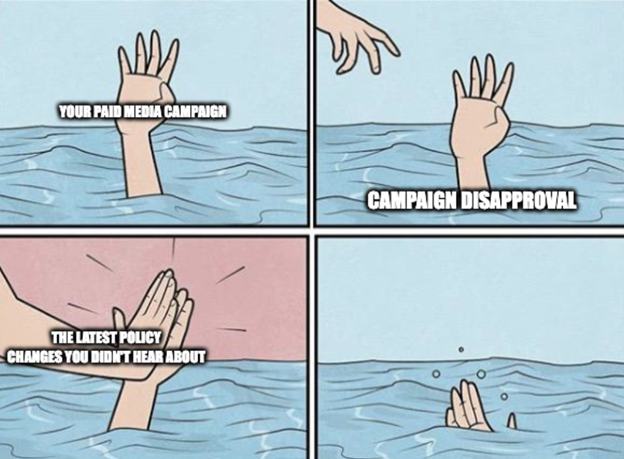
When a campaign gets flagged, the first reaction is usually annoyance. And that annoyance can get even worse when you know that you tried to build it by the book, only to get denied.
But ad platforms don’t see intent. They see signals.
See, their review systems are built to catch risk fast… even if that means catching a few innocent ads along the way.
Think of it like airport security. The scanner isn’t judging you personally; it’s just programmed to react to certain shapes and substances.
The same goes for Meta; it scans for patterns that could harm user experience or platform trust.
Here’s what usually sets it off:
1. Policy Violations
Most marketers don’t set out to break ad rules, but the phrasing that sells can easily sound risky to an algorithm.
And while they may have worked before, these ad copy elements can signal paid media platforms to flag your campaigns:
- Exaggerated or absolute promises like “Get 10X ROI instantly” or “Guaranteed weight loss” are instant red flags. Even if you can prove your claim, the platform can’t verify it, so it errs on the side of caution.
- Personal attributes are another trap. Meta’s policies, for instance, forbid suggesting you “know” someone’s personal condition or circumstance (“Struggling with debt?” or “Feeling anxious lately?”). It’s seen as invasive targeting.
- Sensitive industries (finance, healthcare, legal) face stricter scrutiny. Ads must often include disclaimers or comply with country-specific ad laws.
The review algorithm is like an overly cautious editor. If it’s not sure your line is appropriate, it’ll strike it out… even if it’s technically fine.
That’s why precision in wording your ad copy matters just as much as creativity.


Everything You Need to Know About Meta’s Ad Algorithm Changes
2. Destination Issues
Platforms don’t just review the ad copy; they also check where it leads. A strong, compliant ad can still get disapproved if the landing page fails the test.
Common triggers stemming from destination issues that lead to campaign disapproval include:
- Mismatched promises: If your ad promotes “Free Demo” but the landing page hides it behind a sign-up wall or upsell, that’s misleading.
- Redirects or pop-ups: When a user can’t reach content immediately, it’s flagged as a poor experience.
- Missing trust signals: No SSL certificate, no privacy policy, or broken links; all suggest low credibility.
The logic behind why the issues above can dramatically affect your campaign’s chances of being approved or not is simple: every click should feel predictable and transparent.
3. Account and Asset-Level Flags
Even if your individual ads are fine, your account’s reputation affects how closely you’re watched. Platforms track historical compliance, payment reliability, and advertiser transparency.
Here are a few red flags that can raise suspicion from paid media platforms:
- Frequent disapprovals without learning or adjustments.
- Unverified business details, such as inconsistent addresses, domains, or contact info.
- Unusual payment behaviour, such as failed transactions, sudden spend spikes, or multiple cards on file.
Once flagged, your account gets extra scrutiny. Think of it as a “credit score” for advertisers: the higher your reliability, the faster your campaigns go live.
Tip: Keep a running log of disapprovals, resolutions, and correspondence with platform reps. It builds your case history and can fast-track future reviews.
4. Poor Targeting or Creative Quality
Low-quality ads don’t always get “disapproved” outright; but they get throttled, limited, or labelled as “low relevance.” Over time, that can hurt just as much.
Ad platforms rely on engagement signals. If users consistently skip, hide, or ignore your ads, the system assumes poor user experience and applies stricter filters to future campaigns.
Common examples of poor targeting or creative quality include:
- Overly text-heavy or cluttered images (Meta dislikes more than 20 per cent text in visuals).
- Repetitive or “clickbait” headlines that users report as misleading.
Copy and creative that isn’t laser focused on your audience’s motivators will result in poor quality. Meta’s algorithm works by showing your ads to more users that are similar to those who interact with it.
If your copy isn’t laser focused and specific to your audience, those who aren’t actually interested may interact, and then end up hiding your ad (or not taking action on your landing page), leading to bad engagement signals

How to Create High-Performing Meta Ad Creatives
Disapprovals can often feel random despite the fact that they’re usually completely calculated. Every platform’s enforcement logic comes down to three words: trust, safety, and experience.
If your ad respects those three by being accurate, transparent, and aligned with user expectations, you’ll avoid most flags before they happen.
What Repeated Campaign Disapprovals Reveal
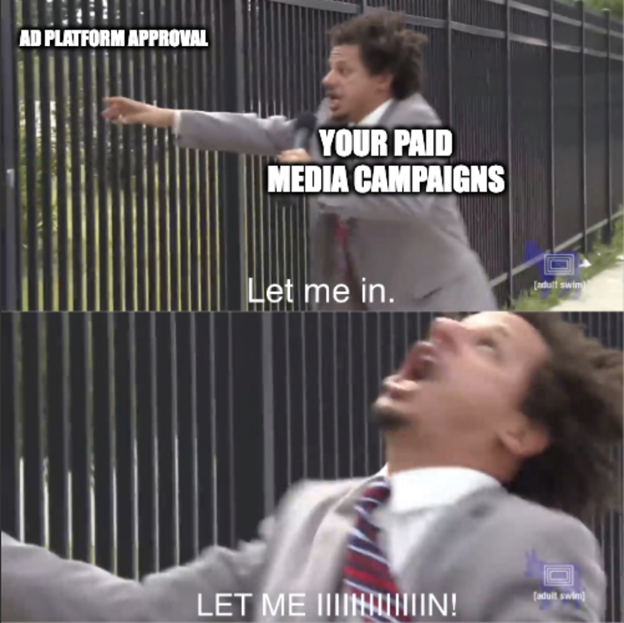
When campaigns keep getting disapproved, it’s rarely just because of ad copy or a landing page glitch.
It could be a reflection of potential issues surrounding how your marketing function operates, showing where process cracks or blind spots live. And if you keep disregarding the root causes, you could stay stuck in the same loop of constant disapproval and missed leads.
Let’s look at what this problem is really telling you:
1. Fragmented Ownership: Too Many Hands, No True Owner
Picture a relay race where each runner assumes someone else is holding the baton. That’s how disapprovals happen in many marketing teams.
The ad gets written by one person, designed by another, and approved by a third… all before it even reaches the person managing the ad account. By the time a campaign is rejected, no one’s quite sure who’sresponsible for what.
For example:
- The copywriter adds a “free trial” mention that doesn’t match the actual pricing model.
- Legal doesn’t see the ad until it’s already live.
- The agency assumes the client reviewed the compliance checklist.
When ownership is diluted, accountability disappears.
The fix, in this case, is not to create more layers of sign-off (because this can only slow things further), but instead to assign one clear campaign owner.
This person doesn’t write or design everything, but they do make sure all assets meet policy and brand requirements before anything goes live.
2. Poor Cross-Team Communication: Marketing and Sales Out of Sync
Disapprovals often trace back to misalignment between what marketing says and what sales can stand behind.
Here’s a common scenario: Marketing promotes “instant results” or “guaranteed ROI” because it converts on paper. But the sales team knows the buying cycle is complex and requires multiple touchpoints.
When ad promises don’t match sales reality, the user experience breaks, and ad platforms are trained to spot that inconsistency through:
- User feedback.
- Bounce rates.
- Post-click behaviour.
It’s like a restaurant advertising “freshly baked bread” but serving frozen rolls. You might get a few customers through the door, but you’ll lose their trust.
And reviews (or, in the case of your paid media campaign, ad performance data) will quickly reflect that.
To fix this, sales and marketing need a shared definition of truth in messaging. A simple rule of thumb: if your sales team wouldn’t say it in a live call, it shouldn’t appear in your ad copy.

How to Improve Communication at Your Company
3. Lack of a Pre-Launch QA Framework: Moving Too Fast, Checking Too Little
Most disapprovals could be prevented with a 15-minute pre-launch review. But teams skip it because “they’ve done it a thousand times.”
That’s exactly when mistakes creep in.
A strong QA checklist to counter potential paid media campaign disapprovals should cover:
- Creative: Does every asset meet visual and textual guidelines?
- Targeting: Is your audience selection compliant with platform policies? (e.g., no sensitive demographic targeting on Meta or LinkedIn).
- Technical: Are your URLs, UTM tags, and tracking pixels functioning properly?
- Messaging: Does the ad promise align with the landing page copy and offer?
Without this structure, each campaign launch relies on human memory… which is often unreliable when you’re juggling deadlines.
4. Data Silos and Feedback Gaps: Learning Nothing from Repetition
Every disapproval generates data… but few teams study it.
If your campaigns are repeatedly rejected for similar reasons, that’s valuable insight about where your process breaks.
But the problem remains: most people planning, building, and executing campaigns treat each disapproval as an isolated incident. The creative team blames the algorithm. The ad buyer blames creative.
And then everyone moves on to the next campaign… until it happens again.
And this leads to the endless loop we told you about earlier.
The fix is to centralise learning.
- Keep a shared tracker of every disapproval, the reason, and how it was resolved.
- Review patterns monthly: Are certain product lines, phrases, or targeting segments riskier?
- Feed that insight back into copy guidelines, design templates, and QA steps.
You wouldn’t ignore a recurring system error in your CRM, so don’t ignore one in your ad engine.

Is Paid Advertising Worth It?
Persistent disapprovals, at the end of the day, are best seen as process diagnostics. They show where communication breaks, accountability blurs, and feedback dies.
Once you fix those root causes, compliance becomes almost automatic because your operation can start working as one coherent system.
Building a Disapproval Prevention Framework

If campaign disapprovals keep eating into your time, you probably need a prevention system; one that doesn’t just catch mistakes, but changes the way your marketing team works.
Think of it like building guardrails on a winding road. You can still drive fast, but you won’t veer off a cliff every time a rule changes.
While there are many ways to build a prevention framework, here are a few steps we recommend adopting for an airtight foundation for your next campaigns:
Build a “Right First Time” Checklist
Most campaign errors are the result of speed… or, more specifically, haste.
Teams rush to launch before anyone’s had a moment to check the small stuff. A structured checklist slows things down just enough to catch issues early.
Break your checklist into four layers:
1. Ad Policy Compliance
Include a short section that lists sensitive phrases or restricted topics.
For example, if you’re in financial services, claims like “no-risk investing” will trigger Meta instantly. Having that list visible helps copywriters self-censor before submission.
2. Creative Standards
Specify image dimensions, tone of voice, and text limits. Meta Ads, for instance, penalises text-heavy images; so, use visuals that draw attention naturally instead of through walls of words.
3. Landing Page Consistency
Match your ad promise to the page headline.
If your ad says “Free demo,” your landing page should lead with that same offer, not a generic “Book a consultation.” The algorithm checks that alignment automatically.
4. Technical Checks
Ensure all tracking links, pixels, and URLs work. Broken redirects or tracking tags are among the most common triggers for instant disapproval.
A living checklist means no one’s relying on memory, and in turn hammers constantly-shifting compliance guidelines into muscle memory.

Paid Media Benchmarks: Where Do You Stand Against Your Competitors?
Prevention is about rhythm, not rigidity.
The more your teams communicate, cross-check, and document, the less likely you are to be blindsided by campaign disapproval… and the more time you’ll have to focus on performance instead of patchwork.
Turn Paid Media Campaign Disapprovals Into Leverage
If your campaigns keep getting disapproved, remember: it’s both a signal and an opportunity for you to optimise your paid media strategy for the long haul.
From a broader perspective, the platforms are effectively holding up a mirror and showing you where your marketing is out of sync with itself.
Most teams only react. The smart ones, on the other hand, use every disapproval as fuel to build cleaner systems, tighter messaging, and stronger collaboration.
And why now?
Because these rejections cost more than time.
Every paused campaign slows momentum, burns team morale, and makes your sales cycle that bit longer. Fixing it now means your next quarter starts faster, leaner, and with fewer “why isn’t this live yet?” meetings.

What is a Paid Media Retainer & What Does It Include?