
Related Posts




Podcasts




You used to know how to set up a Meta ad.
Target the right audience. Test creative. Optimise based on results. Simple… until it wasn’t.
Now your campaigns are being served to audiences you didn’t select. Your best-performing ad was auto-generated by Meta’s tools. And your cost per lead? All over the place.
You’re not imagining it. You’re not missing a trick. The truth is, Meta’s ad platform has fundamentally changed. From AI-controlled creative and targeting, to new restrictions around demographics, to automated campaign types like Advantage+, marketers are being pushed into a system where control is traded for automation.
Meta says it’s more efficient. Many advertisers say it’s unpredictable. And with privacy regulation tightening and performance expectations rising, the stakes have never been higher.
In this article, you’ll get a clear breakdown of what’s actually changed, how it’s impacting ad performance, and what you can do to stay competitive. At the end, you’ll also find access to a free 5 Point Ad Audit eBook Guide for Facebook & Instagram Ads to help you prepare for better paid media performance in 2026.
What’s Actually Changed in the Meta Ad Algorithm?
If you’re seeing different results from the same playbook, here’s why: Meta’s ad engine has evolved.
Meta has introduced Andromeda, a new AI-driven system powering its ad delivery engine. It processes trillions of data points and now handles budget allocation, ad delivery, and audience matching in real-time.
“Meta Lattice is our ad ranking architecture that allows us to generalize learnings across campaign objectives and surfaces in place of numerous, smaller ads models that have historically been optimized for individual objectives and surfaces. This is not only leading to increased efficiency as we operate fewer models, but also improving ad performance. These significantly larger models are able to learn more because they can represent steps that people take in their purchase journey across surfaces and campaigns. For a deeper understanding, read more here.” – Official Meta Announcement
According to internal reports, Andromeda has improved relevance scores by up to 8%, but that comes with a tradeoff: less transparency. You’re not just targeting users anymore; Meta’s engine is deciding who to serve your ads to, based on predicted outcomes, not your manual settings.
Advantage + Campaigns
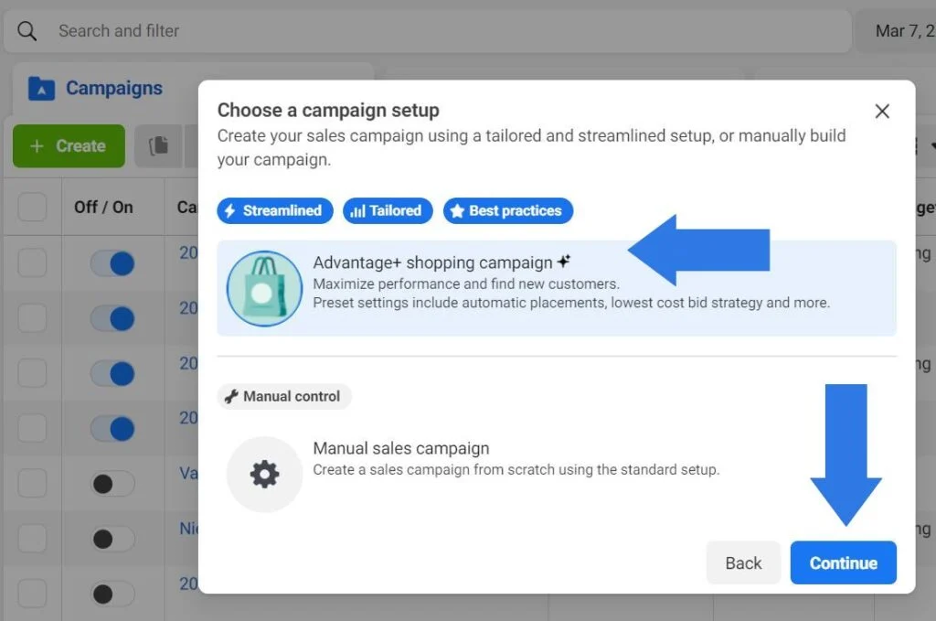
What started as a helpful shortcut is quickly becoming the default. Advantage+ Shopping and Advantage+ Leads now automate everything from audience selection to creative testing and placement.
Key stats:
- Advertisers using Advantage+ Shopping reported up to 70% YoY growth in performance.
- Meta claims ~10% lower cost per lead through Advantage+ Leads compared to manual campaigns.
For many brands, it delivers results. But if you’re used to manual controls, the transition can feel like flying blind.
There Have Also Been Some Campaign Build Changes
Meta’s campaign builder now pushes automation-first choices:
- Detailed targeting is de-emphasised in favour of AI recommendations
- Budget distribution is now guided by machine learning, not fixed splits
- Creative customisation is handled through dynamic elements like images, captions, and call-to-action variants
You’re not just optimising campaigns anymore. You’re managing systems that optimise themselves and learning to guide them indirectly.


How to Create High-Performing Meta Ad Creatives
AI Is Now Behind Every Meta Ad You Build
Meta is using AI to automate:
- Creative generation: Upload a product image and a budget, and Meta can generate entire ads (image, copy, call-to-action) automatically.
- Audience selection: The platform decides who’s most likely to convert, even overriding your custom targeting in some formats.
- Budget and bid strategies: AI adapts spend in real-time to hit predicted outcomes.
According to Meta and reporting from the Wall Street Journal, Meta plans to offer fully AI-generated ad campaigns by the end of 2026. Early versions are already in play, and some advertisers are seeing:
- 8% higher ad quality scores
- Up to 22% increase in ROAS
But there’s a catch: brand consistency is harder to maintain when AI is piecing together creative. The outputs might be effective, but they might not feel like you.

Why Your Ad Copy Isn’t Driving Clicks
What This Means for You
- You’re no longer choosing audiences, you’re feeding data into an engine that chooses them for you.
- You’re not just testing ads, you’re training the AI through inputs and outcomes.
- You’re not designing campaigns, you’re designing systems.
This shift doesn’t remove the marketer’s role. It redefines it. You’re becoming a strategist, a systems optimiser, and a creative guide, not just a media buyer.
Audience Targeting in 2025 & Beyond
If you’ve noticed that your ads are reaching broader or unexpected audiences, you’re not imagining it. Meta has made clear moves to take targeting out of the hands of advertisers and put it into the hands of algorithms.
Meta’s system now uses Advantage Detailed Targeting by default. That means:
- Even if you define a target audience, Meta can expand beyond it if the algorithm predicts better performance.
- Manual filters (age, interests, behaviours) are often treated as “soft suggestions,” not hard limits.
This can help with scale, but it also means you’re giving up granularity. If your campaign depends on tightly defined personas or niche segments, expect inconsistent results.
For campaigns in sensitive categories (housing, employment, finance) Meta has implemented strict limitations on targeting:
- No targeting by gender, age, or ZIP code in the U.S.
- Ads must use a pre-approved process via Meta’s Special Ad Category tools.
- Advertisers in Australia and parts of Europe now face additional verification and compliance checks for finance and data-sensitive ads. And, while this isn’t confirmed, there’s a chance that if you don’t abide by these rules in these industries, you’ll be hit with much higher CPMs (not officially confirmed by Meta).
Meta doesn’t want you thinking about who sees your ad. It wants you thinking about what result you want (leads, purchases, clicks) and letting the system decide how to get there.
That shift changes how you build campaigns:
- Start with your desired conversion event, not a persona.
- Test creatives and placements more than audiences.
- Monitor performance by outcome, not demographic slice.
So then, where does that leave you?
Creative is the New Differentiator
As targeting becomes more automated and uniform across advertisers, the real differentiator is now creative. And Meta knows it… so much so that it’s building AI to generate creative for you.
As already mentioned, Meta is rolling out tools that can generate entire ad sets based on:
- A product image
- A few lines of copy
- Your campaign objective and budget
From there, the system creates:
- Ad variations with different formats (carousel, video, image)
- Dynamic headlines and calls-to-action
- Visual layouts tailored to placements like Reels, Stories, or Feeds
Your new role now is to produce inputs for the AI so that it can produce the best possible output.
In other words, the majority of your time should be invested in producing laser-focused copy, offers, and creative, and then plugging them into Meta and letting it do its thing.
However, while AI can assemble high-performing ads, it doesn’t know your brand the way your team does. Without oversight, you can end up with:
- Generic messaging that doesn’t align with your positioning
- Visuals that clash with your design system
- Ads that convert but dilute your brand
You can prevent this in three ways:
- Pre-load your inputs intentionally: clear copy, high-quality visuals, consistent tone.
- Set creative guardrails: define brand do’s and don’ts the AI can work within. You actually have the option to define brand colours, logos, and tone of voice.
- Curate outputs: don’t just hit approve—review, tweak, and A/B test the AI’s suggestions.
In short: AI can accelerate your creative workflow, but you still need to own your voice and visual identity. Let the system do the heavy lifting, but you make the final call.
The Importance of Reels, Threads, & Creators for a Meta Ad Today
As Meta’s algorithm evolves, so do the surfaces where your ads appear. In 2025, static feed ads aren’t the priority, they’re the baseline. The real reach and engagement is happening in immersive, short-form, and creator-driven spaces.
In fact, reels alone account for 50% of the time people spend on the app.
Meta is pushing hard on Reels across both Facebook and Instagram. Why? Because Reels drive time-on-platform, engagement, and shares—three things the algorithm rewards.
What’s changed:
- Reels ads are now prioritised in delivery and testing
- Meta’s tools can auto-generate short-form versions of your longer video assets
- “Trending Reels Ad Units” let your ads show up after high-performing creator content
If you’re not creating for Reels, you’re already behind.
On top of that, Meta is slowly rolling out ad formats on Threads, its text-first platform. These include:
- Sponsored replies
- In-thread display ads
- Creator-collab posts that blend organic and paid reach
Threads is still in its experimental phase for advertisers, but expect deeper integration by the end of 2025. It’s where Meta wants to compete with X (formerly Twitter), and early adopters will benefit from lower costs and less competition.
Meta shared that ads in Threads will show up as image ads in the Threads home feed:
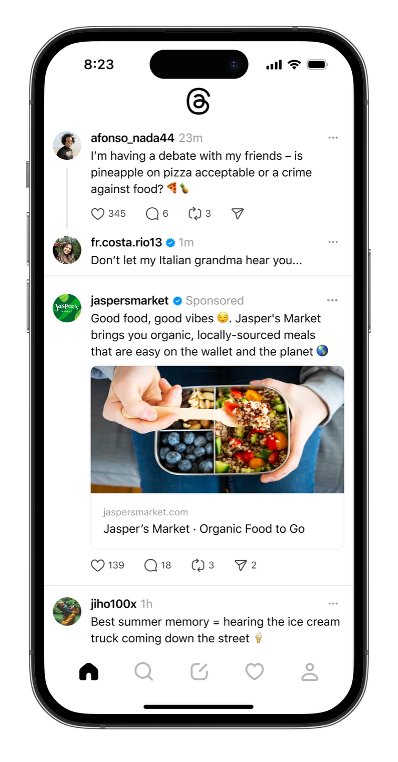
We recommend optimising your creatives for reels and taking advantage of the new Threads placement in ads.
What You Can Do Right Now
In 2025, the one lever you still fully control is creative. Targeting is automated. Budgets are algorithmically adjusted. Audiences are predicted rather than selected. But the message, the visuals, the story you tell—that’s still yours.
And right now, that matters more than ever.
Meta’s algorithm prioritises content that engages. Not just content that gets clicked—but content that’s watched, shared, saved, and rewatched. That kind of engagement comes from relevance, clarity, and emotional impact, none of which AI can fully replicate without your direction.
This is your edge.
The advertisers who succeed in this new landscape will be the ones who treat creative not as decoration, but as strategy. Who builds ad libraries with intentional variations. Who adapts to Reels, vertical formats, and short-form storytelling. Who lets AI test but still guides what gets tested.
So, if you’re feeling like control is slipping… refocus it where it counts. Don’t obsess over audience settings you can’t access. Don’t try to hack an algorithm that won’t sit still.
Instead, double down on the one part of your campaigns that can still cut through everything else: What you say. And how well you say it.
If you need help crafting a stronger offer, creative or copy, check out this article.
Download Your Free 5 Point Ad Audit eBook Guide for Facebook & Instagram Ads