
Related Posts




Podcasts




Here’s something to think about today: Paid media spend in Australia hit a record high of AU$4.2 billion in March 2025.
While the number is higher than ever, most marketing leaders will probably say they’re spending more but don’t know which campaigns actually drive sales… and you might feel the same way.
That gap between spend and clarity is where most budgets go to die.
If you’re managing paid media right now, you’re probably being told two conflicting things: hit bigger targets, but don’t increase spend. The math doesn’t seem to work.
Well, it won’t work unless you stop treating “scaling” as a synonym for “spending more.”
Here’s the truth: scaling paid media isn’t about throwing extra zeros at the problem.
It’s about being precise by finding what works, cutting what doesn’t, and using smart structure and data discipline to make every dollar stretch further.
And that means you can still get significant results out of your paid media strategy and grow its impact on your bottom line without running the budget dry.
In this article, you’ll learn how to scale paid media without overspending, how to spot the levers that matter, and when it’s time to increase investment with proof instead of pressure.
The Real Meaning of “Scaling” Paid Media
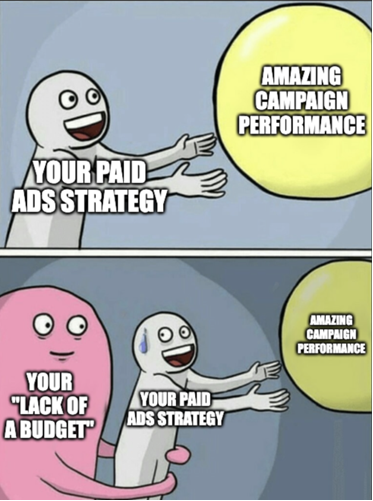
When most people hear “scale,” they picture doubling ad budgets and watching leads pour in.
True scaling isn’t about adding zeroes to your ad account; it’s about multiplying the efficiency of every dollar you spend.
Think of scaling as a ratio instead of a number.
You’re winning when your cost per lead drops while your lead quality rises.
And, you’re growing when the pipeline expands faster than the spend.
Scaling Starts With Control, Not Expansion
If you can’t clearly see where your conversions come from, scaling is just gambling.
Many businesses jump into more campaigns or broader targeting before they’ve nailed the basics: solid attribution, sharp segmentation, and a message that resonates.
The danger comes when teams mistake movement for momentum. Adding new campaigns, more keywords, and broader targeting can look like growth on paper, but often just spreads your budget thinner.
Without clear attribution or smart exclusions, you could end up paying twice for the same eyeballs.
Scaling your paid media strategy (even with a tight budget) usually means knowing when to say no to a new channel, an extra keyword, or even to a “trendy” format that doesn’t fit your funnel.
The Mindset Shift Worth Adopting
Scaling, simply put, isn’t a sprint.
It’s the discipline of identifying what works, doubling down on it, and trimming what doesn’t. It’s building creative restraint and saying: “We’ll grow results first, and let the budget follow.”
Properly scaling your paid media with a limited budget starts with asking sharper questions like:
- “Which campaigns are already close to breakeven, and could become profitable with small tweaks?”
- “Where am I wasting impressions on unqualified clicks?”
- “What would happen if I improved our landing page conversion rate before spending another dollar?”
Those aren’t glamorous questions, but they’re the ones that turn “more spend” into “more return.”
READ: Use the 5-Point Ad Framework to Drastically Increase Leads From Your Paid Ads

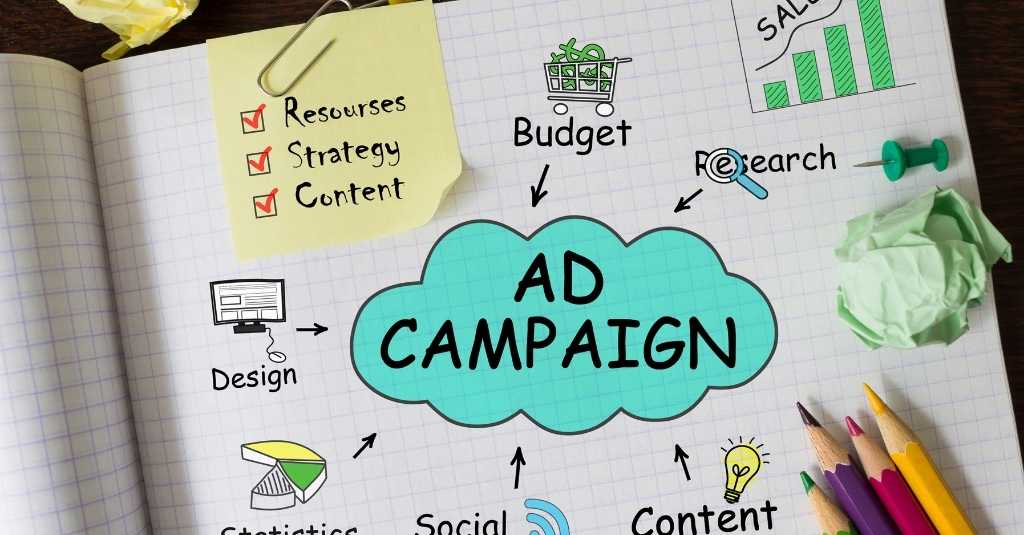
Use the 5-Point Ad Framework to Drastically Increase Leads From Your Paid Ads
How A Limited Paid Media Budget Could Perform Better
A limited budget might seem undesirable at first, but here’s something that can put it into a more positive perspective: it can be your filter for removing everything in your paid media strategy that doesn’t serve growth.
In fact, you can use it to force yourself to think sharply about who you’re targeting, what message you’re putting in front of them, and how you’ll measure success.
Here are a few ways having a limited budget can help you scale your paid media (and get better returns:
1. It Forces You to Have a Tighter Feedback Loop
Marketers with limited paid media budgets can end up building tighter feedback loops to compensate for the smaller room for error.
In your case, this means that you could end up:
- Switching off underperforming ads fast.
- Testing variations in smaller doses to maximise your available budget.
- Doubling down on available tactics only when the data supports them.
Having this kind of rhythm can lead to smarter decisions (and, often, better ROI) because wastage in ad spend won’t have time to settle in.
2. It Forces You to Be More Precise
Limited budgets can also leave lots of room for scaling paid media because they demand precision.
Without a safety net, you probably can’t afford to chase “brand awareness” that never converts.
And to compensate for this, you’ll have more reason to focus on the right fixes for bringing in pockets of traffic that prove intent, like:
- Retargeting engaged visitors.
- Refining lookalike audiences
- Improving the handoff from ad to CRM.
3. It Forces You to Be Accountable
With less spend to play around with, you might start connecting paid media data with HubSpot, CRM insights, and actual pipeline numbers. That’s where the real advantage lies: clarity.
This way, you’ll see which campaigns bring revenue (and not just reach) and make decisions from evidence instead of assumptions.
When approached the right way, a lean budget doesn’t hold you back. Instead, it makes you sharper, faster, and better at finding the truth about what works.

3 Quick Tips to Improve Your Meta Ads ROI Without Increasing Your Budget
5 Frameworks That Will Help You Scale Your Paid Media Without Overspending
The challenge in a situation like this isn’t to stretch your spend thinner; instead, it’s to build stronger systems that make every dollar in your paid media budget work harder.
And these five frameworks help you do that:
1. Focus On One Core Conversion Path
When budgets are tight, spreading campaigns across too many goals kills momentum. Each split reduces the learning power of your data and the strength of your message.
If you have a limited amount to spend, you can start by defining a single conversion path:
One clear journey from ad to landing page to lead capture.
For example, if your highest-value offer is a “Free Strategy Call,” build one campaign around that, and optimise everything (mainly creative, targeting, and copy) toward that conversion.
Once you see predictable results (steady CPL, strong conversion rate, consistent lead quality), then replicate that structure for other offers or audiences.
Scaling this way keeps your ad spend focused on what’s already working, not what might.
2. Simplify Your Campaign Structure
It’s easy to assume more campaigns mean more control. But in truth, it usually means more noise.
Every new campaign splits data and resets the learning curve.
Instead, consolidate. Group similar audiences into fewer ad sets so algorithms can gather enough data to optimise effectively.
On platforms like Meta or Google, performance improves when campaigns hit 50+ conversions per week: a near-impossible feat if your spend is scattered.
Here’s an example of how to do this: Rather than running six small search campaigns for each product line, merge them into one campaign with ad groups focused on key themes or intent levels. You’ll gather clearer insights faster while avoiding wasted impressions.
3. Use Automation With Intention
Automation isn’t a shortcut; it’s an amplifier.
It magnifies whatever foundation you give it… regardless of whether it’s good or bad.
Tools like Smart Bidding, Responsive Search Ads, and Lookalike Audiences can stretch limited budgets further if they’re trained on the right data. That’s where HubSpot comes in.
Syncing your CRM with paid media platforms allows optimisation based on actual lead outcomes. This means that you’ll be able to adjust based on qualified leads instead of contacts who just click or fill out forms.
For example, if HubSpot shows that leads from one keyword consistently convert to closed deals, you can feed that data back to Google Ads and let Smart Bidding prioritise similar profiles.
This way, you’re no longer optimising for volume; you’re optimising for revenue.
The best way to use automation with intention and get results is to set clear automation rules.
Let machines handle the maths (bidding, placements), but keep humans in charge of strategy (creative, messaging, exclusions).
4. Retarget With Purpose
Retargeting can be effective (or not) depending on how precise you get.
Blanket remarketing (“show all site visitors the same ad”), for instance, may burn cash. On the other hand, smarter segmentation changes everything.
Retargeting with purpose and scaling the impact of your paid media with a limited budget starts with creating three distinct retargeting layers:
- Warm traffic: People who visited your pricing or service pages. Show them case studies, testimonials, or social proof.
- Engaged prospects: Those who downloaded a guide or watched a video. Offer them a follow-up piece or a low-friction demo.
- Existing leads: Contacts already in your CRM. Use HubSpot workflows to push specific ads tied to where they are in the pipeline.
An example of this in action: A user viewing your “Paid Media Packages” page could see an ad that reads, “How much paid media do you really need to see ROI?”, which links to a transparent breakdown guide.
That relevance turns curiosity into conversion.
5. Test Methodically
Testing without structure wastes money fast.
On the other hand, one change per test keeps results clear. Think of it as sequential testing.
Here’s how to do sequential testing without going out of your budget:
- Start with your message: test two headline angles for the same offer.
- Once you have a winner, keep the copy but test creative formats (static vs video).
- Then, move on to landing page elements: CTA placement, form length, proof elements.
Each small win compounds.
Over three to six months, you build a stack of proven learnings that outperform any single “big idea.”
When you test methodically, here’s a guideline that can help: Track results in one place (ideally HubSpot), and define success metrics before launching the test.
Avoid micro-optimisations as much as possible; a 0.1% CTR lift means nothing if lead quality drops.
Together, these frameworks replace “spend more” with “spend smarter.” They build a feedback loop between marketing efficiency and sales outcomes: the true foundation of scalable paid media.
The Role of Data and HubSpot in Smart Paid Media Scaling
Paid media alone can’t prove its worth: not without clear data flow between ads, CRM, and sales.
That’s where HubSpot changes the experience of scaling paid media on a tight budget entirely.
Most platforms will tell you which ad drove the click. HubSpot tells you what happened after. It links that click to a contact, a deal, and eventually, revenue.
Suddenly, “good performance” isn’t about impressions or CTR at most anymore. It’s about qualified leads, pipeline, and close rate.
For limited budgets, this visibility is critical. It stops guesswork before it starts. You can see which campaigns attract contacts that actually convert, and which ones only create noise.
A few ways HubSpot sharpens paid media strategy include (but aren’t limited to):
- Closed-loop reporting: Track which campaigns generate paying customers, not just form fills.
- Lead scoring: Prioritise follow-up on the prospects most likely to buy, saving ad and sales effort.
- Smart audiences: Build lookalikes or retargeting lists based on your best-fit clients, not cold interests.
- Attribution clarity: Show your leadership where each dollar of spend connects to revenue, not just traffic.
When marketing and sales share the same data through a CRM like HubSpot, scaling stops being a gamble. You won’t be hoping that campaigns perform… you’ll know which ones do.

How to Set Up Paid Ads in HubSpot
When to Confidently Increase Your Paid Media Spend

There’s a moment when restraint turns into risk… and the same can be said with your paid media budget.
Holding back ad spend makes sense until your campaigns are ready to grow but you still don’t let them.
Scaling with confidence comes down to evidence. When these three signals line up, you know it’s time to step forward:
- Consistent performance: Your cost per lead and conversion rates hold steady across multiple weeks.
- Clear attribution: You can see which campaigns drive actual revenue inside HubSpot.
- Operational readiness: Sales can handle more qualified leads without drop-offs.
Once these signs show up, that’s when you can tell management that extra budget is justified.
But if those signals aren’t there yet, then don’t rush.
Double down on optimisation first: better creative, refined targeting, or stronger nurturing. Each small improvement compounds your eventual return once you do invest more.
But don’t wait forever, either. Markets shift fast.
Competitors who act on their data early tend to claim the most profitable ground first.
If you’re looking for a place to start, review your current campaigns through the lens of these questions:
- “What’s already profitable that could handle a 10% increase in spend?”
- “Where are we losing opportunities because we stopped too soon?”
- “Do we have the tracking and alignment to prove success internally?”
Answer those honestly, and you’ll know your next move: whether that’s optimising tighter or leaning in with conviction.

How Can You Justify Your Marketing Spend to Leadership?
Ready to Grow Your Paid Media Without Growing Your Spend?
The brands winning with paid media right now aren’t the ones with the deepest pockets.
They’re the ones that know exactly where their money’s going and why.
The longer you wait to tighten your tracking, test smarter, and build real visibility between ads and sales, the harder it is to regain control later. Every month of guesswork means missed learning, lost data, and slower growth.
If your ad spend still feels like a gamble, that’s the signal to start.
Audit what’s already running. Spot what’s driving quality leads. Connect your CRM to your campaigns and let the numbers tell their story.
That’s how limited budgets start to behave like big ones: through focus, not deep pockets.
Looking for a free paid media audit? Get in touch here.