

Related Posts




Podcasts




Running a business today often means juggling too many tools at once — a CRM here, an email platform there, maybe a separate tool for landing pages, and another for reporting. The result? Wasted time, messy data, and frustrated teams.
That’s where HubSpot comes in. More than just a CRM, it’s an all-in-one growth platform designed to bring your marketing, sales, and service together in one place. But beyond the features, what matters most are the benefits it brings to your business.
Here are 5 practical benefits of using HubSpot that can help you work smarter, not harder.
1. All-in-One Platform
Most businesses start with one tool at a time: Mailchimp for email, Salesforce for CRM, WordPress for the website, maybe Zapier for integrations. At first, this patchwork seems manageable.
But as you grow, the cracks show.
Marketing can’t see what sales are doing, sales can’t see marketing data, and service is left in the dark entirely.
HubSpot solves this problem by bringing everything under one roof:
- Marketing Hub – create campaigns, landing pages, emails, and track leads.
- Sales Hub – manage your pipeline, track deals, and log calls and emails.
- Service Hub – handle support tickets and customer communications.
- CMS Hub – build and optimise your website.
- Operations Hub – integrate apps and automate workflows.
With all these tools running off the same database, you get a single source of truth. No more silos. No more wasted time exporting spreadsheets.
Everyone in your business, from marketing to sales to service, has the same view of the customer.
This doesn’t just make life easier. It makes your business more effective. When your tools and data are connected, your team can act faster, make better decisions, and deliver a smoother customer experience.
2. Easy to Use and Adopt
One of the biggest reasons CRMs fail is because people simply don’t use them. Tools like Salesforce are powerful, but they can feel clunky and require heavy admin support.
That means adoption suffers, and you end up paying for software that sits unused.
HubSpot takes the opposite approach: it’s designed to be user-friendly. The interface is clean, intuitive, and built so that anyone, not just IT teams, can pick it up quickly.
- Sales reps can log a call or send a tracked email in seconds.
- Marketers can create landing pages or email campaigns with simple drag-and-drop tools.
- Managers can generate reports and dashboards without needing a data analyst.
The result? Your team actually wants to use HubSpot. And when adoption is high, you get better data, better insights, and ultimately better results.
3. Better Sales and Marketing Alignment
Sales and marketing misalignment is one of the most common problems in business.
Marketing blames sales for not following up on leads.
Sales blames marketing for sending bad leads.
Both teams end up working in silos, frustrated with each other, and performance suffers.
HubSpot helps fix this by giving both teams a shared system. Everyone works from the same CRM, which means:
- Marketing can see which campaigns generate the best leads.
- Sales can see what content prospects engaged with before booking a call.
- Both teams can agree on what makes a lead “qualified” and track progress against shared goals.
Here’s the sort of visibility you can achieve with sales, as an example.
This level of visibility transforms how sales and marketing work together. Instead of pointing fingers, they collaborate. Leads don’t slip through the cracks, follow-up is faster, and prospects get a smoother, more consistent experience.
When sales and marketing finally speak the same language, revenue grows.


How to Align Your Sales and Marketing Teams Using HubSpot
4. Powerful Automation Without Complexity
Most businesses know they should be automating more, but the reality is that automation often feels complicated and out of reach. Some tools make you build workflows in clunky, code-heavy systems that require specialists to manage.
HubSpot flips that script. Its automation tools are designed to be powerful but easy to set up. You don’t need to be technical to:
- Send automated lead nurturing emails based on behaviour.
- Route leads to the right sales rep instantly.
- Score leads so your team knows who’s ready to buy.
- Automate service ticketing so no request goes unanswered.

How to Set Up HubSpot Workflows
This saves time and scales your efforts without adding headcount.
Imagine your sales reps never forgetting to follow up, your marketing team engaging leads automatically, and your service team responding faster, all because HubSpot does the heavy lifting in the background.
Automation isn’t about replacing people. It’s about freeing your team from repetitive tasks so they can focus on what matters most… building relationships and closing deals.
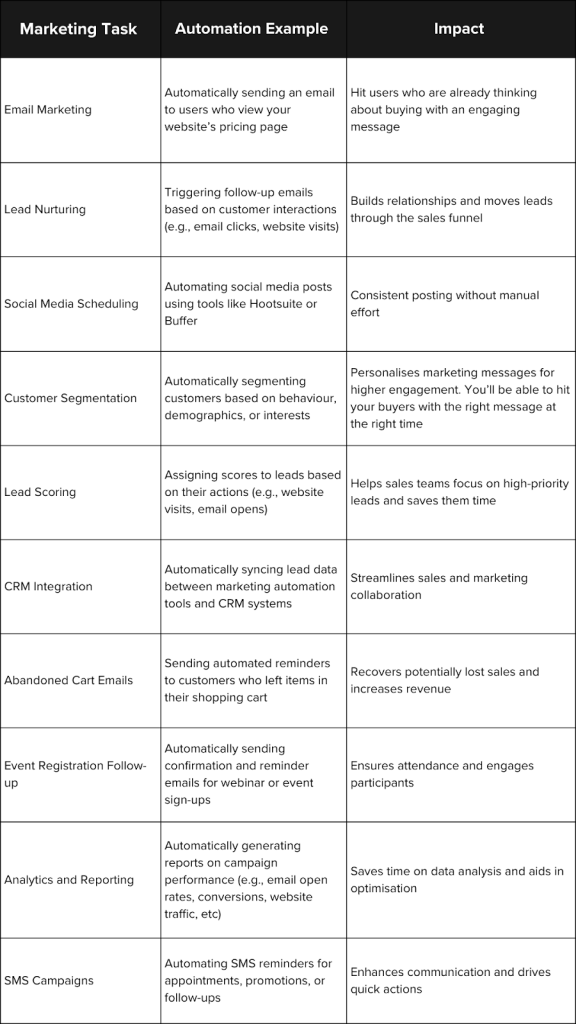
Here’s some example of the automation HubSpot allows you to achieve:

Everything You Need to Know About Marketing Automation
5. Scalability and Integrations
Businesses often outgrow their tools. A system that worked when you had five employees suddenly collapses when you hit 50. That’s when companies end up in the painful cycle of ripping out old systems and replacing them, wasting time and money.
HubSpot is built to grow with you. You can start small with the free CRM and add hubs or premium features as your business evolves. Whether you’re a small startup or an enterprise, HubSpot has tiers and tools that scale at your pace.

Is the HubSpot CRM Actually Free? A Breakdown of the Features & Limitations
And because no single platform can cover everything, HubSpot integrates seamlessly with over 1,000 other apps, including Gmail, Outlook, Shopify, Slack, Zoom, and more.
This means you don’t have to abandon the tools you already love, you can connect them into HubSpot and create one unified system.

HubSpot Launches New CRM ChatGPT Connector
With scalability and integrations baked in, HubSpot gives you flexibility. You’re not locked into a tool that holds you back as you grow. Instead, you’ve got a platform that expands with you.
So, Is HubSpot Right For Your Business?
HubSpot isn’t just another piece of software. It’s a growth platform designed to bring clarity, connection, and scale to your business.
If you’re tired of juggling disconnected systems, struggling with low CRM adoption, or watching sales and marketing work against each other, HubSpot is worth a closer look.
Still not sure? Check out our full guide on what HubSpot can do for your business to see if it’s right for you.