









Why Not Having Brand Voice Consistency is a Bigger Problem Than You Think

Stop me if this sounds familiar: your marketing team writes one thing, your agency writes another, and sales rewrites it all anyway.
By the time a prospect reaches you… they’ve heard three different versions of who you are.
And you feel just how much having an inconsistent brand voice holds you back.
You feel the frustration when a campaign underperforms, and you’re left wondering if the messaging was the problem.
You feel the pressure when sales says, “These leads don’t understand what we do.”
You feel the embarrassment when your brand sounds different everywhere it shows up, like you’re competing with yourself and all the other companies in your industry for attention.
And here’s the truth in all this: inconsistency isn’t a creative issue. It’s a revenue issue.
It slows your sales cycle, weakens trust, and makes every dollar you spend on marketing work harder than it should.
We know this because we’ve seen it across marketing teams, sales teams, and boardrooms… and even in our own business at the start.
But fixing brand voice consistency is often the simplest way to stop the chaos, instantly improve results, and turn things around.
In this article, you’ll learn exactly why brand voice consistency matters, the hidden dangers of ignoring it, and the steps you can take to fix it before it chips away at your leads, your sales, and your reputation.
Why Brand Voice Consistency Matters
Brand voice consistency isn’t about sounding pretty or poetic.
It’s about making sure your audience recognises you, trusts you, and understands you no matter where they find you.
When your brand sounds the same across every touchpoint, you create familiarity. And familiarity builds trust. It’s what makes a buyer think, “I know these people. I know what they stand for. I understand what they’reoffering.”
And that feeling alone shortens sales cycles and improves lead quality.
Consistency also removes internal friction.
When marketing, sales, customer service, and any external vendors speak in the same voice, everything becomes easier.
Content gets approved faster. Sales stops rewriting messaging. Teams stop guessing. And your brand starts to feel like one unified company instead of several departments operating in silos.
Most importantly, a consistent brand voice helps your audience understand your value from the first touch. People don’t buy when they’re confused. They buy when your message is clear, confident, and recognisable.
And that only happens when your voice stays the same everywhere it shows up.


Essential Types of Brand Collateral Every Business Needs
The Problems With Having an Inconsistent Brand Voice
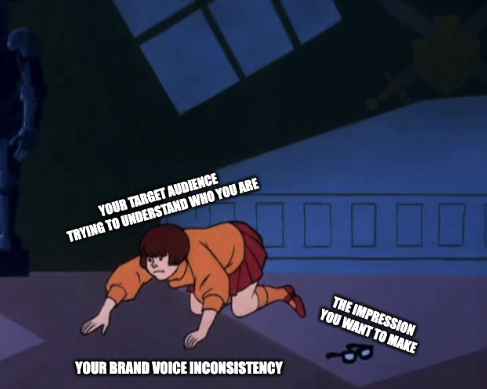
Brand voice inconsistency doesn’t usually shout. It whispers.
And because the problems show up quietly, like in small dips in engagement, slightly confused prospects, or extra time spent explaining your offer, most people tend to underestimate the damage it’s causing.
But these small cracks eventually turn into costly gaps. And before you know it, your brand starts working against you rather than for you.
Here’s what’s really happening when your brand voice is inconsistent:
1. You Can Weaken Trust Without Realising It
Think of trust like a rhythm: when your brand shows up with the same tone, personality, and language every time, you create a rhythm your audience recognises.
But when that rhythm suddenly changes by even just a little bit, your audience hears it. It’s the same as you noticing someone changing their accent mid-sentence.
The most crucial thing to realise here is that inconsistency creates emotional friction.
Your audience may not say, “the tone in this ad feels inconsistent with the tone in the email”, but they’ll feel it before they point it out. And people buy based on feeling long before logic.
Trust isn’t built through big moments. It’s built through small, repeated signals that show “you can rely on us.”
When your brand voice is inconsistent, those signals get scrambled, and your brand feels less dependable.
2. Your Message Might Become Harder To Understand
Buyers crave clarity, not complexity.
But if every piece of content you put out uses a different tone to describe your product, service, or process, you force people to keep re-interpreting who you are and what you do.
Imagine giving someone directions to your office, but each team member writes their own version:
- One uses technical jargon.
- One uses casual language.
- One uses acronyms.
- One adds unnecessary detail.
They’re all trying to help… but the person following the directions ends up lost.
Your content works the same way.
If your voice shifts every time a new person writes something, your audience wastes mental energy trying to stitch the message together, gets confused, and doesn’t convert.
3. Lead Quality Could Drop
You might not realise this, but your brand voice plays a significant role in filtering your audience.
But when your voice changes depending on who creates the content, your brand becomes unpredictable to the point where it can’t attract the right audiences.
One week, your copy sounds bold and confident; the next week, it sounds soft and vague.
Different tones attract different types of buyers. And you end up with leads who are interested in the tone you used that day, instead of the offer itself.

Why Your Sales Team Thinks Your Leads Suck
4. Sales Cycles May Grow Longer
When marketing and sales speak in different voices, the handover between them becomes clunky.
If marketing sounds polished, warm, and consultative, but sales sounds direct, blunt, or technical, a prospect could suddenly feel like they’re talking to a different company. They start asking clarifying questions.
They hesitate.
They need reassurance.
And suddenly, what could have been a quick, confident decision gets dragged out to the point where it takes your teams twice or thrice as long to close the same lead.
An inconsistent brand voice creates room for your leads to start doubting your business and your offer… and that doubt makes for serious opportunity cost.
5. Your Brand Could Become Forgettable
Strong brands are memorable not because they say the loudest things, but because they sound the same each time you hear them.
Repetition builds recognition. Recognition builds trust. Trust builds sales.
But when your voice shifts constantly, the repetition breaks and your audience never gets the chance to truly “know” you. You become one more generic voice in an already crowded market.

How to Measure Brand Salience: Tools and Techniques for Effective Assessment
Brand voice inconsistency is easy to ignore because it doesn’t cause immediate chaos. And chances are that you’re already experiencing the effects in your reports without knowing exactly what’s behind the cause of the deficits.
But once you’re aware of what can happen when you’re inconsistent with your brand voice, you’re already halfway to solving the problem for good.
4 Signs Your Brand Voice Might Be Inconsistent

Brand voice inconsistency usually snowballs into a huge problem for any business because it’s rarely obvious at first.
It shows up in everyday scenarios you’ve probably normalised: the kind you shrug off as “team misalignment” or “messy processes.” But these small cracks signal a deeper issue that’s quietly undermining your marketing and sales performance.
If any of these signs are happening in your business, your brand voice might be inconsistent:
Sign #1: Your Campaigns All “Sound” Different
Think of your brand like a person. If one day they speak loudly and boldly, and the next day they whisper with a completely different personality, you wouldn’t know what to expect from them.
Brands work the same way: buyers rely on consistency to decide whether they trust you.
Here’s what this sign can look like inside your business:
- Your ads are punchy, modern, and disruptive.
- Your landing pages sound more formal, corporate, and heavy.
- Your emails sit somewhere in the middle, where they sound conversational, but aren’t aligned to either your ads or landing pages.
This mismatch forces buyers to work harder to understand who you are. And when people have to work harder, they quietly back out.
Sign #2: Your Sales Team Keeps Rewriting Marketing Content
Based on what we’ve seen so far, this is one of the clearest red flags.
Imagine you hand someone a script that doesn’t sound like them. What happens? They change it. They adjust the words until they feel natural.
Sales teams tend to do the same thing when they get scripts that aren’t written with a clear, consistent brand voice.
Here’s what this could look like in your business:
- Your sales team rewrites marketing emails because the voice doesn’t match how they speak to prospects.
- Your sales team changes the messaging in slides because the tone doesn’t feel confident enough.
- Your sales teams ignore certain assets entirely because they “don’t sound right.”
All of these situations end up happening because of sales correcting brand voice inconsistencies to maintain trust in their conversations. But every rewrite costs time, slows follow-ups, and introduces even more internal inconsistency.
So, if sales keeps revising your marketing content, it could mean that your brand voice isn’t clear or strong enough to guide them.
Sign #3: Your External Vendors All Produce Content That Feels Like They’re for Different Companies
This usually happens when you work with multiple writers, agencies, or freelancers without a unified brand voice guide. They all interpret your brand differently because you’ve unintentionally left room for interpretation.
Typically, you’ll see this sign of brand voice inconsistency in different ways, such as:
- Emails written in one tone by your freelancer.
- Ads written another way by your media agency.
- Website copy written entirely differently by an internal team member.
It’s like asking three artists to paint the same person without giving them a reference photo: they’ll produce three completely different portraits.
Your buyers can feel that inconsistency immediately. And instead of appearing strong and coherent, your brand could feel scattered and unstable.
Sign #4: You’re Attracting Leads… But Not the Right Ones
Poor lead quality is often blamed on targeting or offer structure. But messaging, especially inconsistent messaging, plays a bigger role than most teams realise.
The way you speak determines which audience feels “invited” into your world or company experience. If your tone shifts constantly, you’ll attract people who:
- Misunderstand your offer.
- Aren’t ready for your solution.
- Expect a different style of service.
- Don’t match your ideal customer profile at all.
It’s like hosting an event with three different invitations printed in three different styles: people will show up with completely different expectations… and many will be the wrong fit.
If your lead quality keeps dipping, an inconsistent brand voice could be the hidden cause behind it.

How To Convince Your Boss It’s Time for a New Marketing Direction
If any of these scenarios feel uncomfortably familiar, you’re not dealing with small problems: you’re experiencing symptoms of a brand voice that isn’t aligned, controlled, or repeatable.
And the longer it goes unchecked, the more it slows down your marketing, your sales, and your revenue potential.
How to Build Brand Voice Consistency
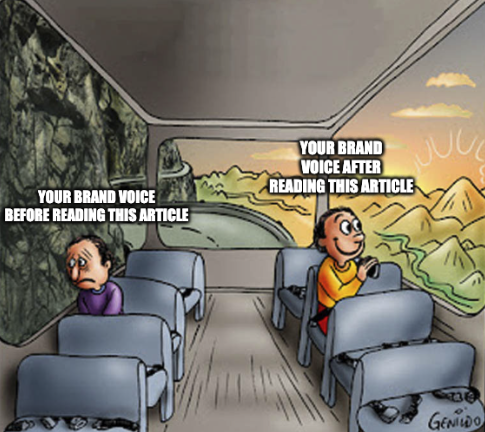
Fixing brand voice inconsistency is all about creating clarity and removing guesswork so every piece of communication sounds like it comes from the same place. Think of this as building a shared language for your entire business that anyone in your team can speak confidently.
Here are a few simple yet impactful ways to build a consistent brand voice:
1. Create a Clear, Usable Brand Voice Guide
Now, writing a brand voice guide doesn’t have to mean drafting a 50-page document that takes months to make. Generally, you just need a simple guide that explains:
- How your brand sounds.
- How your brand doesn’t sound.
- Key phrases you use.
- What target audiences you’re going after.
- Key phrases you avoid.
- Examples of “right vs wrong” tone.
Think of this guide as your north star: everyone in your business who writes anything should have it.
2. Train Your Team and Your Vendors
Your voice won’t stick unless everyone understands it.
Run a short session with your team, your agency, and anyone who creates content. Show them examples. Let them practise.
Clarity beats creativity here, so make sure to tell them exactly what “good” looks like so that all your teams know what to look for when creating anything and everything representing your brand.
3. Centralise Your Content
When content lives everywhere in emails, Slack threads, Google Docs, or random folders, consistency becomes impossible.
To avoid creating an environment that fosters brand voice inconsistency, it helps to create one shared space where the brand voice guide, templates, and approved messaging live.
If people can find the right version easily, they’ll stop making their own.
4. Align marketing and sales language
If marketing says one thing and sales says another, buyers get confused. But one way to avoid this is to bring both teams together and agree on the language you use to describe:
- Your offer.
- Your value proposition.
- Your benefits.
- Your audience’s problems.
This simple fix alone can speed up deals dramatically.
5. Audit your existing content
Look at your website, emails, ads, and sales materials and ask yourself one simple question: “Does this sound like us today?”
If the answer is no, update it based on your brand voice guidelines and compare it to more recent content that you made using the same guide.
It’s crucial to consistently audit your existing content because legacy content is one of the biggest sources of mixed messaging… and that mixed messaging leads to severe cases of brand voice inconsistency.

How Do I Know If I’m Overcomplicating My Digital Marketing Funnel?
Creating a consistent brand voice and maintaining it in the long run all boils down to following small, consistent habits that help protect your business’s relationship with your audiences.
Over time, each of the tips above can help ensure that your teams work in sync while allowing you to capture a bigger share of your market.
Grow Your Business With a Consistent Brand Voice
Building brand voice consistency isn’t complicated: it just requires clarity, structure, and a bit of discipline.
When your team shares the same voice, your message hits harder, your sales become smoother, and your marketing starts compounding instead of conflicting.
At the end of the day, your brand voice isn’t just a creative choice… It’s a revenue system.
And every day it stays inconsistent is another day of that system working harder than it should.
If your teams are rewriting content, if your campaigns feel disconnected, or if your buyers keep saying, “I’m not sure what you actually do,” then this is no longer a problem you can wait to fix.
Inconsistency compounds.
But so does clarity.
And the moment you bring your voice back under control, even with a few simple steps, you’ll feel the shift.
Faster approvals. Stronger leads. A smoother sales process. Marketing that finally works as one machine instead of three disconnected parts.
You don’t need to overhaul your entire brand to get there; you just need to take the first step.
If you want a simple place to start, audit your content using one question:
“Does this sound like us today?”
If you find yourself answering “no” more often than “yes”, then it’s a sign to start working on your brand voice consistency.

What Are The Best Paid Media Platforms By Industry?




Get the best content marketing insights right in your inbox!
Subscribe to our Newsletter and get marketing insights delivered to your inbox every week.