









How a Poor Landing Page Affects Your Paid Media Performance

Stop me if this sounds familiar.
You’ve optimised your targeting. You’ve refined your ad copy. You’re even running A/B tests to bring that cost per lead down.
But the results still don’t add up.
Leadsare low. Bounce rates are high. And every report ends with the same uneasy question: “Is it the ads, or something else?”
Well, sometimes, the problem might not be in your ads.
Sometimes, it might be your landing page.
We’ve seen countless paid campaigns underperform, not because the targeting was off, but because the landing page failed to meet the moment the ad created.
Slow load times, unclear messaging, or a weak value proposition can all quietly drain ROI before a single form is filled.
Over the last few years, we’ve helped teams uncover this gap… and once they fix it, their ad performance changes shortly after.
In this article, you’ll learn how to spot when your landing page is holding your ads back, what metrics reveal the problem, and how to fix it without a full redesign.
Why Even Great Ads Fail on Bad Landing Pages
You’ve put hours into perfecting your ads. Your targeting is on point, your copy speaks directly to your ideal customer, and you’ve optimised your bids.
But when people click, they land on a page that’s either too slow, too confusing, or completely out of sync with what they saw in the ad… and the results show it.
So, what’s going wrong?
Think of it this way: your ad is the invitation to the party, but the landing page is the venue. If your landing page doesn’t live up to the hype created by your ad, you’re throwing a party no one wants to attend.
Let’s look at why that happens:
1. Message Mismatch
Imagine you’re invited to an event with the promise of a luxury experience, but when you arrive, it’s an entirely different setting: a budget venue, minimal decor, and no clear agenda.
You’d feel deceived, right?
Well, that’s the kind of experience users get when there’s a message mismatch between your ad and landing page.
To see what could happen when your ad messaging and landing page messaging don’t line up, let’s take a look at the situation below.
Let’s say you run a Facebook ad offering “50 per cent off your first month on our premium plan.”
But the landing page people are directed to talks about a free trial with a generic, feature-heavy sales pitch. This disconnect creates confusion, leaving visitors wondering: “Wait, I thought I was getting a discount, not a trial?“
By the time they realise they’re in the wrong place, they’ve already lost interest.
When the messaging doesn’t align, users feel like the ad was bait-and-switch, which can result in immediate frustration and lower conversion rates.


Why Your Paid Ad Traffic Isn’t Converting on Your Website
2. Slow Load Time

Did you know that a 100 millisecond delay in page load time can lead to a 7 per cent reduction in conversions?
See, having a slow landing page is like making a customer wait in line for hours before they can even get inside the store.
Sure, they might have been interested in the product, but as their patience wears thin, so does their likelihood to make a purchase.
Imagine a potential lead clicks on an ad offering a limited-time discount for a new e-commerce product.
They eagerly wait for the landing page to load, but it takes more than five seconds. By the time the page is ready, they’ve lost interest… or, worse, given up and moved on to your competitor’s site that loads instantly.
The ad may have been perfect, but your landing page’s sluggish performance sabotaged the chance to convert.
3. Unclear Next Step
When someone lands on your page, they need to immediately know what they’re supposed to do.
If they have to guess where to click, how to sign up, or where the offer is, you’re probably going to lose them.
For example, let’s say that you’re offering a 10 per cent discount, but your CTA button says something vague like “Submit” or it’s buried at the bottom of the page.
With this current set-up, users might get confused.
Should they sign up? Learn more? Or is it too late to grab that discount?
It’s in situations like this that a simple CTA like “Claim Your 10 Per Cent Off Now” can immediately clear things up and save your potential leads from unnecessary guesswork.
4. Too Much Noise

At first, you might think your landing page needs to feature everything about your product or service.
But, the reality is that you could risk overwhelming visitors when you put too much information in front of them… and this could lead to little-to-no conversions.
Now, take this situation into consideration: you’ve got a landing page with a long form asking for every possible detail. Before accessing your offer, your visitors need to put in details like their name, phone number, email, company name, job title, and more.
While the information you get can help you refine your lead quality, your potential lead will probably feel overwhelmed by the form and bail before completing it.
Alternatively, you might put unnecessary links to your blog, social media, and other pages in your form to “deliver more value”, pulling attention away from the core action.
Instead of having engaged visitors that you can turn into leads, you end up with a poor user experience and higher bounce rates.
How This All Affects Your Ads
Here’s something to keep in mind as you set up your next paid media campaign: when your landing page underperforms, your paid ads suffer, too.
If your landing page isn’t engaging visitors or converting them, ad platforms like Google and Meta will pick up on that and adjust their algorithms. For example:
- Low engagement: If users are bouncing from your page quickly, Google sees that as a negative signal and may penalise your ad by raising your CPC (cost per click).
- Low conversion rate: If people aren’t converting, your Quality Score on platforms like Google Ads can drop, making it more expensive to run ads.
- Reduced relevance: Ads linked to poor-performing landing pages are considered less relevant, causing your ads to be shown to fewer people and raising your cost per conversion.

3 Ways to Improve Your Google Ads
Even the best ad campaigns will struggle to deliver results if the landing page is working against them.
Slow load times, message mismatches, unclear CTAs, and overwhelming content all detract from the experience, causing visitors to bounce before you can convert them.
6 Key Metrics That Expose Landing Page Issues
It’s easy to blame ad performance when conversions tank, but the data often tells a different story; one that’s hidden in plain sight.
You can start paving the way for better results from your paid media campaigns by looking beyond ad metrics like CTR and CPC. The real red flags sit one layer deeper:
| Metric | What it Measures | What to Look For | Best (Healthy) | Median (Average) | Worst (Red Flags) | What You Can Do |
| Bounce Rate | The percentage of visitors who leave without interacting further. | A high bounce rate suggests users aren’tfinding what they expected. | <40% | 40%-70% | >70% | Simplify the landing page and align messaging with the ad’s promise. Ensurethe content is directly relevant to the audience’s intent. |
| Time on Page | How longvisitors stay on your landing page. | If visitors leave quickly, your content likely isn’tengaging or it’s unclear. | >2 mins | 1-2 mins | <1 min | Improve content relevance, enhance clarity, and ensure that the page loads quickly. |
| Conversion Rate (CVR) | The percentage of visitors who complete the desired action (form fills, purchases). | A strong CVR showsthe landing page is effective at persuading visitors to convert. | >10% | 3% to 7% | <1% | Make the call to action (CTA) prominent, improve value propositions, and reduce friction in form completion. |
| Page Load Speed | The time it takes for your landing page to fully load. | Slow load times drive people away, especially on mobile. | <2 seconds | 2-4 seconds | >4 seconds | Optimiseimages, reduce unnecessary scripts, and leveragecaching. Prioritise mobile optimisation. |
| Scroll Depth & Heatmaps | How far visitors scroll down your page and where theyclick. | If users don’t scroll far enough, your key messages and CTA aren’t being seen. | 70%+ of visitors scroll to the main CTA | 50%-70% | <50% | Reorganise your landing page layout, placing key information and CTAs higher up and making sure the page isn’toverwhelming. |
| Exit Rate | The percentage of users who leave from a specific page, often just before completing a conversion. | A high exit rate near the form or CTA indicatesbarriers right before conversion. | <10% | 10%-20% | >20% | Simplify the form, reduce distractions, and ensure the CTA is clear and prominent. |
When you line these signals up, you often find your “ad problem” isn’t an ad problem at all: it’s the landing page quietly bleeding performance.

Paid Media Benchmarks: How Are You Doing vs. The Competition?
5 Landing Page Tweaks You Can Do Right Now for Better Paid Media Results
If your paid media results aren’t where they should be, it helps to start troubleshooting with your landing page.
Don’t worry: you don’t need a full redesign to turn things around; you just need alignment. And you can do that with the help of these five quick tweaks that can transform ad clicks into conversions fast:
1. Revise Your Headline
Your headline is the first, and often only thing people read. And it just so happens that it’s also the easiest win.
In fact, our Head of Growth, Luca, has seen conversion rates jump from two per cent to 13 per cent just by changing the headline alone.
A high-performing headline does three things:
- Names your audience: “For SaaS founders…” or “For busy marketing teams…”
- Highlights the transformation: “Get 3x more qualified leads…”
- Hints at the solution or offer: “…with data-backed ad optimisation.”
If you want to tick all three with your landing page headline, you can test this formula:
[# of target audience] + [achievement or ideal outcome] + [solution].
An example of this formula: “86 per cent of B2B firms get 10x more out of their HubSpot portals with HubSpot Optimisation services.”
With a new framework in mind, you can A/B test two to three headline variations at a time. We recommend keeping the one that gives the lowest bounce rate and the highest conversion lift.
2. Improve Your Above-the-Fold Design
“Above the fold” means everything visible before a user scrolls… and it’s prime real estate.
Yet, too many pages waste it on a vague headline and a stock image.
Your goal is to pack as much conversion-based information as possible into that space. One structure that consistently performs well is:
Headline + Subheadline + 3 Dot Points + CTA Button
Here’s why it works:
- The headline hooks attention.
- The subheadline gives clarity.
- The dot points tackle three motivators (pain points) and/or three outcomes (desired results).
- The button gives an immediate next step.
If your current layout is just headline-image-button, you’re probably leaving conversions on the table.
3. Match the Message of Your Landing Page to Your Paid Media Ad
If there’s one mistake that tanks paid performance fast, it’s message mismatch.
When someone clicks an ad expecting one thing but lands on a page that feels different, their trust breaks… and so does your ROI.
Platforms track this through ad relevance scores (Google) or ad relevance diagnostics (Meta: quality ranking, engagement rate ranking, conversion rate ranking).
If you have strong click-through but poor conversions, algorithms flag your ad as “low quality.” And this gives platforms a compelling reason to penalise your account with higher bid costs and lower reach.
Here’s what can happen if the messaging on your paid media campaigns and landing pages are mismatched:
- Meta Ads: Your cost per result (CPR) rises as the system struggles to find a new batch of users likely to convert.
- Google Ads: You lose bids because your relevance score drops, driving up CPCs and lowering visibility.
To fix this, make sure your landing page mirrors your ad message: same tone, offer, and promise. If the ad says “Get Your Free Strategy Session”, your headline should repeat it instead of reinventing it.
4. Improve Your Website Load Time
Speed isn’t optional nowadays because it can mean the difference between a lead and a bounce. According to recent data, 47% of customers expect a webpage to load in 2 seconds or less.
And that means every extra second can drastically reduce your landing page’s conversion rates.
To cut load times:
- Compress images (tools like TinyPNG or Squoosh work fast).
- Simplify your code: Remove unused plugins and scripts.
- Host smart: Use a reliable CDN (Content Delivery Network) for faster delivery.
- Limit animations and pop-ups that drag down performance.
Then test your site speed using Google PageSpeed Insights or HubSpot’s Website Grader. Aim for a “Good” score on both mobile and desktop.
5. Tweak Your CTA Button Colour (and Where Users Can Find It)
It sounds small, but your call-to-action button colour can directly affect conversions.
The trick isn’t about choosing the “best” colour; instead, it’s about contrast. In fact, the highest-performing CTA buttons tend to have a strong contrasting colour in comparison with the website background.
You can help improve your landing page’s conversion rates by:
- Making your button colour stand out against your background (if your site is blue, try orange or green).
- Placing your form or button in the header, above the fold. Don’t make people scroll to find it.
- Adding buttons in every major section of the page, all linking back to the same conversion form.
This simple change keeps the call-to-action visible no matter where a user is on the page, which means more chances for them to click when they’re ready.
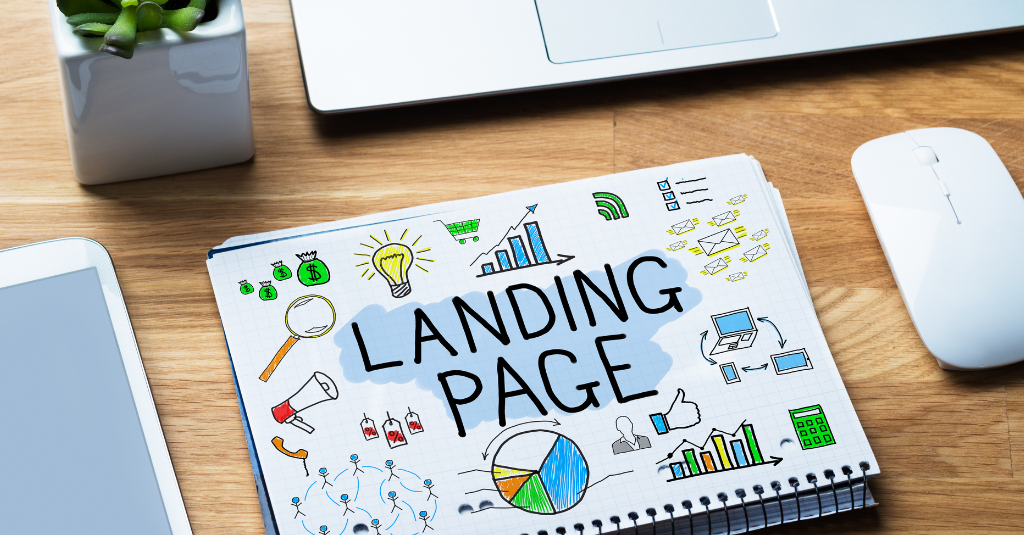
The Anatomy of a High Converting Landing Page
When your landing page and paid ads are in sync, you create a seamless user journey from the ad click to conversion. And these simple yet powerful adjustments can help boost your ROI by aligning with every step of the way.
But if you’ve nailed these five areas and still see weak results, it’s time to question the offer itself.
Unfortunately, no amount of headline testing or button tweaking can save a landing page built around something that people might not actually want. And if you find yourself in the same situation, here’s a guide that can help you craft a better offer.
Turn Your Landing Page Into Your Highest-Performing Ad Asset
If your ads are the engine of your lead generation, your landing page is the road beneath it.
No matter how powerful the engine, it won’t go far if the road’s full of potholes.
Right now, most teams are spending more on ads to fix what’s really a landing page problem.
And every week they delay, they’re teaching the algorithms to charge them more for the same clicks. That’s the quiet tax of inaction.
The smart move here is to start small… and, more importantly, start now.
Pick one high-spend campaign, audit the landing page, and fix just one issue: whether it’s speed, clarity, or message match. Track the difference over two weeks.
That small test often sparks the biggest mindset shift.
And remember, your ads and your landing page aren’t separate things; they’re one system.
When that clicks, your ad costs can drop, your conversion rates might rise, and suddenly the funnel works the way it should.
If you need help with building a stronger paid media strategy that delivers results, book a free paid media audit with us and learn more about our paid media performance management services.
About the Author





Get the best content marketing insights right in your inbox!
Subscribe to our Newsletter and get marketing insights delivered to your inbox every week.