








Can Facebook Ads Target Specific Users?

Can you target specific users on Facebook?
If you’ve run ads before, you probably remember when targeting felt like a superpower. You could stack interests, layer behaviours, and zero in on exactly who you wanted to reach. It felt like you were in control.
But if you’ve jumped into Facebook Ads recently, you might’ve noticed things feel… different.
The targeting options look slimmer. Your favourite interest filters are gone. And all the advice suddenly points to “going broad.”
So what gives? Can you still target specific people or not?
The short answer is: yes — but not in the way you might think.
In this article, you’ll learn:
- What types of targeting Facebook still supports (including Custom Audiences)
- How the shift to Meta’s Andromeda algorithm has changed what actually works
- And why the smartest advertisers today are focusing more on creative than on audience settings
Can Facebook Ads Still Target Specific Users?
Yes, but with limits.
If you have a list of customers or leads, you can absolutely still target them using Facebook’s Custom Audiences feature.
Upload email addresses, phone numbers, or other identifiers from your CRM, and Facebook will match those users (when possible) so you can show them ads directly.
This is useful for things like:
- Retargeting past customers
- Re-engaging cold leads
- Running loyalty or upsell campaigns


How Can You Use Meta’s Ad Auction System to Reduce Your CPA
How to Target Specific Users on Meta
To upload your list for use as a custom audience and target specific users through ads, head to Ads Manager, then click on Audiences on the left.
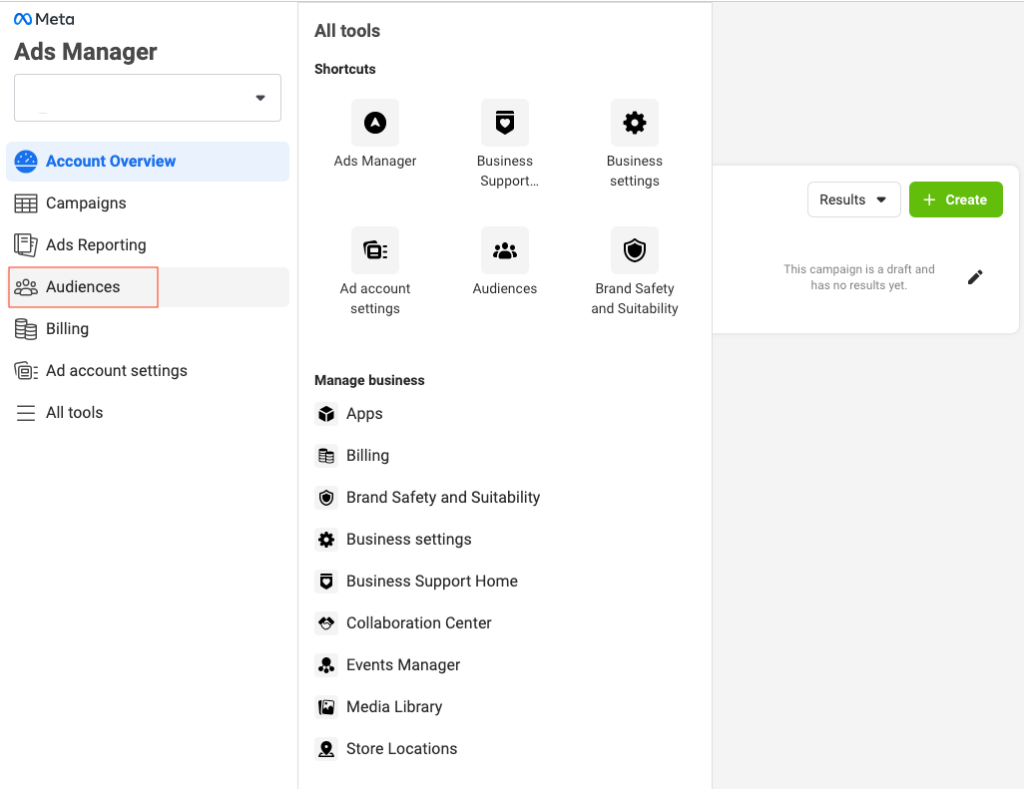
From there, click Create audience, then select Custom Audience.
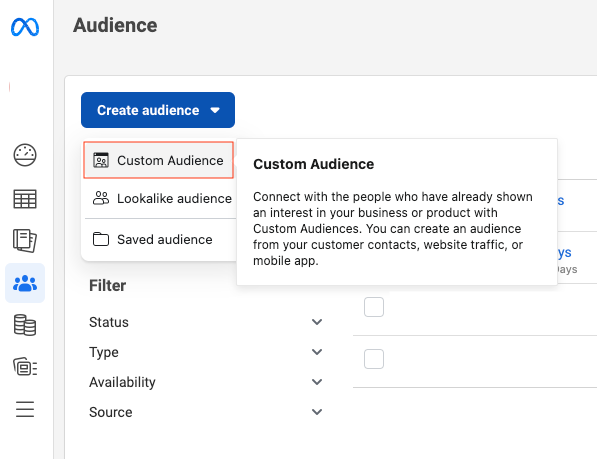
Finally, select Customer list as your source.
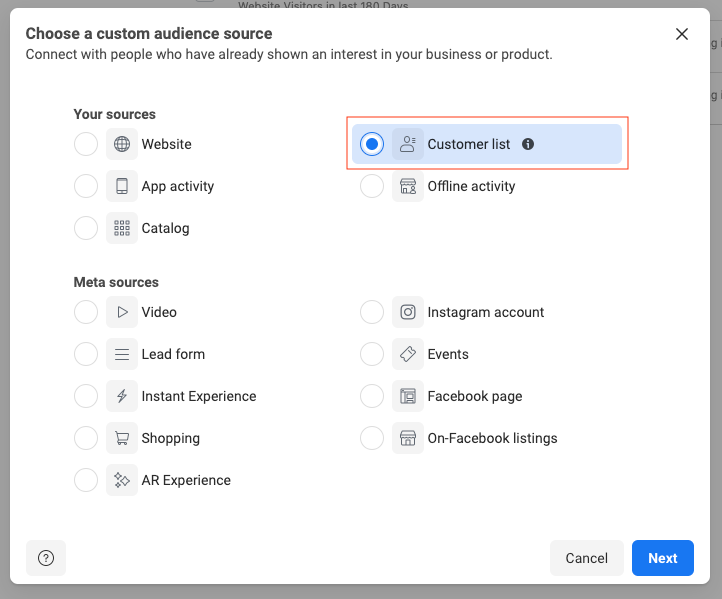
Now, you probably won’t be able to simply export a .CSV from your CRM and upload it. The data—what Meta calls “identifiers”—needs to be formatted correctly.
Meta offers a downloadable template with the correct formatting.
Once your custom audience is in the system, you can choose it when you create a new Meta ads campaign.
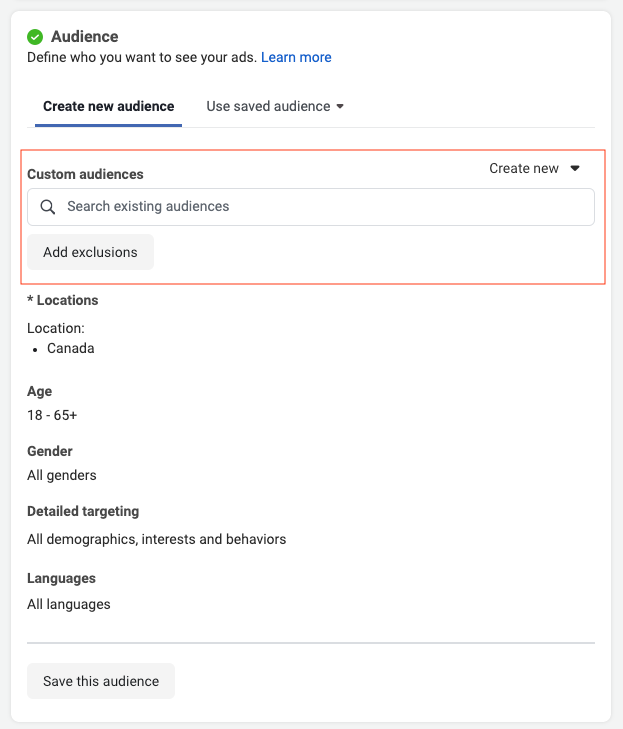
You can also build Lookalike Audiences from your list, letting Meta find new users who resemble your best customers. These are still effective, especially when based on high-quality data (e.g. high-value customers or purchasers).
However, if you’re thinking about targeting individual users one by one, or narrowing your audience with 10+ detailed filters — that’s where things have changed.
Meta has quietly pulled back many of the interest-based and behavioural targeting options that used to give advertisers tight control.
The reason? Privacy, machine learning, and performance. Meta’s system performs better — and respects more privacy boundaries — when it handles the targeting automatically.
So yes, you can target specific users. But before you do, the real question is: should you?
And that’s where the shift to the Andromeda algorithm comes in.

How to Create a Custom Metric in Meta Ads
What Targeting Options Still Exist in 2025?
Facebook hasn’t eliminated targeting, but it has refined how it works, and quietly deprioritised a lot of the older, granular tactics.
Here’s what’s still in play:
1. Custom Audiences
Still one of the most reliable options. Upload your own list of users (emails, phone numbers, app data) and show ads directly to them. Ideal for retargeting, upsells, and re-engagement.
2. Lookalike Audiences
Meta builds an audience that resembles your best customers. Still valuable, especially when based on strong first-party data like purchasers or high-LTV clients. But not as dominant as it once was.
3. Interest & Behaviour Targeting
These options still exist, but they’re more limited than they used to be. Many niche interests have been removed or merged into broader categories. Behavioural filters are also less precise, and often inferred by Meta rather than declared by the user.
That said, interest targeting can still work, especially when paired with great creative. But layering too many interests or exclusions tends to restrict performance, not improve it.
4. Demographic & Location Filters
You can still target by age, gender, language, and location. These help narrow reach when it’s strategically necessary (e.g. region-specific offers or compliance needs).
5. Advantage+ and Broad Targeting
This is where Meta is clearly pushing things. You give the algorithm minimal constraints (maybe just country and objective) and let it optimise delivery using its own behavioural data and machine learning.
Advantage+ campaigns are seeing lower CPAs in many industries because Meta’s algorithm (powered by Andromeda) is often better at finding high-intent users than manual targeting.
Bottom line: You still have control, just not in the way you used to. Facebook targeting today is less about picking the perfect user, and more about feeding the algorithm good signals: clean data, strong creative, and clear conversion goals.
Why Meta’s Andromeda Algorithm Changed the Game
In the past, Facebook Ads success hinged on targeting. You’d spend hours refining audiences, stacking interests, and creating exclusions to hit your perfect persona.
But then Meta rolled out Andromeda, the AI engine behind how ads are delivered today.
It changed everything.

Everything You Need to Know About Meta’s Ad Algorithm Changes
Andromeda is designed to optimise your ad delivery using billions of data points, faster and more accurately than manual targeting ever could.
Here’s how it’s changed the game:
- It’s optimising in real-time: Andromeda constantly tests and shifts your ad delivery based on performance. If a certain type of user is converting well, even if you didn’t target them, the algorithm finds more people like them and adjusts spend accordingly.
- It doesn’t need you to be precise: The more filters you stack (interests, exclusions, behaviours), the more you restrict the algorithm’s ability to learn and optimise. Broad targeting gives it room to explore what actually works, often outperforming hyper-targeted campaigns.
- It’s better at predicting intent than you are: You might think your buyer is a 35-year-old marketing manager who likes HubSpot. Andromeda might find that 45-year-old sales directors convert better, even though you never considered them. It sees patterns humans can’t.
- It rewards data + creative, not micromanagement: The system now works best when you feed it clean data (via pixel and Conversions API) and strong creative that resonates. Meta doesn’t want you managing every lever, it wants you focused on giving the algorithm the right signals.
The best-performing advertisers in 2025 aren’t trying to outsmart the algorithm, they’re giving it what it needs to do the job for them.
Creative is King Now, Not Targeting
You don’t need perfect targeting anymore, you need creative that finds and qualifies your audience for you.
In the old days, you could compensate for average creative with tight targeting. Today, the algorithm is your targeting and your creative is how it decides who to show your ad to.
Here’s what matters most now:
- Message-market fit: Write copy that speaks directly to your audience’s pain points, goals, or objections. This helps the algorithm figure out who the ad is relevant for, even inside a broad audience.
- Creative variety: Don’t rely on one ad. Test multiple hooks, formats, and angles. The algorithm will identify which versions resonate with different subgroups and shift spend accordingly.
- Strong opening visuals: The first 1–3 seconds of your ad matter more than anything. Use bold imagery, fast movement, or disruptive visuals to stop the scroll and earn attention.
- Clear, benefit-driven CTAs: Your call to action needs to be simple, specific, and aligned with the ad’s message. In a broad targeting setup, assume your audience doesn’t know you, so clarity wins.
- Native-looking formats: Use formats that blend in with the feed. Think UGC-style video, direct-to-camera talking heads, or casual product walkthroughs. These tend to outperform polished, ad-looking creative.
- Consistency between creative and landing page: The algorithm is watching how users behave post-click. Make sure your landing page matches the promise and tone of your ad to keep conversion rates high.

How to Create High-Performing Meta Ad Creatives
How to Win With Facebook Ads Today
So, can you target specific users on Facebook?
Yes, technically. But the real question is: is that the smartest way to grow right now?
Facebook Ads (aka Meta Ads) is a different game now. It’s not about building hyper-targeted audiences. It’s about understanding how Meta’s algorithm works and feeding it the right inputs.
Meta doesn’t reward control anymore. It rewards inputs.
If you stop chasing precision and start delivering quality, you’ll start seeing better results.
Want to know if your ad creative is optimised? Download our free ad audit guide to test your creatives and copy.
About the Author





Get the best content marketing insights right in your inbox!
Subscribe to our Newsletter and get marketing insights delivered to your inbox every week.