









How to Rank on ChatGPT

You’ve spent years fine-tuning your SEO strategy. Your blog ranks on page one. You’ve nailed your keywords. But then one day, a prospect says, “I just asked ChatGPT which tool to use and your brand didn’t come up.”
Suddenly, it hits you… the game has changed.
ChatGPT isn’t just a novelty, it’s where your buyers are now turning for advice, product recommendations, and decision-making shortcuts. And if you’re not being mentioned when they ask, you might as well not exist.
Here’s an image showing what a prospect might ask when looking for HubSpot Agencies, and as you can see we can rank second on the list:
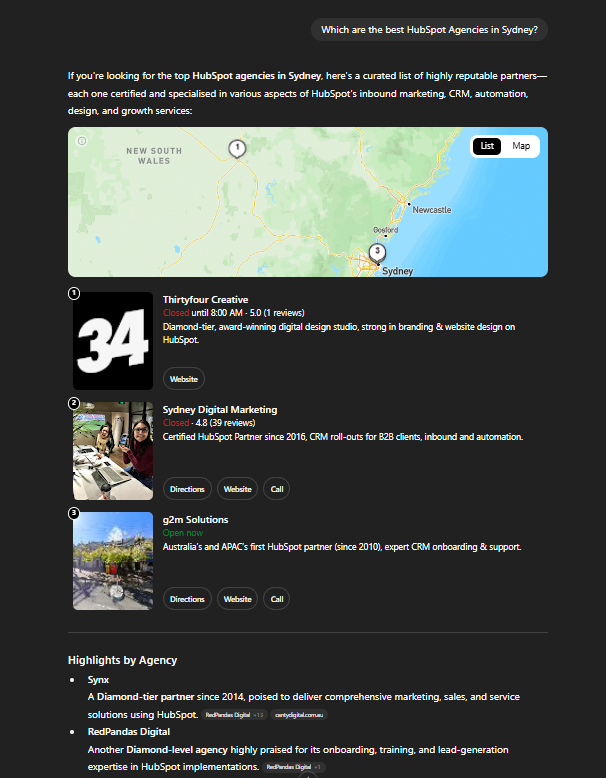
We’re not trying to brag. But it’s important to recognise that ranking on ChatGPT (and other AI tools that run off the same LLM) is becoming more and more important as consumers use these tools for search.
Here’s the good news: this isn’t guesswork. ChatGPT has patterns, and like traditional search engines, it draws from specific signals to decide which brands to recommend.
We know exactly how to rank on ChatGPT and in this article, you’re going to learn exactly how to get your brand in front of your buyers inside ChatGPT.
How ChatGPT Chooses What (and Who) to Recommend
If you’re expecting ChatGPT to work like Google, you’re in for a surprise. ChatGPT doesn’t “crawl” the internet in real time.

Technically, ChatGPT can search the web for up to date information, however, this is very different to a live, continuous crawling process of the web.
Instead, it’s trained on a massive dataset that includes books, websites, forums, product reviews, blog content, and more. It’s more like a really smart librarian than a search engine.
So how does it decide who to mention when someone asks for a recommendation?
Here’s what’s happening behind the scenes:
1. It pulls from patterns it has seen before
ChatGPT doesn’t “know” who’s the best CRM or email tool.
Instead, it draws on patterns across thousands of mentions from articles, listicles, guides, and discussions where certain brands consistently come up in a specific context.
If your brand is frequently mentioned alongside a certain keyword or topic (for example, “best CRM for small businesses”) you’re more likely to be included in a response.
2. It weighs credibility and clarity
Even though ChatGPT doesn’t have opinions, it was trained to value clear, authoritative content.
That means the sources it’s absorbed (articles with strong headlines, expert-backed commentary, or content published on high-authority domains) carry more weight in shaping its responses.
3. It avoids recommending unknown or unverified brands
ChatGPT is cautious (well, it tries to be).
It leans towards brands with a digital footprint, such as brands that have mentions in trusted publications, customer reviews, and comprehensive product pages.
If your brand has minimal online presence, it’s unlikely to be surfaced in answers.
Traditionally, ranking on Google focused on website specific optimisations. Now, while that remains important, other factors also have a (perhaps stronger) impact on rankings in ChatGPT, such as social media and general brand publicity online.
Bottom line? ChatGPT recommends what it “remembers” and it remembers what it sees consistently, clearly, and across multiple credible sources.


What is ChatGPT 5 and How is it Different?
The 5 Factors That Influence Your Rank on ChatGPT
Now that you understand how ChatGPT forms its answers, let’s get tactical. If you want to increase the chances that your brand shows up in its recommendations, these are the five key factors that matter most.
1. Consistency Across the Web
ChatGPT isn’t pulling from a single source, it’s looking for repetition. If your brand is mentioned on your blog, in guest posts, on third-party review sites, and across forums, those repeated signals build trust in the model’s “memory.”
A one-off mention won’t cut it. Saturation does.
Quick win: Audit your brand mentions. Are you showing up in top 10 lists, comparison articles, or customer conversations on public platforms?
2. Topical Authority
The more content you create around a specific niche, the more likely ChatGPT is to associate your brand with that topic. Think of it as the AI version of E-E-A-T (Experience, Expertise, Authoritativeness, and Trustworthiness).
Quick win: Build clusters of content around key buyer questions and product comparisons. Don’t just have one blog post on a topic, create a web of content that reinforces your authority.
3. Third-Party Credibility
You could shout about your product all day on your own site but what matters more is who else is talking about you.
Media features, awards, influencer endorsements, and especially customer reviews all strengthen your brand’s credibility.
Quick win: Encourage reviews on high-visibility platforms (like G2, HubSpot, Capterra, Google Reviews or Trustpilot), and aim to get featured in industry roundups or guest blogs.
4. Structured, Clear Content
ChatGPT loves clarity. If your content is muddled, overly fluffy, or hard to parse, it’s less likely to leave an impression on the model.
On the flip side, if your content is clear, structured, and uses simple language, it’s more easily retained and regurgitated in relevant prompts.
Quick win: Use clear headings, bullet points, and straightforward language in all your content. Imagine you’re writing for someone who’s skim-reading, because ChatGPT essentially is.
5. Relevance to the Prompt
Finally, even if your brand is well-known, it won’t show up unless it’s relevant to what’s being asked. If someone asks for “affordable project management tools for freelancers” and your messaging is all about enterprise-grade features, you could be skipped.
Quick win: Align your product messaging with specific user intents. Create content for different buyer personas and make it easy for AI to associate your solution with the right use cases.
Together, these five factors act like levers.
The more of them you pull, consistently, the higher your odds of being mentioned when someone asks ChatGPT for a recommendation in your space.
Key Strategies to Rank on ChatGPT
Now that you know what influences ChatGPT’s recommendations, it’s time to take action. Unlike Google, you can’t “submit” your site or optimise with meta tags, but there are clear strategies that boost your visibility in ChatGPT’s world.
1. Create Content That Mimics What People Ask ChatGPT
If you want to be recommended by ChatGPT, you need to mirror the questions people are asking it.
Think “What’s the best [category] for [persona]?” or “Top tools for [industry pain point]”.
What to do:
- Write list-style articles that match real buyer queries.
- Use titles like “Best X for Y” or “Top Tools for…”
- Make sure your brand is one of the solutions featured.
If you don’t, someone else will, and that’s the content ChatGPT learns from.

The Best 5 Topics to Drive Traffic Leads & Sales
2. Make Sure You’re in the Right Lists
Much of ChatGPT’s knowledge comes from third-party listicles, comparisons, and product roundups. If you’re not on those lists, you’re not in the conversation.
What to do:
- Pitch editors of roundup-style blogs or industry publications.
- Submit your tool or service to curated directories and review platforms.
- Guest post and include natural product mentions where appropriate.
3. Use Natural, Conversational Language
ChatGPT favours content that sounds like how people talk. If your blog posts read like a PhD thesis or your product pages are packed with jargon, you’re making it harder to get remembered.
What to do:
- Write like you’re answering a friend’s question over coffee.
- Use simple, descriptive language that matches user intent.
- Add FAQs, comparisons, and clear benefit statements.
4. Strengthen Your Off-Site Reputation
Off-site mentions are just as important (maybe more) than your own site.
What to do:
- Prioritise review generation across G2, Capterra, and Google Reviews.
- Be active in communities like Reddit and Quora (without being spammy).
- Encourage happy customers to mention you in LinkedIn posts or blog articles.
5. Publish Authoritative, Skimmable Content
The best-performing content for AI reference is both in-depth and easy to digest. If it’s too short or too dense, it’ll be skipped or forgotten.
What to do:
- Break your content into clear sections with headings.
- Use bullets, numbered lists, and short paragraphs.
- Prioritise substance over fluff and answer questions directly and clearly.
Ranking on ChatGPT isn’t about gaming the system, it’s about being the brand that consistently shows up where it matters, in the ways that matter.
Make your content clear, your presence broad, and your message focused and you’ll be well on your way to earning those recommendations.
How to Track and Test If You’re Being Recommended
One of the biggest challenges with ChatGPT is that there’s no analytics dashboard. You can’t log in somewhere and see how often your brand is mentioned in AI conversations.
But that doesn’t mean you’re flying blind. Here’s how to track your visibility and test whether your efforts are working:
1. Ask ChatGPT Directly
This sounds obvious, but it works.
What to do:
Open ChatGPT and type prompts your buyers would realistically use, like:
- “What’s the best [type of product] for [persona]?”
- “Top alternatives to [competitor]”
- “Tools for [industry need]”
See if your brand comes up. If it doesn’t, note who does… those are your AI competitors.
2. Test Different Prompt Angles
Sometimes it’s not that your brand isn’t relevant, it’s that the prompt doesn’t match how you’re positioning yourself.
What to do:
Try variations in tone, persona, or intent.
For example:
- “Affordable email marketing tools for small businesses”
- “Email platforms with great automation for beginners”
This can help you spot gaps in your messaging or content strategy.
3. Monitor Your Referring Traffic and Mentions
AI mentions are hard to track directly, but they often lead to a spike in branded searches, direct traffic, or mentions elsewhere.
What to do:
- Keep an eye on Google Search Console for brand-related keywords.
- Set up alerts using tools like Google Alerts or Mention to catch unexpected backlinks or brand mentions.
- Watch for patterns—did traffic spike after launching a new piece of content or getting featured in a roundup?
Get in Early, or Get Left Behind
ChatGPT isn’t just another shiny tool… it’s changing how people research, compare, and make decisions.
Right now, your potential buyers are asking it questions they used to ask Google. And when they do, they’re getting answers that may—or may not—include you.
This isn’t about replacing your SEO strategy. It’s about evolving it.
Brands that adapt early will gain a major edge.
Why? Because AI tools like ChatGPT tend to reinforce what they’ve already seen. The earlier your brand gets mentioned, the more likely it is to be remembered and recommended down the line.
You don’t need to game the system. You just need to show up, consistently, in the right places, with the right message.
Because in the world of AI, visibility isn’t automatic. It’s earned.
Next, learn how you can better leverage AI to save 20+ hours per week.

How to Build a Custom ChatGPT Bot in Less Than 10 Minutes to Save You 20+ Hours Per Week
About the Author





Get the best content marketing insights right in your inbox!
Subscribe to our Newsletter and get marketing insights delivered to your inbox every week.