







HubSpot Vs GoHighLevel: Which Is Better For You?

Key Takeaways
- GoHighLevel’s Unlimited plan starts at AUD $455/month with unlimited sub-accounts. HubSpot’s Marketing Hub Professional starts at AUD $1,380/month, about three times the cost
- GoHighLevel tracks lead source through referrer and campaign reports and shows revenue against closed opportunities. It doesn’t offer multi-touch attribution across the full customer journey, which HubSpot’s Professional and Enterprise tiers include
- Both platforms can trigger automated actions when a deal changes pipeline stage. GoHighLevel does this through workflow triggers you build yourself. HubSpot ships with pre-built lifecycle-stage automation that needs less manual setup
- GoHighLevel includes a native Contact Engagement Score for basic lead scoring. HubSpot’s lead scoring lets you weight multiple properties and behaviours, and it feeds directly into sales handoff and revenue reporting
- HubSpot’s Enterprise onboarding costs about AUD $10,080 when bought directly. GoHighLevel has no mandatory onboarding fee, though most teams use free bootcamps or pay a third party for setup help
- Teams under 5 people on a tight budget usually do better with GoHighLevel’s lower cost and faster setup. Teams with a dedicated sales team and leadership asking for forecasts usually do better with HubSpot’s reporting depth
If you’re stuck choosing between HubSpot vs GoHighLevel, chances are your team can’t agree either.
Marketing wants better automation. Sales wants a CRM people will actually use. Leadership wants clearer proof of ROI.
You’re expected to make the right call without blowing the budget or derailing your team for six months.
That pressure is fair. Picking the wrong platform can choke growth and drain your team’s time. You’ll be dealing with the fallout long after the decision feels final.
We’ve watched hundreds of businesses get this decision wrong before they came to us.
Get it wrong and you’ll feel it everywhere. Poor lead quality, reporting nobody trusts, frustrated sales reps, and marketing results no one can explain.
As a HubSpot Diamond Partner, RedPandas has onboarded and repaired hundreds of HubSpot portals across APAC. We’ve also moved teams off platforms like Salesforce that no longer fit how they sell.
We’ve seen how much damage the wrong system causes. And how much clarity the right one brings.
This article breaks down how HubSpot and GoHighLevel actually compare. You’ll see who each platform is really built for. And which one will help your marketing and sales teams generate revenue without the headaches.
Quick Answer
HubSpot is the stronger choice for growing businesses that need multi-touch attribution, native lead scoring, and revenue reporting shared across marketing and sales.
GoHighLevel is the stronger choice for solo operators, agencies, and small teams who want an all-in-one toolkit for around AUD $455/month.
HubSpot’s Marketing Hub Professional starts at about AUD $1,380/month, roughly three times GoHighLevel’s Unlimited plan, but it includes attribution modelling and CRM adoption tools built for scaling sales teams.
Choose GoHighLevel if speed and budget matter most; choose HubSpot if your sales team needs pipeline visibility and forecasting.
Need help figuring out to get your business started on HubSpot? Get in touch with RedPandas’ experts for a free consultation and strategy session:


Book Your Free HubSpot Consultation With RedPandas’ Experts
The Differences Between HubSpot and GoHighLevel
Before comparing features, you need to understand what each platform actually is at its core.
Most marketers skip this step. They jump straight into pricing charts or automation screenshots. That’s exactly why so many teams choose the wrong system, then spend months fixing it.
HubSpot and GoHighLevel are built for different types of businesses. Their philosophy, product design, and long-term trajectory aren’t the same.
What is HubSpot?
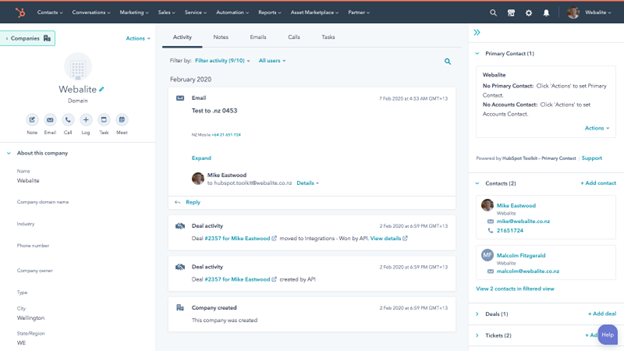
HubSpot is a scalable revenue platform and CRM designed for businesses that want clarity, alignment, clean data, and long-term growth. It’s a structured system that pushes sales, marketing, and customer service to work together properly.
The platform is intentionally designed to be:
- User-friendly, so your team actually adopts it
- Data-clean, so reporting is accurate
- Scalable, so the system grows with your business
- Cross-functional, so marketing, sales, and service aren’t siloed
HubSpot shines when your business needs:
- Better lead qualification
- Accurate reporting and attribution
- Stronger sales and marketing alignment
- Clean CRM adoption
- Predictability and visibility
- Or a long-term platform that won’t break when you scale
HubSpot is built for businesses that want structure and sustainable growth instead of quick hacks.

What Does HubSpot Do? (The Ultimate 2026 Guide)
What Is GoHighLevel?
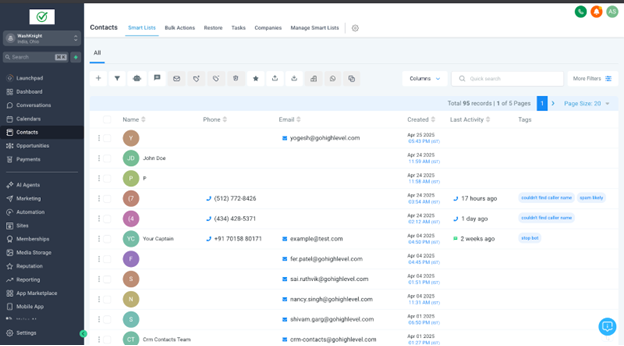
GoHighLevel (GHL) is an all-in-one marketing platform created originally for solo operators, agencies, and small teams who want maximum functionality at the lowest cost.
It combines CRM features, marketing automation, landing pages, email and SMS, and funnel tools in one system.
GoHighLevel’s philosophy is different from HubSpot’s. It’s built for speed, flexibility, and affordability, not enterprise-clean data or cross-team governance.
GoHighLevel shines when businesses need:
- A low-cost tool with lots of features
- Quick funnel building
- Basic automation that’s fast to set up
- A “do everything” platform without buying multiple tools
- SMS-heavy workflows
- Fast setup for simple processes
It has fewer built-in reporting and attribution tools than platforms built for larger, multi-team operations, and its native lead-scoring and pipeline automation need more manual setup to match what HubSpot ships pre-built.
For smaller teams or early-stage start-ups, GHL feels like a bargain. For scaling companies, that gap in reporting depth becomes harder to work around.
GoHighLevel is built for smaller teams who want a quick, affordable, all-in-one toolbox.
HubSpot vs GoHighLevel: Side-by-Side Comparison
| Category | HubSpot | GoHighLevel |
| Best For | Medium to large teams, scaling businesses, and companies needing clean data and strong alignment | Start-ups, small teams, budget-conscious users |
| Philosophy | Structured, scalable, built around best practice | Flexible, fast, and “cheap all-in-one” |
| Ease of Use | Extremely user-friendly and intuitive | Functional but rougher, more DIY |
| CRM Adoption | Very high: reps actually use it when trained through proper HubSpot onboarding with a solutions partner | Variable: depends heavily on the team |
| Automation Depth | Deep, reliable workflows with clear reporting on what triggered what | Fast to build; needs more manual upkeep to stay clean as campaigns get complex |
| Reporting | Multi-touch attribution across the full customer journey | Tracks lead source and conversion revenue by opportunity, but no multi-touch attribution |
| Scalability | Built to grow with your business | Can hit reporting and process limits as your team and pipeline grow |
| Integrations | One of the largest native and marketplace ecosystems | Zapier, its own marketplace, and API access; smaller ecosystem than HubSpot’s |
| Cost | Higher upfront, lower long-term inefficiency | Very affordable, but may become limiting |
HubSpot vs Salesforce: Comprehensive Comparison Guide
HubSpot vs. GoHighLevel: Marketing Features Compared

Choosing between HubSpot and GoHighLevel isn’t about who has the longest feature list.
Almost every platform looks impressive on paper. What matters is how those features perform under real conditions: live campaigns, flowing data, and things breaking. And whether your team can collaborate without losing their minds.
Let’s break down the differences:
Marketing Automation
GoHighLevel gives you a lot out of the box: email, SMS, funnels, pipelines, even voicemail drops.
It’s fast to build, perfect when you need something live today, not next week. The trade-off: it gets clunky, and breaks more easily as your journeys get complex.
HubSpot, on the other hand, focuses on reliability.
Workflows are cleaner. Logic is clearer. Reporting tells you exactly what’s happening at every step. Running multi-channel campaigns and need automation that scales with you? HubSpot is simply stronger.
Campaign Management
Here’s where the gap gets obvious.
GoHighLevel is campaign-heavy but lacks deeper insight.
You can build funnels, landing pages, emails, and SMS sequences. Tying that back to pipeline and revenue is manual work, though: GoHighLevel doesn’t connect the full first-click-to-revenue journey automatically.
HubSpot, alternatively, gives you the full lifecycle: first click, lead, SQL, revenue.
It’s built for marketers who need to prove ROI, not just launch activities.
If your leadership keeps asking, “Which campaigns actually brought in revenue?” HubSpot makes that answer easy to pull up.
Lead Generation Tools
Both platforms give you landing pages, forms, and email tools. For lead capture alone, they’re on equal levels: GoHighLevel’s templates are quicker to spin up, while HubSpot’s builder covers the same ground.
The real difference shows up after the lead comes in.
GoHighLevel scores it with a single Contact Engagement Score based on activity. HubSpot weights scores across multiple properties, like job title, deal size, or page visits, then routes that score straight to your sales team.
Lead volume barely separates these two platforms. What separates them is whether your sales team knows who to call first.
If your reps keep asking “why did I get this lead,” HubSpot’s scoring model gives you the answer.
Tracking and Attribution
GoHighLevel’s Attribution report tracks referrer, campaign, and revenue tied to closed opportunities. What it won’t do is connect multiple touchpoints across a longer journey. Three ads, two emails, one conversion? GoHighLevel credits a single source, not the full path.
HubSpot builds multi-touch attribution in instead. Every email open, form fill, ad click, deal stage, call, and contact action feeds into one record.
Here’s what that looks like: a contact clicks a LinkedIn ad, downloads a guide two weeks later, then books a demo after a follow-up email. HubSpot shows all three touchpoints and the revenue credit each one earns. Spend money on paid media, and you’ll see exactly which channel pulls its weight, and which one just adds clicks.
Small team, focused on speed and scrappy execution? GoHighLevel does the job. Need stability, clarity, and room to scale without chaos? HubSpot is the better choice.
Can HubSpot Replace Your Marketing Manager?
HubSpot vs. GoHighLevel: Sales, CRM & Reporting Compared

Here’s where HubSpot and GoHighLevel differ on what actually matters for sales performance:
CRM Usability & Adoption
GHL started life as an all-in-one marketing platform, not a pure CRM. Pipelines, opportunities, and task management are there, but they feel more like add-ons than a core strength.
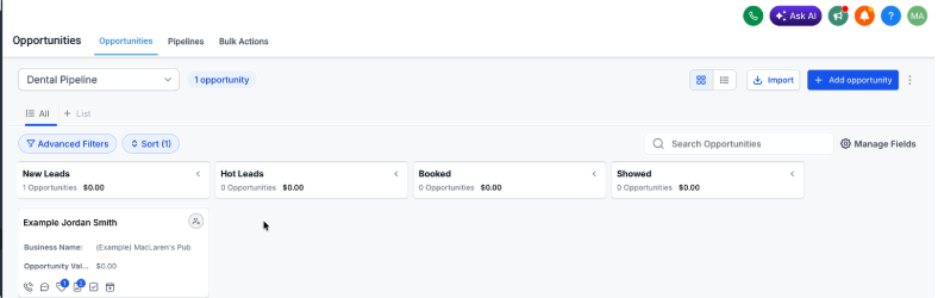
Fine for a small team, or one person doing a bit of everything. Once you have a proper sales team, it starts to feel stretched.
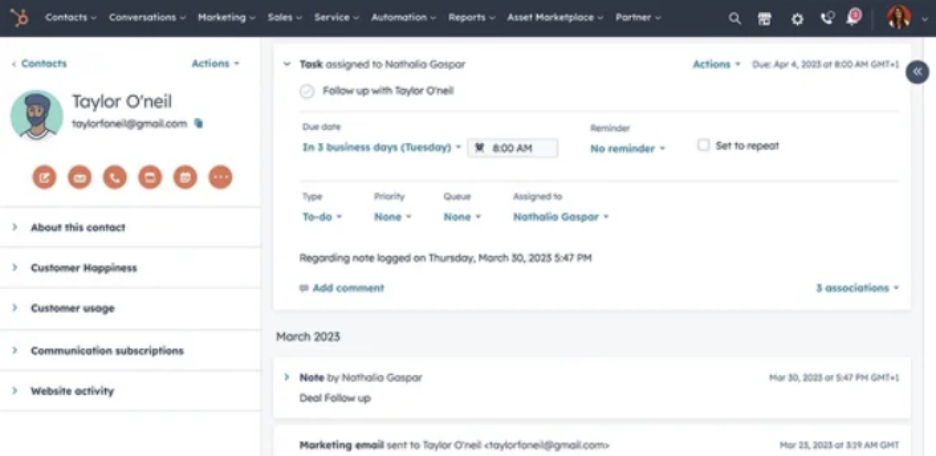
HubSpot is built around its CRM. The interface is clean, records are easy to navigate, and your team sees everything on one screen: emails, calls, deals, tasks, notes. If a CRM is painful to use, reps just won’t use it.
Pipeline Management & Handover from Marketing
GoHighLevel lets you build pipelines, move deals through stages, and trigger workflows on stage changes or lead value.
What takes more effort is the marketing-to-sales handover: you’re wiring each automation together yourself, and keeping everything in sync depends on your own setup.
HubSpot ships more of that pre-built.
Lead status, lifecycle stages, and automation are connected from day one. Deals get created automatically when a lead crosses a score threshold, routed to the right rep, with tasks firing without you building the logic.
Reporting & Revenue Visibility
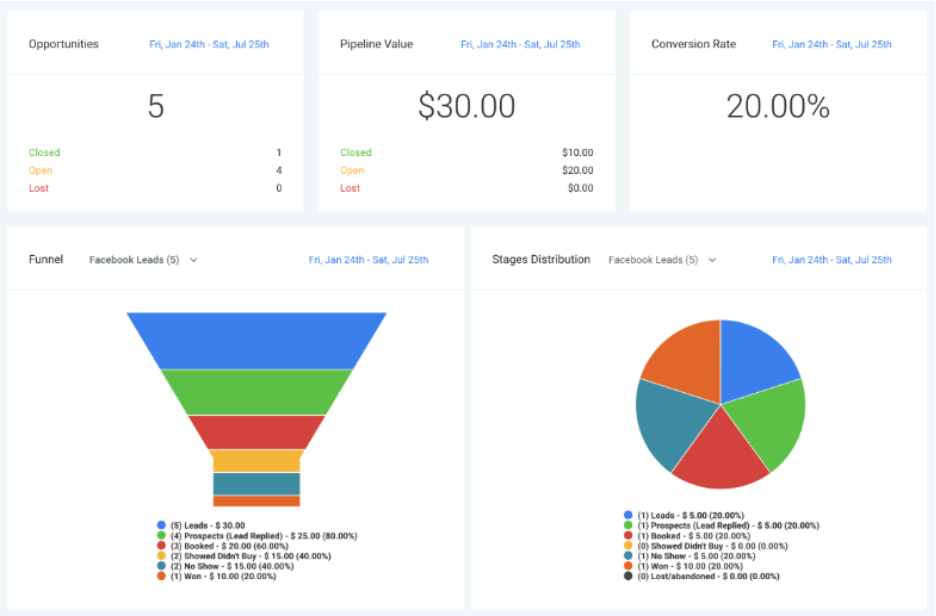
GoHighLevel gives you opportunity counts, pipeline value, conversion rate, and a stage-by-stage funnel view. Enough to keep a small pipeline moving, not enough to answer “what’s our forecast?” with confidence once you grow.
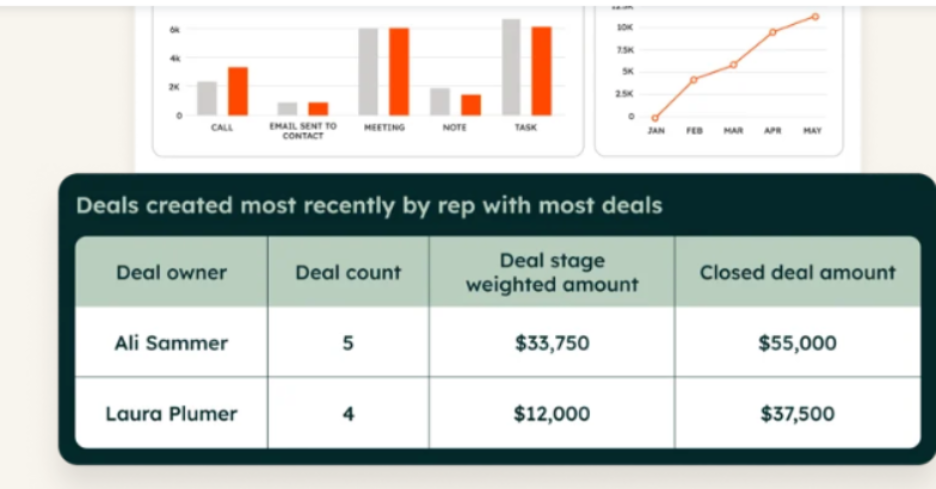
HubSpot is built for revenue reporting: track deals by owner, stage, source, product, or region, and see exactly where deals are getting stuck.
Sales Productivity Tools
Both platforms give you email, templates, and tasks, built for different approaches.
GoHighLevel is built around volume: bulk SMS and email sequences, voicemail drops, multi-channel follow-ups you can fire off fast.
HubSpot is built around fewer, better-timed touches: sequences, templates, and playbooks that log every call and sync with your calendar.
If you’re chasing volume, GoHighLevel keeps up.
But if you’re working fewer, bigger deals that need full context before every call, HubSpot gives you exactly that.

5 Signs You’ve Outgrown Spreadsheets and Need a CRM
Cost Comparison Between HubSpot vs. GoHighLevel
Usually, this is the part where most people get confused because they compare HubSpot’s price tag to GoHighLevel’s price tag and assume the story ends there.
But, as we’ve seen with hundreds of clients who came from other CRMs: it doesn’t.
The real question isn’t “Which tool is cheaper?”
It’s: “Which tool costs you more once you factor in time, adoption, missed leads, broken processes, and long-term growth?”
Here’s a cost comparison table between HubSpot and GoHighLevel to help you weigh out the short and long-term costs better:
| Cost area | HubSpot (typical) | GoHighLevel (typical) |
| Core subscription (for small teams or startups) | HubSpot Starter Customer Platform: from AUD $24/month for core marketing, sales, service, CMS, and ops tools. | Starter: about AUD $137/month for 3 sub-accounts, unlimited contacts and users. No free plan. |
| Core subscription (scaling teams) | Marketing Hub Professional: about AU$1,380/month. Marketing Hub Enterprise: about AU$5,580/month, billed annually. | Unlimited: approx. AUD $421/month, unlimited sub-accounts Agency Pro: approx. about AUD $704/month, SaaS mode and white-labelling. |
| Onboarding (bought through vendor or through a partner) | HubSpot onboarding (mandatory for Professional onwards): about AUD $5,700, or AU$5,900 if you work with a certified partner like RedPandas. Enterprise: about AUD $10,080 if bought directly from HubSpot, or AUD $38,000 onwards if you work with RedPandas. | No mandatory onboarding fee at any tier. Most teams self-serve with GoHighLevel’s bootcamps or pay a third party for setup help. |

Is HubSpot Right for My Business? Here’s How to Tell
Which Option Is Better for Your Team?
HubSpot and GoHighLevel are not built for the same kind of business. Here’s a quick framework to help you make the right choice for your operations:
If You’re A Small Team, Early-Stage, Or Running On A Tight Budget: Choose GoHighLevel
GoHighLevel gives you:
- Lots of tools in one place
- Low monthly cost
- Fast setup
- Enough automation to keep things moving
Built for launching fast and testing ideas, not running a full-scale CRM and attribution system.
But, take note of the trade-off: speed and affordability for stability, reporting depth, and scalability.
If You’re A Growing Business That Takes Revenue Seriously: Choose HubSpot
HubSpot gives you:
- A clean, intuitive CRM your team will actually use
- Reliable automation that scales
- Proper attribution and revenue reporting
- Smooth alignment between marketing and sales
- A long-term platform that won’t buckle as you grow
If your CEO wants clarity, sales needs structure, and marketing needs to prove ROI, HubSpot delivers all three.
It might cost more, but you get a platform that drives growth instead of holding it back.
Frequently Asked Questions: HubSpot vs. GoHighLevel
Is GoHighLevel cheaper than HubSpot?
Yes. GoHighLevel’s Unlimited plan costs about AUD $455/month with unlimited sub-accounts, while HubSpot’s Marketing Hub Professional starts at AUD $1,380/month. HubSpot’s Starter tier narrows that gap, starting from AUD $24 to $30/month for core CRM access. The gap widens again at enterprise level, where HubSpot’s Marketing Hub Enterprise runs about AUD $5,580/month, while GoHighLevel’s SaaS Pro is about AUD $760/month.
Can GoHighLevel do everything HubSpot does?
GoHighLevel covers many of the same categories as HubSpot, including CRM, email and SMS marketing, funnels, and basic pipeline management. It’s not a like-for-like replacement for growing sales teams, though, because it lacks HubSpot’s multi-touch attribution and enterprise-grade revenue reporting. For solo operators and small agencies running simple funnels, GoHighLevel usually covers what they need.
Does GoHighLevel have lead scoring?
Yes. GoHighLevel includes a native Contact Engagement Score that ranks leads based on activity. It’s more basic than HubSpot’s lead scoring, which lets you weight scores across multiple contact properties, behaviours, and lifecycle stages. Sales teams that need fine-grained lead prioritisation tied to broader revenue reporting usually get more out of HubSpot’s model.
Which is better for small businesses, HubSpot or GoHighLevel?
For very small teams and early-stage start-ups on a tight budget, GoHighLevel’s lower monthly cost and faster setup usually make more sense. Once a business has a dedicated sales team, multiple marketers, or leadership asking for forecasting, HubSpot’s structure and reporting depth typically justify the extra cost. The right choice depends on your team size and revenue tracking habits.
Does GoHighLevel have attribution reporting like HubSpot?
GoHighLevel’s attribution reporting tracks lead source through referrer and campaign data, and shows revenue against closed opportunities. It doesn’t offer multi-touch attribution modelling across the full customer journey, which HubSpot’s Professional and Enterprise tiers include. Businesses running multi-channel campaigns that need to trace revenue back to specific touchpoints usually need HubSpot’s deeper model.
Is HubSpot worth the extra cost compared to GoHighLevel?
For businesses focused on scaling revenue with clean reporting, yes. HubSpot’s Marketing Hub Professional costs roughly three times GoHighLevel’s Unlimited plan, but it includes attribution modelling, native lead scoring, and CRM adoption tools that reduce time spent fighting the system. For a small team still testing ideas on a tight budget, that extra cost isn’t always justified yet.
What’s the main difference between HubSpot and GoHighLevel?
HubSpot is built as a structured, cross-functional revenue platform for teams that want clean data and long-term scalability. GoHighLevel is built as an affordable, all-in-one toolkit for solo operators, agencies, and small teams that prioritise speed and low cost over reporting depth.
Does GoHighLevel charge onboarding or setup fees?
GoHighLevel doesn’t charge a mandatory platform onboarding fee. Most teams either set themselves up using GoHighLevel’s free bootcamps, or pay a third-party freelancer or agency for support. HubSpot, by comparison, has a formal onboarding fee for Professional and Enterprise tiers, which a certified partner can sometimes reduce or bundle.
Can I switch from GoHighLevel to HubSpot later?
Yes. RedPandas has helped dozens of clients move off platforms that no longer fit their stage of growth and onto HubSpot. The longer a migration is delayed, the more pipelines, automations, and historical data need to be rebuilt, so it’s worth planning the switch before your team outgrows the platform.
Go With the Option that Better Suits Your Needs
If you’re a small team still finding your rhythm, GoHighLevel lets you move fast without torching your budget.
But if you’re building a real marketing engine, waiting to move to a platform built for scale like HubSpot only makes the transition harder.
The longer you wait, the more painful and expensive the fix becomes.
Every growing business hits a moment where yesterday’s tech becomes today’s bottleneck. If that’s you, don’t let it drag out.

How to Set a Digital Marketing Budget for 2026
About the Author




Get the best content marketing insights right in your inbox!
Subscribe to our Newsletter and get marketing insights delivered to your inbox every week.