









Content Marketing Shouldn’t Take 6 Months to Produce Results

How long do you think it takes to generate results from content marketing? The traditional view has been that it’s a slow game, often taking up to six months or more to produce significant results. But what if I told you that it doesn’t have to be this way? If implemented correctly, content marketing can start producing results much sooner. This article addresses a fundamental question many executives and marketing leaders ponder: how long does it really take to get results from content marketing?
Breaking the Traditional Dogma of Content Marketing Success
The conventional wisdom of content marketing success often emphasises measures like traffic, views, likes, and shares.
While these metrics are certainly useful for gauging reach and engagement, they don’t necessarily translate to the end goal for most businesses: sales.
Instead of focusing on these metrics, companies should be tracking the Return on Investment (ROI) of their content marketing efforts. In order to effectively track the ROI of your content efforts, you’ll need a system in place to measure and centralise your data.
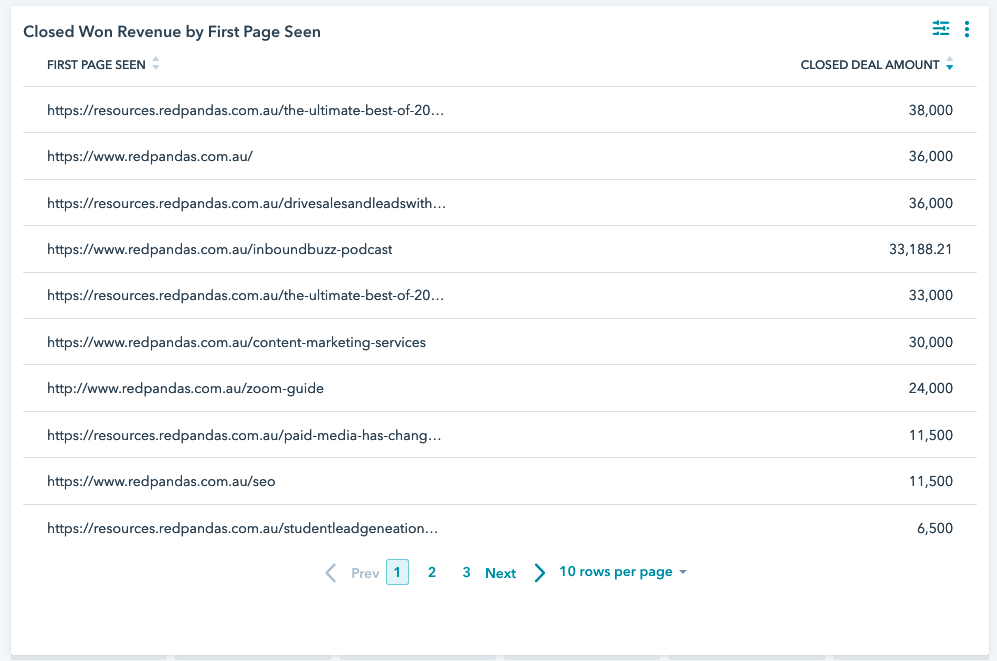
HubSpot is one example of a tool that can help you link your content marketing initiatives directly to sales, providing a clearer picture of their effectiveness. In the below image, you can see a report on HubSpot showing the revenue generated from specific blog articles on our website.
If you’re not too fond of HubSpot, there are some worthwhile HubSpot alternatives you may want to look at. Whatever CRM you use, you want to ensure that it has the capability to attribute revenue from content.
But to really achieve sales-oriented results from your content marketing, you must adopt a “sales first” approach. How do we do this?
The Sales First Approach to Content Marketing
A common issue in many organisations is the siloed operation of the marketing and sales departments.
Often, marketing produces content that isn’t fully leveraged by sales, while sales teams answer the same questions on calls repeatedly, without relaying these common queries back to marketing.
When marketing and sales align, they can collectively create content that directly addresses the questions and concerns of prospective buyers, saving time for salespeople and providing value to the prospects.
This process, known as “Assignment Selling,” involves the sales team relaying frequently asked questions to the marketing team, which then produces content to answer these queries.
This approach ultimately increases close rates and shortens the sales cycle, positively influencing your bottom line.
While content marketing without a sales first approach may take longer periods of time to kick into gear, a sales first approach can speed up your results and impact your bottom line right from the moment you publish your first piece of content.
How Long Should it Take to Produce Results with this Approach to Content Marketing?
With the sales first approach – where sales is actually sharing that content with leads they come in contact with – the results from content marketing are almost instant.
Essentially, once you have your first piece of content published (such as a blog article answering a buyer question), you can begin using that in your sales cycle, which will immediately make an impact.
For example, if in a first sales conversation if someone says ‘I’m trying to decide between HubSpot and Salesforce’ – guess what we’re sending them after the call? Yep, a detailed (and honest) review of HubSpot vs Salesforce article! We’re not just going to talk about it in passing on the call, we’re going to empower them with info they can read and share with their organisation afterwards.
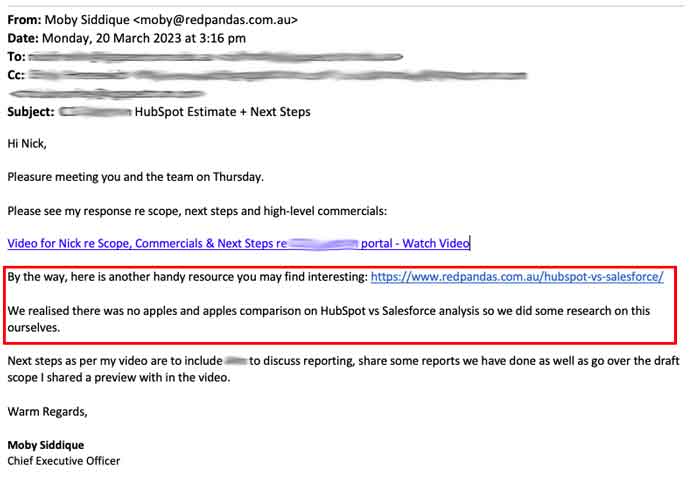
If someone asks about a competing product in our sales process you bet we have a Vs article in our chest of sales content!
Another example from the OG of buyer-lead They Ask, You Answer content: if you’re selling swimming pool installations in residential homes, you might publish a blog article titled ‘Comprehensive comparison of the different types of pools for your home’.
This article might answer questions around differences in cost, features, upsides and downsides for different types of pool installations.
You might then send this to your buyer before you visit their home. By the time you walk into their living room and discuss the pool installation, they already know exactly what they want.
This saves you time and increases your chances of getting the sale. In fact, Marcus Sheridan found that this improved his close rates from around 15-20% all the way up to 80% (They Ask, You Answer book).
In this way, if you’re strategic around the content your marketing team is publishing, you can start using this system immediately to influence your sales and ultimately make an impact on your bottom line.
Content Marketing doesn’t have to take 6 months to work. By using a sales first approach, you can see results immediately.
The effectiveness of this method hinges on ensuring that your sales enablement content follows these three steps:
- Helps customers navigate their buying decision with real, meaningful information, such as cost/price comparisons, problem analysis, and clear comparisons with other products or services. To do this effectively, you can read our guide on the best five content topics to write about and our guide on using the customer journey model to brainstorm content ideas.
- Enables sales reps to overcome objections and guide prospects over their indecision. The content should help the customer visualise the outcome, evaluate alternatives properly, and provide enough information to satisfy their due diligence.
- Progresses the deal forward by closing the trust gap and ensuring that all stakeholders have the necessary information to make a decision.
With content that follows these guidelines, results can start appearing the day it’s published—not in two, one, or six months, but immediately.
How do I Implement Content Marketing?
Implementing this approach to content marketing starts with aligning your marketing and sales teams, ideally by creating a unified “Revenue Team” composed of key stakeholders from both departments.
Regular meetings between these teams, often called Brainstorming Sessions, are essential to share common questions, address buyer concerns, and identify the content that needs to be created.
During these sessions, the sales team can answer pertinent questions such as:
- What questions do you get asked that indicate the buyer is not ready to make a decision?
- What do your clients and buyers push back on the most?
- What are your buyer’s biggest doubts or worries with respect to the product, the process, or the company?
- What do your buyers have to convince the key decision-makers of?
The answers to these questions can generate a plethora of content ideas, leading to the creation of material that speaks directly to the buyers’ concerns and queries.
After that, it’s the marketing team’s job to create engaging, informative content based on these insights. The effectiveness of this content can then be amplified by the sales team using it during the sales process, further streamlining the buyer’s journey and improving close rates.
By integrating this sales-first approach into your content marketing strategy, you can start seeing results from the day your content goes live. Not in 6 months. Not in 3 months. Tomorrow.
Now that you know how to generate results from content marketing almost immediately, it may benefit you to learn about how to write content that ranks and generates leads.





Get the best content marketing insights right in your inbox!
Subscribe to our Newsletter and get marketing insights delivered to your inbox every week.