









Best Digital Marketing Objectives

In the dynamic world of digital marketing, navigating through the flurry of strategies and tactics can often seem overwhelming, particularly if you’re leading the marketing efforts for your company. From SEO to social media, content marketing to paid advertising – the options are vast, but the key to success lies in setting the right objectives.
As a marketing leader, it’s crucial to set specific, measurable, achievable, relevant, and time-based (SMART) digital marketing objectives. They serve as a compass, guiding you and your team towards achieving your business goals.
However, with a myriad of possibilities, it can be challenging to determine which objectives are worth pursuing and can yield the best results.
With over a decade of experience and a successful track record, we’ve worked closely with clients, setting digital marketing objectives and achieving success. Our knowledge is trusted by industry leaders like HubSpot.
In this article you will find answers to questions like:
- What marketing objectives should I set?
- What are the best ones to pursue?
- Why should I even bother setting digital marketing objectives in the first place?
We’ve outlined some of the best digital marketing objectives you should consider setting for your company. So, let’s get started!
What is Digital Marketing?
Digital marketing refers to the use of internet-based or digital technologies, media, and platforms to promote products, services, and brands.
Digital Marketing involves creating online marketing strategies through leveraging channels like search engines, social media, email marketing, content marketing, mobile applications, and more.
The key components of digital marketing include, but are not limited to:
- Search Engine Optimization (SEO): This involves optimising your online content to rank higher in search engine results pages (SERPs), improving the visibility of your website, and driving organic traffic.
- Content Marketing: This approach focuses on creating and distributing valuable, relevant, and consistent content to attract and engage a defined audience, ultimately driving profitable customer action.
- Social Media Marketing (SMM): Using social media platforms to promote your products or services, engage with your audience, and build your brand image falls under this category.
- Email Marketing: This is the process of sending targeted messages via email to a group of people who have expressed interest in your products or services. It’s a direct and personalised way to reach your customers.
- Pay-Per-Click (PPC): This is a digital advertising model where advertisers pay a fee each time their ad is clicked. It’s a way of buying visits to your site rather than trying to earn them organically.
- Affiliate Marketing: This involves promoting someone else’s products or services on your platform. When your referrals result in sales, you get a commission.
- Online PR and Influencer Marketing: This is the practice of securing earned online coverage or endorsements with digital publications, blogs, influencers, and other content-based websites.
- Marketing Analytics: This involves tracking, managing, and analyzing marketing performance to maximize its effectiveness and optimize return on investment (ROI).
The essence of digital marketing is to reach the right audience, at the right time, with the right message, and on the right platform.
Why Do You Need to Set Digital Marketing Objectives?
Setting objectives for your digital marketing activities is crucial for success. It provides a clear direction and helps to focus your efforts. Objectives offer a means to measure progress and determine whether your strategy needs adjustment.
They’re not just goals; they’re quantifiable end-points of a plan that guide and inform your digital strategy.
Best Digital Marketing Objectives
Here are some of the best digital marketing objectives that have proven to be successful:
- Produce 3 blog articles consistently every week
- Post on social media every day
- Create content that answers buyer questions
- Use marketing material in sales calls
- Implement SEO
- Implement Paid Media
- Implement email marketing autoresponders
- Adopt an omni-channel campaign
Produce 3 Blog Articles Consistently Every Week
Producing three blog articles consistently every week serves several crucial functions in your digital marketing strategy.
Firstly, it keeps your website fresh and up to date, which is something that search engines love. Posting at this frequency sends a signal that your website is a reliable source of information. This may significantly improve your traffic within a three-month period, which ultimately has a spill on effect on leads and sales.
On top of this, creating three articles per week provides you with a wealth of content to share on social media, in your email newsletters, and even to use in your sales team’s efforts. As you produce more content, you’ll become known as the trusted authority in your industry, and with the right sales process, more sales too.
Moreover, consistently creating content increases your chances of ranking for a wider range of keywords, thereby improving your visibility in search engine results.

Aim for at least three high-quality articles each week to ensure sustainability and consistency.
Post on Social Media Every Day
A daily presence on social media not only helps in brand visibility but also allows you to engage with your audience and receive real-time feedback.
This engagement can increase your reach and help attract more traffic to your website. On top of this, it helps you build trust in the marketplace as a helpful advisor, which leads to more closed deals.
This objective works in tandem with the previous objective, because if you’re posting three blog articles every week, you can repurpose that content into social media posts, making your job quicker. At RedPandas, we use this strategy to publish 60+ pieces of content every week.
Create Content that Answers Buyer Questions
One of the best ways to attract potential customers to your website is by answering their questions.
You should collaborate with your sales team to identify common questions or concerns raised by prospects in sales calls.
Then, create content addressing these queries. This approach not only helps to improve SEO but also builds trust and credibility with your audience, which can lead to increased conversions.
Use Marketing Materials in Sales Calls
When sales reps use the content created by your marketing team, it can have a significant impact on sales close rates.
This technique, known as “Assignment Selling,” is a powerful tactic to guide potential customers through the sales funnel. By assigning relevant reading materials (like blog articles) to prospects during the sales process, sales reps can address their queries effectively, position your company as the trusted advisor, and close more deals.
An example of Assignment Selling in practice might look something like this:
“Hi, Harry! I’m looking forward to meeting with you next Wednesday. I’ve attached a guide to read before our meeting that will answer all your questions in advance and go over options you need to consider. This way, when we meet, we can make the most of our time together and focus on your specific needs. If you can’t read this before our meeting, let me know and I will reschedule for a better time. Can you confirm you’re able to do this before Wednesday?”
This is so effective for a bunch of reasons:
- Gives a definitive “why” this assignment is important from the perspective of the buyer (it will answer your prospect’s questions so you can better use your time together).
- Offers a tease about what’s in it for them
- Shows your prospect that it’s important to complete the assignment before meeting with you (if they can’t get to it, you’re rescheduling).
- Asks for confirmation they will complete the assignment (so you can be sure when you go on that sales call, you’re not wasting your time).
- Importantly, it positions you as an authority, a trusted advisor and not just another salesperson trying to hit commission.
Implement SEO
mplementing SEO is a must to improve your website’s visibility and ranking on search engines. It involves optimising your website and its content to make it easier for search engines to understand and index.
SEO improves the likelihood that your website will show up when potential customers search for relevant keywords.
This can be done through on-site optimisation (such as using relevant keywords in your content, improving site speed, optimising images, and ensuring mobile-friendliness) and off-site optimisation (like building high-quality backlinks, improving social media presence, and enhancing local SEO).
For a full guide on how to improve SEO, read this article.
Implement Paid Media
While organic efforts like SEO and content creation form the backbone of digital marketing, paid media can complement these strategies by providing a boost in visibility and targeted reach.
Paid media includes strategies like pay-per-click (PPC) advertising, social media ads, and sponsored content. Implementing paid media can drive immediate traffic to your site, improve brand awareness, and increase conversions.
The thing is, there are multiple paid media channels, so which should you focus on implementing first? In this guide, we compare two popular paid media channels, Facebook and Google, and advise you on whether it’s better to invest in Facebook Ads or Google Ads.
Implement email marketing autoresponders
An email autoresponder is an automated email message that is triggered to be sent to an email recipient after a specified action has taken place. This action can be anything from subscribing to a newsletter, downloading a lead magnet or abandoning a shopping cart. The purpose of an email autoresponder is to provide information, offer support, or promote a product or service in a convenient and personalised manner.
They offer the ability to deliver a series of emails at predetermined intervals, helping to keep the audience engaged and informed about the business and its offerings. Whether it’s a welcome message for new subscribers, an educational series for new customers, or a promotional offer for repeat customers, email autoresponders provide a powerful tool for businesses looking to generate more sales.
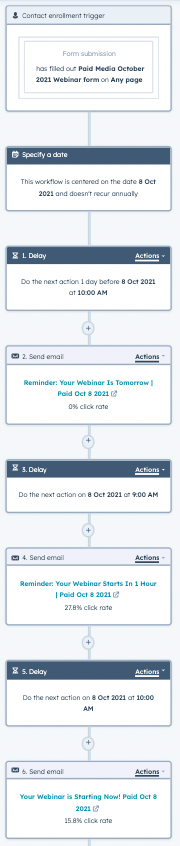
Implementing email autoresponders in your digital marketing strategy is like hiring an extra team member who works tirelessly to engage your subscribers, drive conversions, and build customer loyalty.
With the right approach and well-crafted email sequences, email autoresponders can greatly enhance your customer communications and significantly boost your business outcomes.
Adopt an omni-channel campaign
Omni-channel marketing refers to creating a seamless, unified user experience across all channels. This means that you’ll be able to reach your buyer across multiple channels at the right time, whether it’s email, social media, Google Search or another channel.
The cornerstone of omni-channel marketing is understanding your audience’s journey and ensuring they have a consistent and meaningful experience at each stage, regardless of the channel they choose to use.
Implementing an omni-channel campaign may seem daunting, given the need for a high level of integration between different channels. However, the benefits it offers make it a worthwhile objective for your digital marketing strategy. It’s about meeting your customers where they are and providing a cohesive experience that will ultimately drive brand loyalty and business growth.
So, what now?
The digital marketing objectives outlined in this article provide a solid foundation for a robust and effective marketing strategy. These objectives, grounded in a decade of our experience and endorsed by the likes of HubSpot, are designed to ensure that your digital marketing efforts are focused, strategic, and ultimately, successful.
Remember, consistency and quality are key to any digital marketing endeavour. Focus on creating engaging content that answers your buyer’s questions, maintaining a consistent presence on social media, leveraging SEO and paid media, and ensuring your marketing materials are utilised in your sales calls.
By implementing these objectives and keeping track of your progress, you can steer your digital marketing efforts in the right direction and enjoy the results you desire.
Remember, marketing objectives should be specific, measurable, attainable, relevant, and time-bound (SMART). This ensures you can track the progress of your marketing efforts and adjust your strategy as necessary to meet your goals. So, go ahead and set those objectives. Your success starts now.




Get the best content marketing insights right in your inbox!
Subscribe to our Newsletter and get marketing insights delivered to your inbox every week.