








ChatGPT Ads 2026: Here’s What You NEED to Know

You can feel it coming. Another platform shift. Another conversation you’ll have with leadership. Another question mark hanging over your pipeline.
You’re already under pressure to generate leads, prove ROI, and keep sales happy with lead quality… and now ChatGPT Ads are available in 2026.
In this article, you’ll get a clear, no-nonsense breakdown of what’s confirmed about ChatGPT Ads, who will see them, and how they’re expected to work.
What’s Happening With ChatGPT Ads?
The big news is official: ChatGPT Ads are now available.
OpenAI has officially launched ChatGPT Ads in early 2026, with the availability to target users in Australia, United States, New Zealand and Canada.
With ChatGPT’s estimated 800-plus million weekly users, a discovery channel powered by AI is entering the mainstream.
Here’s what makes this truly significant, and why your organisation should be paying attention now:
Ads Appear Inside Conversations, Not Just Alongside Them
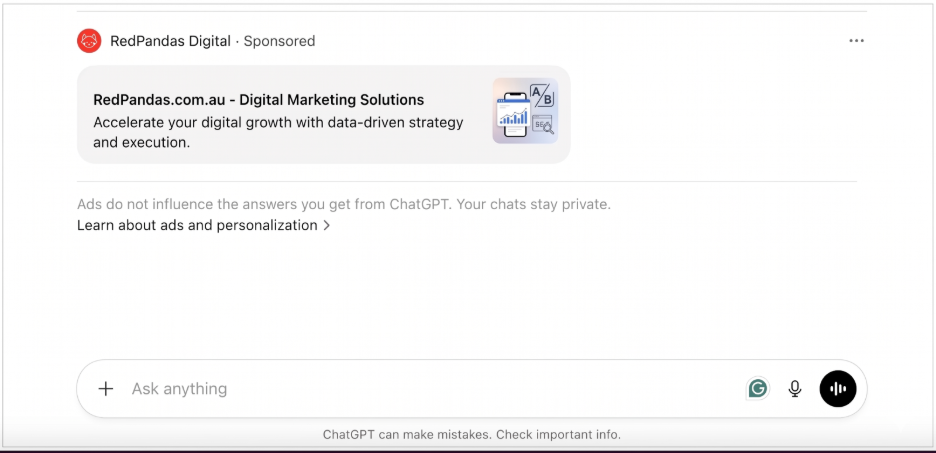
Context really matters when it comes to dissecting the latest news about ChatGPT Ads.
Let’s say you’re using ChatGPT to ask: “What’s the best CRM for B2B organisations with complex pipelines?”
Instead of just getting a text response, you may see an advertised suggestion for a CRM with a message like:
“Sponsored: Compare [Product X]; Trusted by 5,000+ B2B sellers.”
These ads are designed to appear based on the conversation context, like when you talk about travel, marketing software, or products, not simply as banners slapped in randomly.
This is not like traditional display ads that interrupt a page.
Think of them more like intent-driven suggestions embedded in a conversation, which can feel more natural but also more influential because people are already seeking answers.
Ads Won’t Influence ChatGPT’s Answers
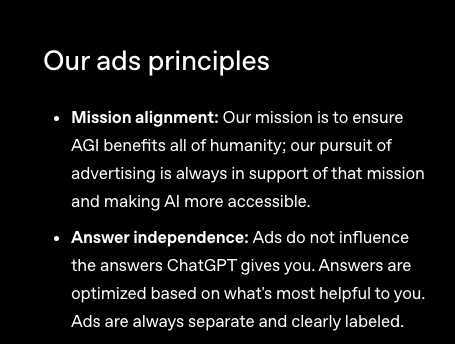
OpenAI has made a clear promise: the ads will be separate from the model’s answers and won’t be used to shift or bias the content that ChatGPT provides.
In other words, the AI’s reasoning and replies are meant to stay independent from advertising.
So, while the answer itself remains AI-generated without ad influence, the ad is “front and centre” right where a decision moment happens; like a shop window right below a product review.
That subtle difference matters because it changes the buyer’s mental path: from asking → learning → deciding → clicking, and puts advertising into the decision equation itself.
Why This Matters For Your Buyers
If prospects start using ChatGPT as a discovery engine, you’re no longer only competing in search results or social feeds.
You’re competing inside reasoned, conversational discovery moments that can look like this:
- A buyer asks, “What’s the best home builder in my area for a knockdown rebuild?”
- ChatGPT replies with helpful context.
- Immediately underneath, a set of relevant advertised solutions, such as your residential construction company, appears.
That’s not a traditional “search” moment; instead, it’s contextual purchase intent inside dialogue.
The risk for many organisations isn’t just about budgeting for another ad channel. It’s about the hidden shift in how people form choices and where your brand shows up at that choice point.


The Approach that ACTUALLY Works for Ranking in AI | Episode 188
Without preparation, it’s like a store that suddenly appears on a major highway after the highway is built while competitors already have billboards out front.
And unlike past digital ad channels, it’s not just about clicks and impressions anymore.
Instead, it’s about how your brand is positioned at the moment someone consciously evaluates a category.
If people are discovering solutions through ChatGPT, then brands without any in-platform ad presence risk being invisible in the early, formative moments of buyer decision-making.
Who Will Actually See ChatGPT Ads?
Before you start imagining ChatGPT Ads as billboards in the sky every time someone chats, it’s important to understand:
- Which users will actually see these ads.
- Why that choice was made.
- What it means for your marketing strategy.
Think of the ChatGPT user base like a theme park with different ticket types.
At the front gate, there’s the free entry line: that’s where ads are most visible. Further inside, there are premium experiences where ads don’t appear at all.
This means that the audience you reach depends entirely on which line your visitors are in.
OpenAI Will Only Show Ads to Free and ChatGPT Go Users
ChatGPT isn’t going to plaster ads everywhere for its initial rollout.
Instead, it’s targeting specific access tiers like Free and ChatGPT Go to potentially compensate for recent reports on its speculated bankruptcy and pad revenue from a business standpoint. This approach is comparable to the same strategy Google rolled out for YouTube Premium in 2018, which provides a monthly subscription for ad-free watching.
OpenAI’s choice to predetermine ad exposure shapes who in your audience will see ads, like:
- Casual users and people doing exploratory research.
- Individuals trying out tools or services before they commit to purchasing them.
- Students, freelancers, and solo founders.
- Early-stage decision-makers who don’t yet have enterprise access.
But, it’s important to remember that ChatGPT Ads won’t immediately reach high-tier subscribers with Plus, Pro, Business, or Enterprise plans. This means that your ads won’t be able to reach an audience that often includes established teams and senior decision-makers.
Ads Will Be Limited to Logged-in Adults in Certain Regions
OpenAI has also said (based on the current rollout plan):
- Ads will only be shown to logged-in users aged 18 or older.
- Ads won’t appear in all countries at once; the testing begins in the U.S. before international expansion is confirmed.
- Ads will not be eligible around sensitive topics like health, politics, mental health, etc.

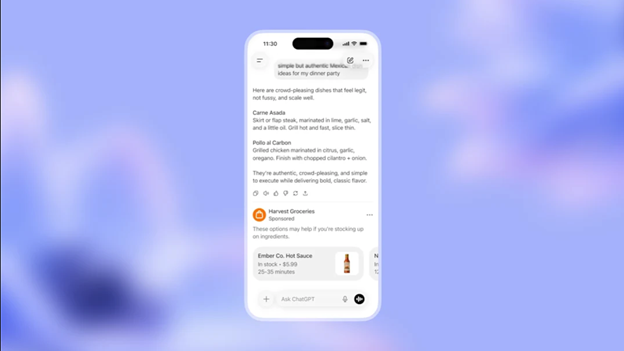
Actual sample of what ChatGPT Ads will look like, taken from OpenAI’s announcement.
ChatGPT Ads aren’t a universal broadcast network: they’re a segmented, context-driven, early-funnel channel.
That makes them interesting for awareness and shaping early preference, but not a replacement for demand gen channels aimed at conversion and pipeline acceleration.
OpenAI’s latest update has the potential to complement existing strategies: they add a place to influence consideration before users ever click your website or enter your CRM.
ChatGPT Ads will not be a silver bullet, but they can shift where influence can happen… and that’s worth planning around.
What You Should Know About ChatGPT Ads’ Privacy and Targeting
When the idea of “ads inside ChatGPT” comes up, the first thing most people think of is data and privacy. Fortunately, OpenAI has already laid out principles and guardrails that answer a lot of those concerns… and they’re surprisingly strict compared with other platforms.
But with every promise comes nuance, so here’s what you need to know:
| Key Point | Details | What It Means for You and Your Strategy |
| Conversations Aren’t Sold To Advertisers | OpenAI will not sell your private conversations to advertisers. Ads are not based on your entire conversation history. | Data privacy is a key concern, and this ensures your customer interactions remain private. You can feel confident that sensitive info won’t be used for targeting. |
| Ads Will Be Clearly Labelled And Distinct | Sponsored content will be clearly marked as “sponsored” so users know when they are seeing an ad. | Transparency builds trust. As a marketer, you’ll need to create ads that add value without detracting from the core ChatGPT experience. |
| Targeting Based On Context, Not Personal Data | Ads will be shown based on the context of the conversation, particularly what the user is asking about, rather than personal information from previous chats. | Ads will be relevant to user intent, not past behaviour, which means you need to align your messaging with specific queries and problems users are solving. |
| Users Can Turn Off Personalisation | Users have control over whether they want personalisation turned on or off for ads. | Opt-out options mean ads might not always be tailored. Marketers should be prepared to create ads that appeal to a broad audience and don’t rely on personal data. |
| Targeting Relies On Signals, Not Tracking | Ads are based on real-time data, such as location, device, or session-level context, rather than detailed user profiles. | You need to be aware that ad targeting will be more moment-based than user-history driven. Plan for contextual ads rather than long-term profiling. |
| Relevance Over Personal Profiling | Ads are designed to be relevant to the user’s immediate context, not hyper-targeted based on long-term behaviour. | Focus on solving immediate user needs. Your content and ads should be highly contextual to the conversation and aligned with what the user is currently exploring. |
| What This Update Doesn’t Mean | This isn’t hyper-targeting using personal data. Ads won’t involve your private prompt data or conversation logs. | Less reliance on cookies or tracking means your advertising strategy will need to be more focused on intent-based moments rather than past behaviour. |

How a Poor Landing Page Affects Your Paid Media Performance
FAQ: ChatGPT Ads in 2026
1. What Are ChatGPT Ads?
ChatGPT Ads are paid placements that will appear within the ChatGPT interface. These ads will be clearly labelled as “sponsored” and placed alongside ChatGPT’s answers, giving brands the opportunity to influence buyers’ decisions before they even visit a website.
Ads will be shown to Free and Go-tier users, but not Plus or Enterprise subscribers.
2. When Will ChatGPT Ads Launch?
ChatGPT Ads have now launched in 2026. Ads are visible to Free and Go-tier users in select regions, particularly in the US, Australia, New Zealand, and Canada.
3. Who Will See These Ads?
ChatGPT Ads will be shown to users of the Free and Go tiers of ChatGPT, who are logged in and 18 years or older. These ads will not appear on the Plus, Pro, or Enterprise tiers, nor will they be shown to users engaging in sensitive topics like health or politics.
4. How Will Ads Be Displayed Within ChatGPT?
Ads will appear next to ChatGPT’s responses, clearly marked as sponsored. These ads won’t alter or influence the answers given by ChatGPT, and they will not disrupt the user experience, as they will be presented separately from organic responses.
5. What Type Of Ads Will Appear In ChatGPT?
ChatGPT Ads will likely take the form of sponsored recommendations or contextual placements. These ads will be related to the user’s queries but won’t interfere with the core response.
6. How Is Targeting Handled For ChatGPT Ads?
ChatGPT Ads use contextual targeting based on the user’s query and general session data, not personal data or past interactions. Users will have the option to disable ad personalisation.
Ads will be shown based on the context of what users are asking rather than their personal history or preferences.
7. Will ChatGPT Ads Replace Other Advertising Channels Like Google Or Facebook?
No, ChatGPT Ads are not intended to replace existing channels like Google Ads or LinkedIn Ads. Instead, they add a layer of visibility and influence at the early stages of a buyer’s journey, making them complementary to your existing strategy.
8. How Should I Prepare My Brand For ChatGPT Ads?
Start by aligning your messaging and ensuring your content addresses user queries clearly and directly. Focus on positioning your brand as a trusted advisor in your industry.
Also, update your CRM to capture better qualitative data on how users are discovering your brand early in the process, rather than just relying on traditional sources of attribution.
9. Is It Worth Jumping Into ChatGPT Ads Right Away?
While it’s tempting to rush in, the best approach is strategic patience. Prepare your content, messaging, and CRM, but avoid diving into ads until you’re clear on how they’ll fit into your broader strategy.
Once you’ve aligned your teams and understood the risks, you can test ads with confidence when the time is right.
10. Can I Track The Effectiveness Of ChatGPT Ads?
Attribution is more difficult compared to traditional ad platforms.
Since ChatGPT Ads are focused on influencing early-stage research and decision-making, tracking clicks or direct conversions may not provide a full picture. Instead, focus on brand perception and lead quality, and adjust your measurement strategy accordingly.

How To Use OpenAI’s New ChatGPT Apps Integration for Digital Marketing
Preparing for ChatGPT Ads in 2026
Now that you have a clear understanding of ChatGPT Ads and their potential impact, it’s time to think about how to prepare for this shift in the landscape… even if you’re not jumping in headfirst just yet.
Don’t feel pressured to run ads right away. Instead, take this opportunity to focus on refining how you connect with prospects before they even click.
Focus on ensuring your brand is visible in the moments that matter, when buyers are shaping their shortlist.
Start small. Stay informed. And when the time comes, you’ll be ready to jump in without missing a beat.

Need Help With Your Ad Campaigns? Learn More About Paid Media Retainers



Get the best content marketing insights right in your inbox!
Subscribe to our Newsletter and get marketing insights delivered to your inbox every week.