









The Most Common Mistakes Businesses Make with ‘They Ask, You Answer’ and How to Avoid Them
‘They Ask, You Answer’ (TAYA) is a proven business and marketing framework that can be used to increase traffic, leads and sales. However, despite its popularity and success, TAYA is not a bulletproof strategy. There are common mistakes that businesses make with TAYA that can prevent them from seeing the results they want. In this article, we’ll explore those mistakes and provide practical solutions for how to avoid them or address them when they occur. By the end of this article, you’ll have a better understanding of how to fine-tune your TAYA strategy and build stronger customer relationships.
In this article, you’ll discover:
- What is TAYA and why is it important?
- Mistake #1: Not aligning sales and marketing teams (or excluding sales from the process)
- Mistake #2: Not prioritising buyer/prospect questions in your content strategy
- Mistake #3: Not using articles and videos in the sales process
- Mistake #4: Not getting buy in from the entire organisation before embarking on TAYA
In each of these sections, you’ll learn about practical solutions to avoid or address these mistakes when they occur. By the end of this article, you’ll be equipped with the knowledge and tools to build a more effective TAYA strategy, one that’s more aligned with your customers’ needs and capable of delivering results.
What is TAYA and Why is it Important?
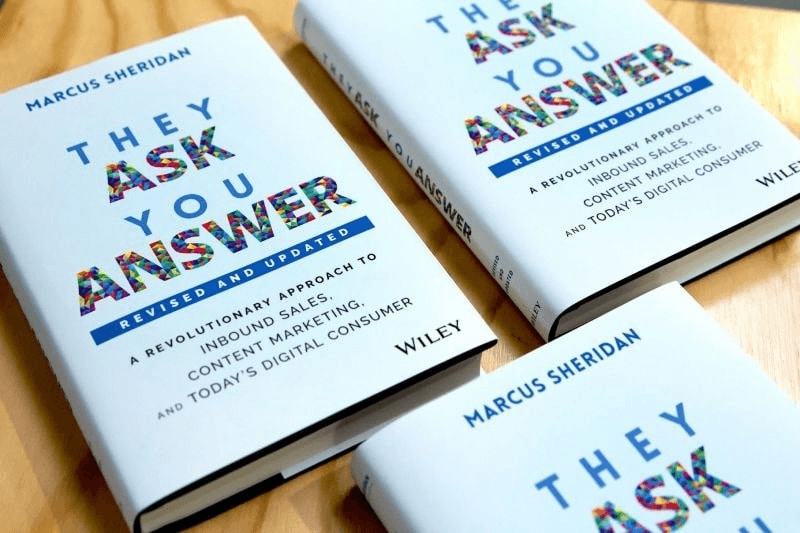
The goal of building trust and authority in your industry is core to TAYA, and it’s based on the idea that by addressing your customers’ concerns directly and providing valuable information, you can position yourself as a helpful resource and differentiate yourself from your competitors.
TAYA was coined by Marcus Sheridan, a digital marketing expert and entrepreneur, who used this approach to save his swimming pool business during the 2008 financial crisis. Since then, TAYA has become a strategic and systemised approach to business growth. By implementing TAYA, you’ll not only increase traffic, leads, and sales, but you’ll also become a trusted advisor in your space, which is absolutely essential if you want to build a strong relationship with your customers.
In the next section, you’ll learn what could go wrong with TAYA and how to prevent and fix common mistakes so that you can succeed.
Mistake #1: Not aligning sales and marketing teams (or excluding sales from the process)

One of the most common mistakes businesses make with TAYA is failing to align their sales and marketing teams effectively. When these teams are not aligned, it can result in a lack of communication, unclear messaging, and missed opportunities.
When marketing creates content that doesn’t align with the questions that the sales team are being asked by prospects every day, it can result in lost opportunities to close deals. Conversely, if the sales team is not providing feedback to the marketing team on what content is resonating with customers or what questions are commonly asked, it can result in ineffective content creation and wasted resources.
To prevent ineffective alignment between sales and marketing teams, it’s essential to formulate a Revenue Team, which includes members from both teams and meets regularly to brainstorm content by reviewing questions that prospects are asking the sales team every day. By ensuring that everyone is on the same page and working towards the same objectives, you can create a more cohesive and effective TAYA strategy.
In addition, regular communication between teams, such as weekly meetings or check-ins, can help to identify and address any misalignments or gaps in messaging. By prioritising communication and collaboration, you can ensure that your TAYA strategy is delivering the results you want and building stronger relationships with your customers.
Mistake #2: Not prioritising buyer/prospect questions in your content strategy

At its core, TAYA is about answering your customers’ questions honestly and transparently. One of the biggest mistakes businesses make with TAYA is failing to prioritise answering buyer questions as the main focus of their content strategy.
When businesses create content that is too focused on themselves or their products, it can result in customers feeling like their questions and concerns are not being heard or addressed. This can lead to frustration, confusion, and ultimately, lost sales.
To avoid this mistake, it’s important to focus on answering the questions that your customers are already asking most frequently. One effective way to do this is to gather questions from your sales team, who are often the frontline of customer interactions.
Using sales as your primary research is key. Another way to do it is using secondary research from tools like SEMRush or simply just checking the ‘’People Also Ask’ section in Google search results.
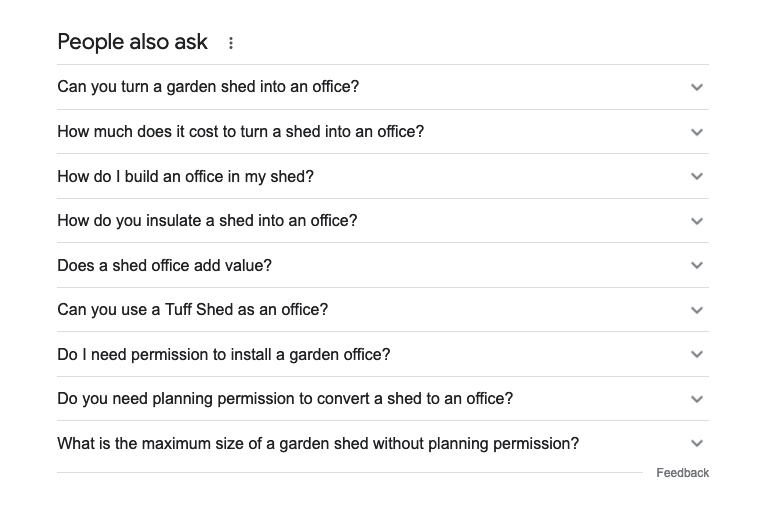
By answering these questions directly and transparently, you can build trust with your customers and position yourself as a valuable resource in your industry. By consistently providing valuable information that addresses your customers’ needs, you can differentiate yourself from your competitors and build a loyal following.
Mistake #3: Not using articles and videos in the sales process
Another common mistake businesses make with TAYA is not utilising content effectively in the sales cycle. TAYA is not just about creating valuable content that answers your customers’ questions; it’s also about leveraging that content to drive sales and close deals.
One effective way to utilise content in the sales cycle is through a concept called Assignment Selling.
Assignment Selling is when we assign “homework” to our prospects in the form of educational blog articles or videos anytime during the sales cycle.
Assignment Selling can be implemented at various stages of the sales cycle; before the first sales call, after the first sales call, before a deal is signed, and so on. This allows the customer to review the content beforehand and come to the meeting with more knowledge and understanding of your business and product.
An example of Assignment Selling in practice might look something like this:
“Hi, Harry! I’m looking forward to meeting with you next Wednesday. I’ve attached a guide to read before our meeting that will answer all your questions in advance and go over options you need to consider. This way, when we meet, we can make the most of our time together and focus on your specific needs. If you can’t read this before our meeting, let me know and I will reschedule for a better time. Can you confirm you’re able to do this before Wednesday?”
This is so effective because it positions you as an authority, a trusted advisor and not just another salesperson trying to hit commission.

By using Assignment Selling, you can help to shorten the sales cycle and increase close rates. In fact, if a prospect visits 30 pages or more of a website, there is an 80% chance that they’ll buy. If they view fewer than 30 pages, there’s a 15-20% chance that they’ll buy. This statistic was discovered by Marcus Sheridan when he tested groups of buyers to find what factors influenced their buying decision.
Ultimately, it’s clear how impactful Assignment Selling can be, and how missing out on using Assignment Selling can negatively impact sales.
However, in order for this to be effective, it’s important for your sales team to be fully trained on how to utilise content in the sales process. On top of this, you’re going to want to make sure that the content being produced by the marketing team actually answers questions that prospects are asking in sales calls.
As you can probably see now, the previously mentioned mistake of not effectively aligning marketing and sales can have a run off effect and result in a scenario where your sales team cannot effectively utilise Assignment Selling.
If you want to get your sales team trained on utilising Assignment Selling, you might want to have a chat to us about our coaching programs.
Mistake #4: Not getting buy-in from the entire organisation before embarking on TAYA
One of the biggest mistakes businesses make with TAYA is not getting buy-in across the entire organisation.
In order for TAYA to be effective, it’s important that everyone is on board with the approach and understands its importance and potential benefits.
When one department or team is not fully committed to TAYA, it can result in missed opportunities, misalignments in messaging, and a lack of cohesion in the overall strategy. Most importantly, if upper management is not fully on board, then you’ve got a big problem.
To avoid this mistake, it’s important to get buy-in from everyone in the organisation, from top to bottom. One of the most effective ways to get buy-in across the entire organisation is with a TAYA Workshop. A TAYA Workshop is that helps you bring your marketing, sales, and leadership teams together with the single goal of increasing revenue. You can learn about TAYA Workshops here.
You can achieve this by holding company-wide training sessions, creating a TAYA committee to ensure every team is effectively doing their part, and holding regular Revenue Team Meetings to ensure ongoing alignment. If you’re having trouble with this, one of the most effective things you can do is show every team the potential benefits of TAYA on their role and department.
So, what’s next?
In this article, we’ve explored some of the most common mistakes businesses make with TAYA and how to avoid them. From ineffective alignment between sales and marketing to not prioritising buyer questions, to forgetting to utilise content in the sales cycle, to not getting buy-in across the organisation, there are a number of ways TAYA can go wrong.
However, by taking the steps outlined in this article, you can create a more effective and cohesive TAYA strategy that drives results and builds stronger relationships with your customers.
By prioritising communication, collaboration, and transparency, you can ensure that your content strategy is aligned with your business goals and focused on answering your customers’ questions and concerns.
If you’re looking to implement an effective TAYA strategy, you might also be interested in these articles:
- What is TAYA? A Comprehensive Guide
- Who is TAYA Coaching Right For?
- The Cost of a TAYA Partner
- What Can You Expect in a TAYA Coaching Program
- Digital Marketing Retainers vs TAYA Coaching & Training
Don’t want to read more? Check out one of these TAYA Podcasts:




Get the best content marketing insights right in your inbox!
Subscribe to our Newsletter and get marketing insights delivered to your inbox every week.